A Long-Awaited Bespoke Stainless Collar Coat: Part 1

Tomohiro Hayashi
Another lifelong companion has just been completed — a bespoke stainless collar coat! In this first part, I’ll walk you through the unique details that only bespoke tailoring can offer. There’s a lot to highlight, so the post is a bit image-heavy, but I hope you’ll enjoy scrolling through.
Background of the Order
My previous bespoke double-breasted Chesterfield coat turned out so well that, before the excitement had even worn off, I decided to request another bespoke piece. This time, I wanted a so-called "spring coat" that could be worn across spring, summer, and autumn.
When we talk about spring coats at our store, our Spritumn Coat from the made-to-measure (MTM) line is especially popular. I regularly wear both the Spritumn Raglan Coat and Spritumn Chester Coat myself, both made from cotton-nylon fabric by Olmetex. You might wonder why I needed another spring coat, but as someone who loves outerwear, I wanted to experience a different kind of coat -- something with a character distinct from the clean finish of the Spritumn -- through the bespoke process.
 What came to mind was the military-style "all-weather coat" associated with the U.S. Navy: dark navy, fly front, and bold machine stitching. Simple, yet extremely stylish. That said, I did not want to make a replica. I simply used it as inspiration: a fly front, a collar that could be folded inward to create a lapel-free appearance, and slightly dropped shoulders with set-in sleeves. That was the initial concept I brought to Mr. Kojima.
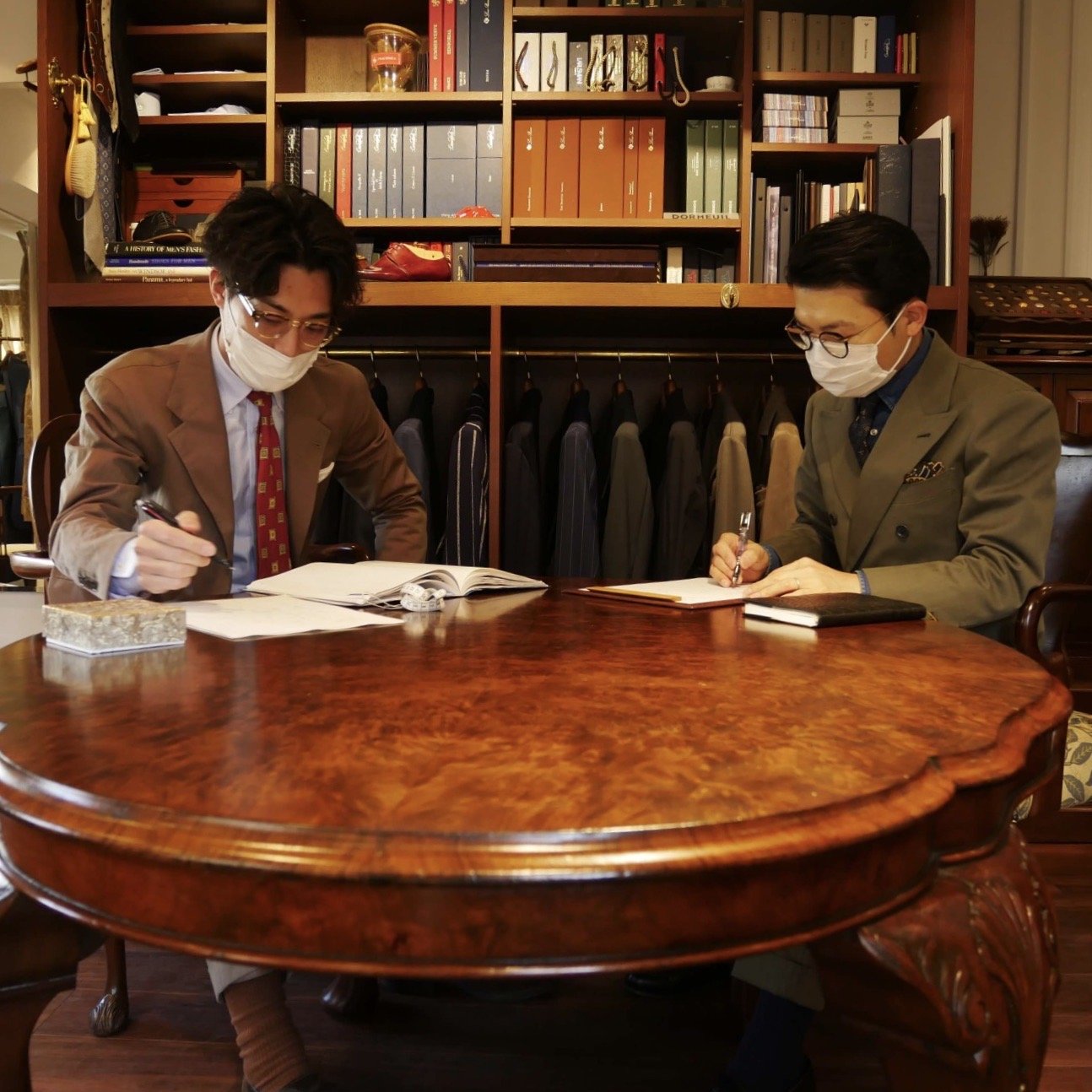
When I consulted Mr. Kojima, he responded candidly: "Even with MTM, we can already make very good Staincollar Coats, so creating something genuinely different through bespoke will be quite a challenge." But as our discussions continued, he embraced the project, saying, "If we are going to make this, let's create a coat distinctive enough that decades from now, someone might find it in a vintage shop and wonder, 'What is this coat?' -- in a good way."
Fabric
Since the concept was a long-lasting piece inspired by military wear, I wanted a durable fabric -- something that might even look better with signs of repair over time. I also intended to wash the fabric before tailoring. The idea was to give it a slightly worn-in character from the beginning while also allowing for initial shrinkage, as I hoped to be able to wash the coat at home when necessary.
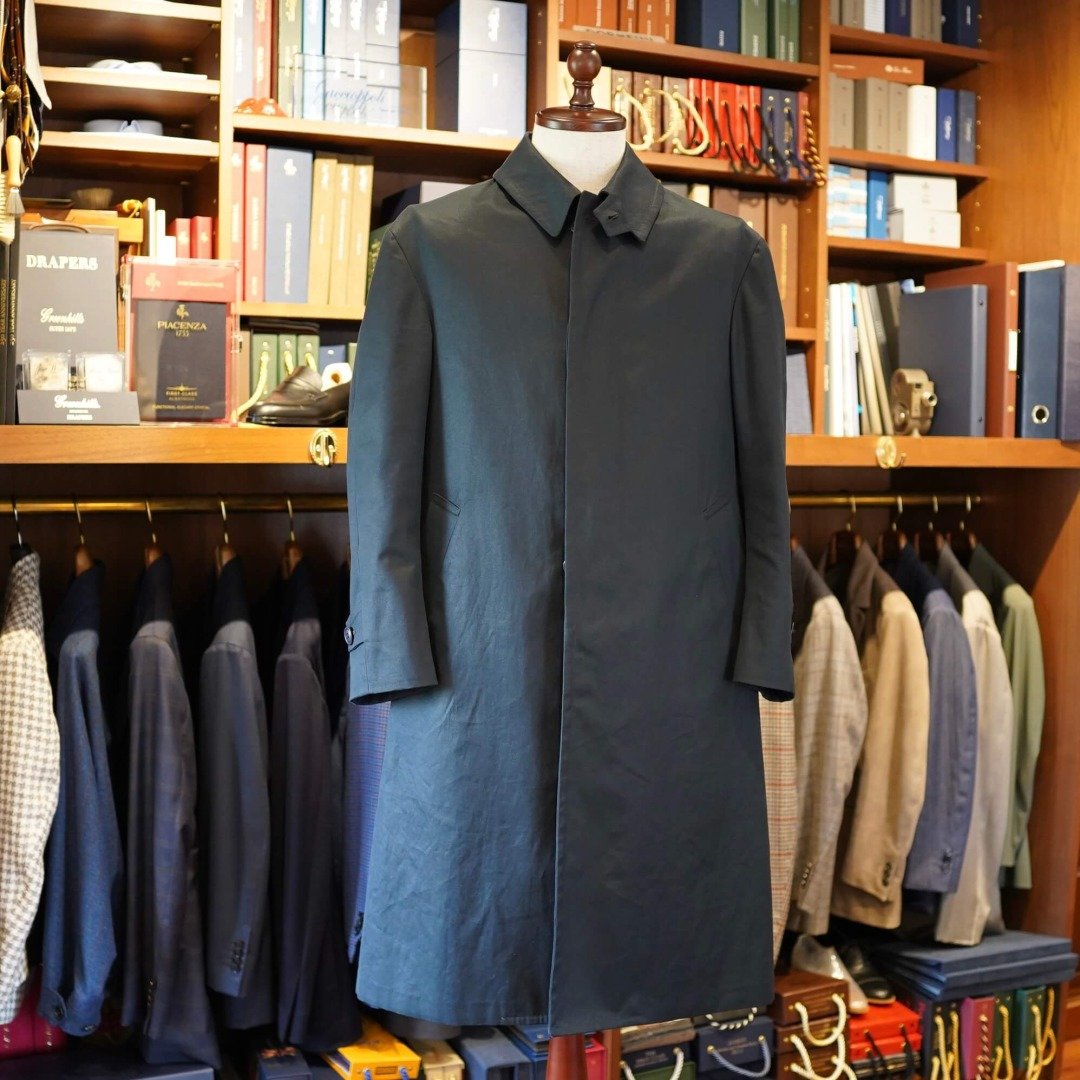
The fabric I selected for this concept was "GIOVE," a cotton gabardine by Olmetex of Italy. This high-density 100% cotton fabric has a reputation for combining wind resistance and water repellency with a surprisingly soft and lightweight feel. Its smoothness is almost reminiscent of a fine shirting fabric, without the stiffness one might expect from a densely woven gabardine. I initially considered something more rugged to suit the military-inspired design, but I am very glad I chose this fabric. The more I wear it, the more I appreciate its character as a coat fabric.
I had decided from the beginning on midnight blue. While lighter colors are often associated with spring coats, I deliberately wanted something darker. I was also drawn to the rugged, almost-black navy seen in images of vintage all-weather coats. There were moments when I saw beige or khaki coats on the street and wondered whether I should have chosen one of those colors instead, but looking back, I am glad I stayed with my original idea.
This chambray fabric is woven using two different shades of navy yarn, creating subtle changes in color depending on the light, somewhat reminiscent of Solaro cloth. It also has a soft sheen, so despite the dark color, it does not feel visually heavy. I am looking forward to seeing how the fabric changes over time, including the way the color may gradually soften with wear and exposure to sunlight.
Details
Now, let me introduce some of the details of the completed coat.
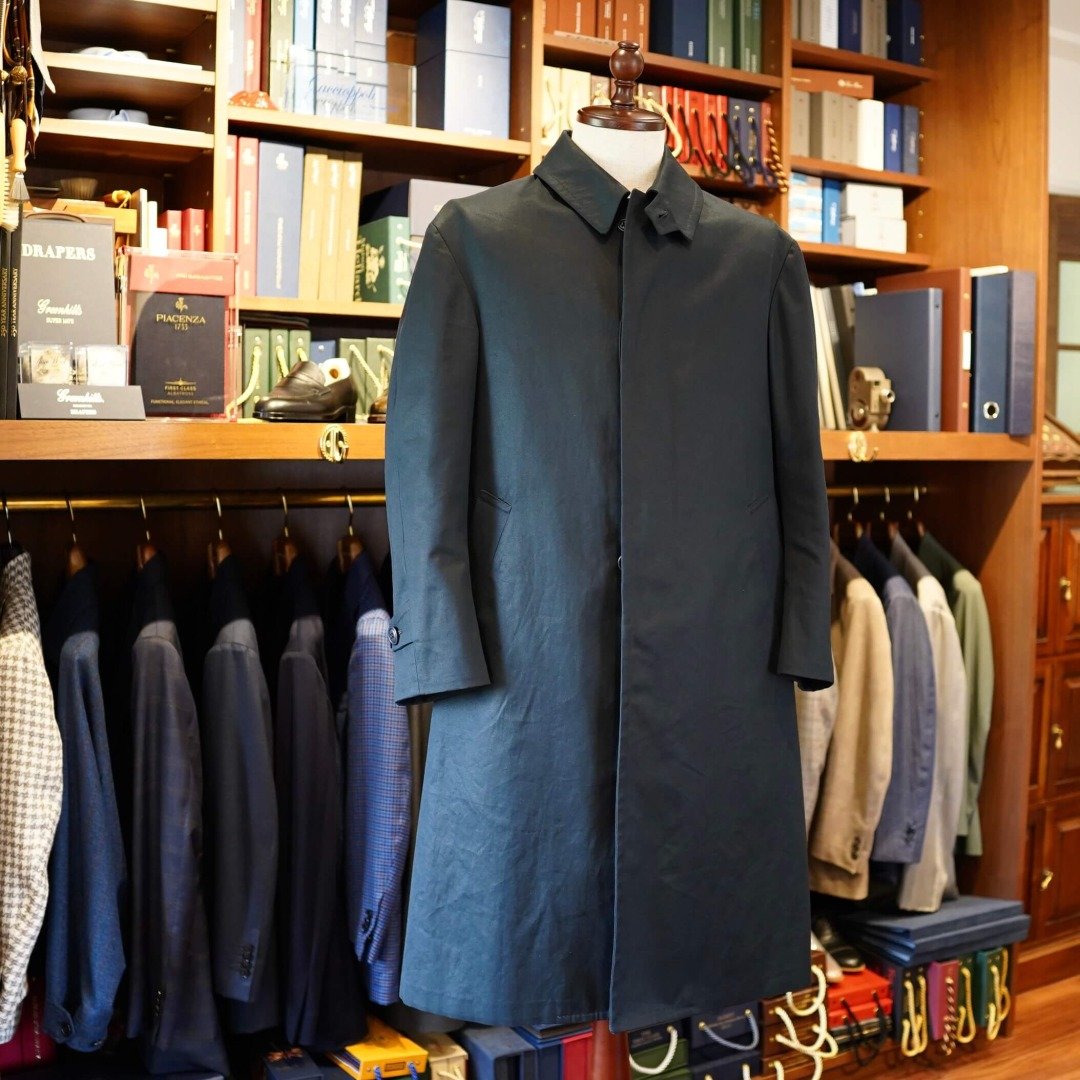 The front is finished with a fly front, with the buttons concealed beneath the placket.
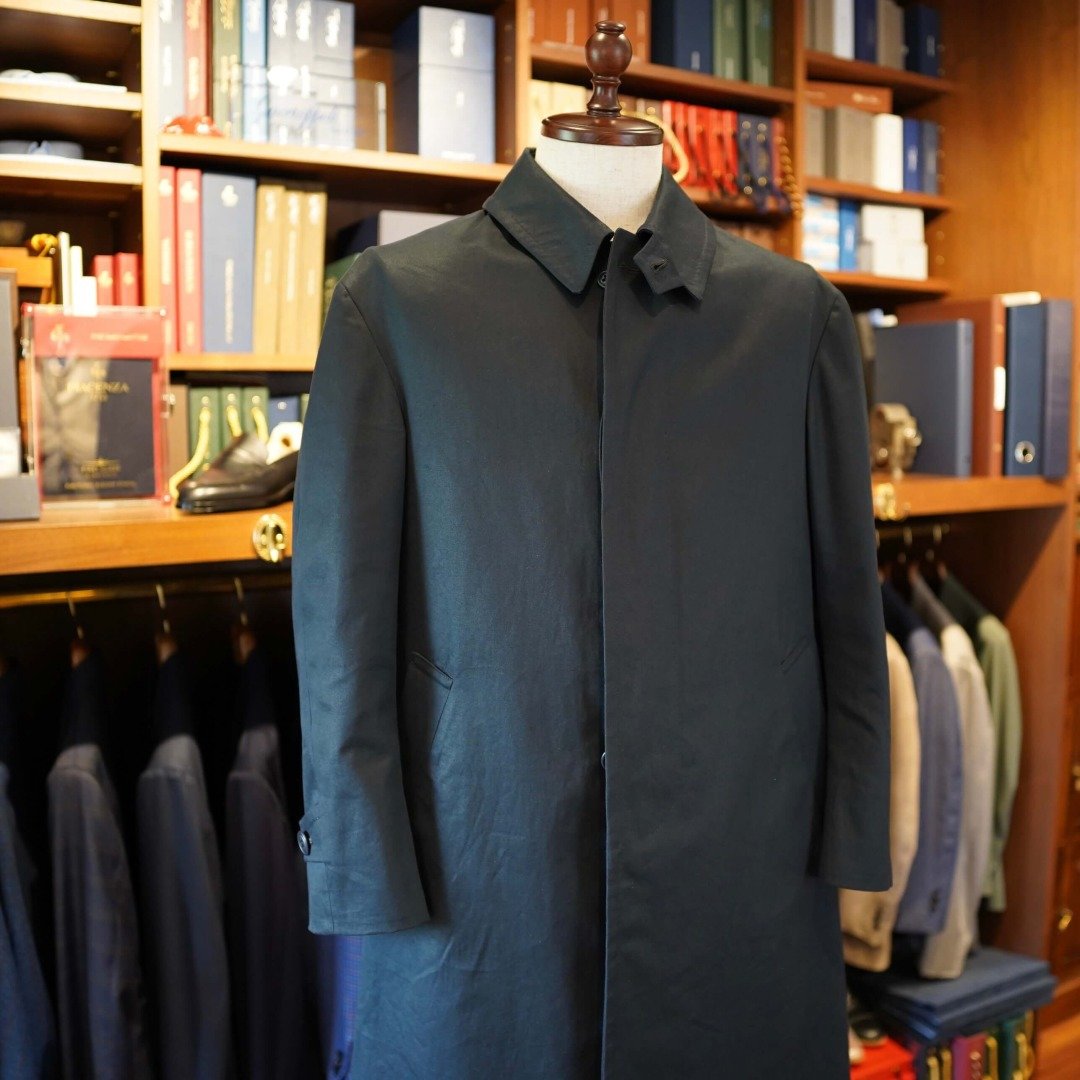
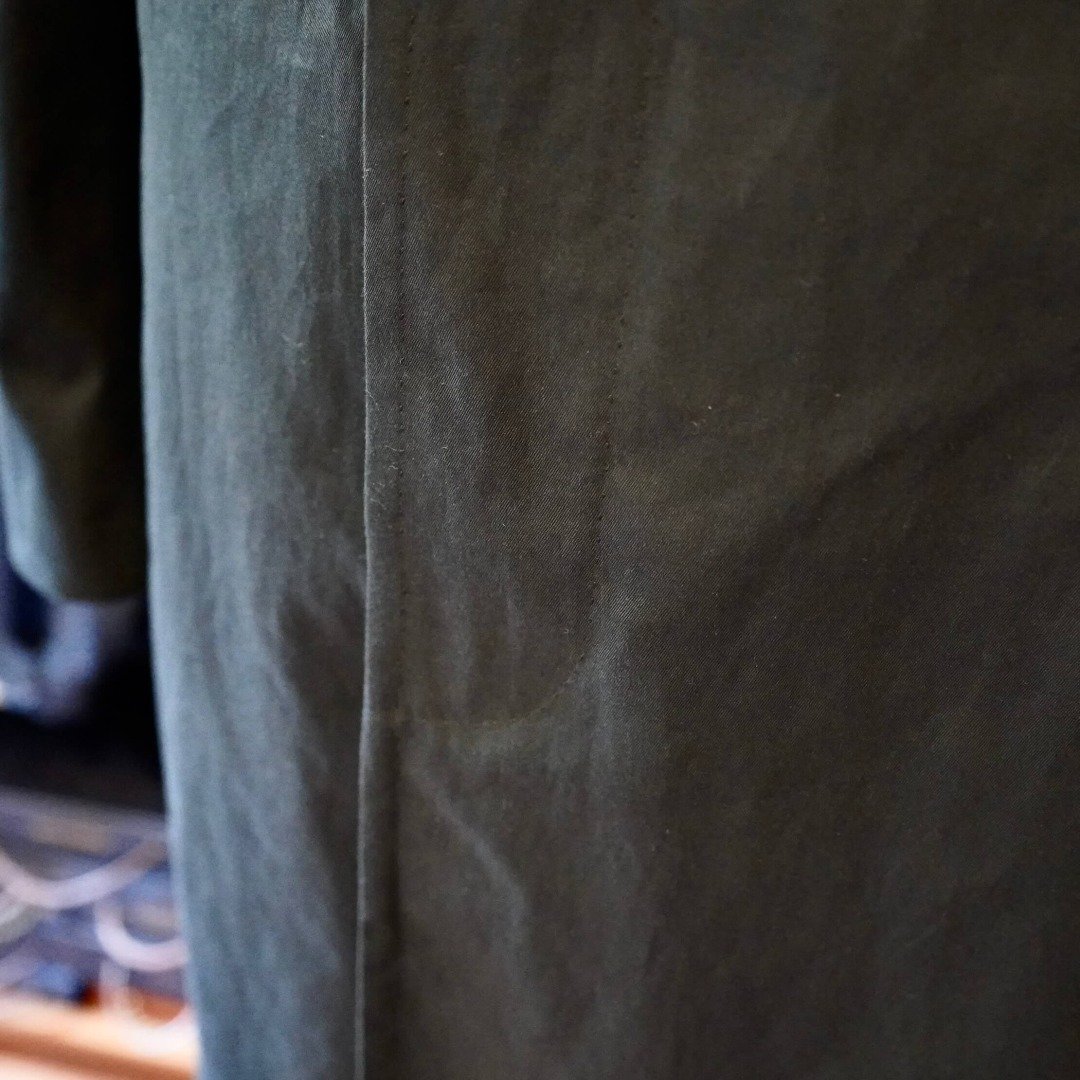
The side pockets are positioned discreetly near the seams and are almost hidden by the sleeves. At first glance, the design may appear extremely simple, but I feel that this restraint is one of the details that defines the character of the coat.
Staincollar and Tab
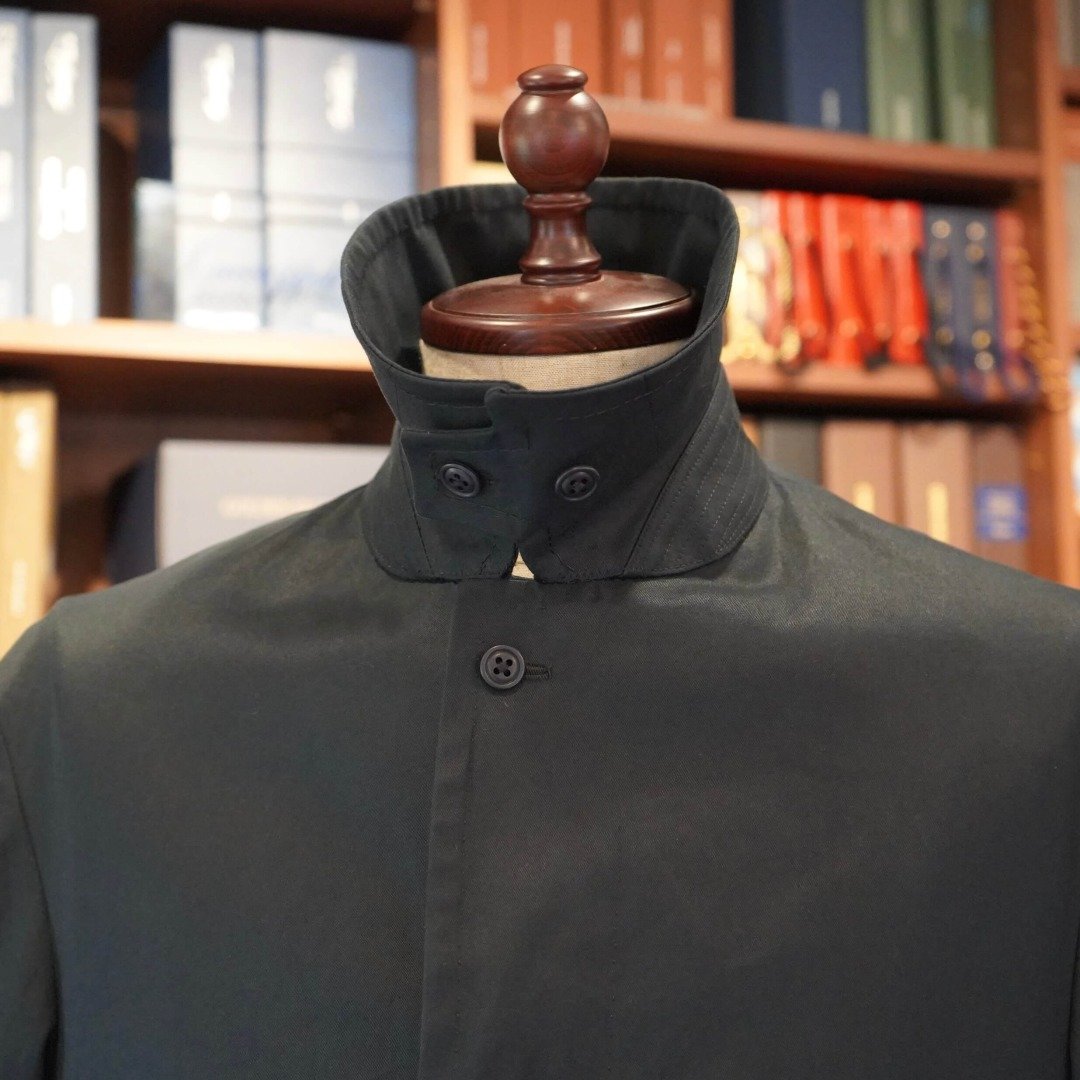
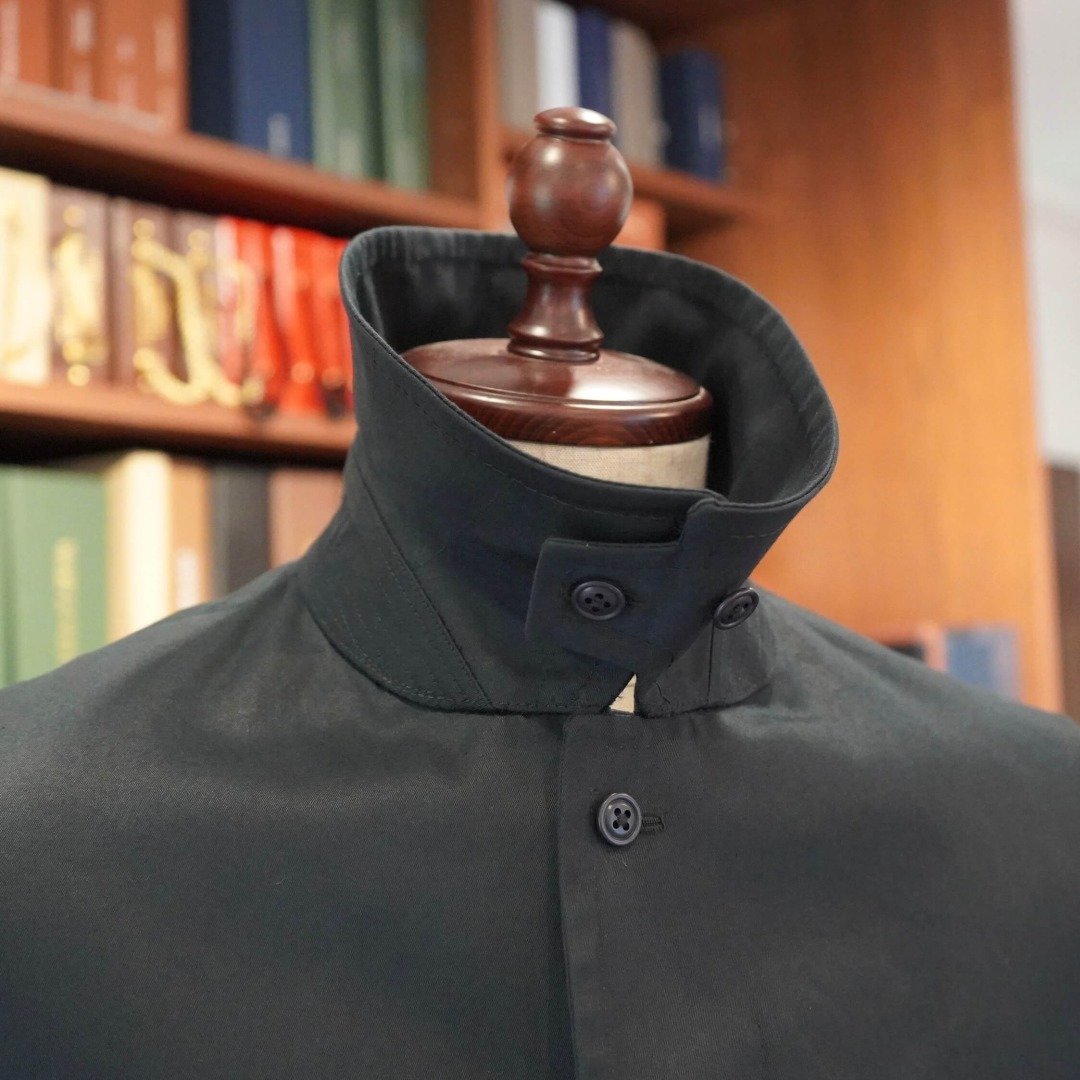
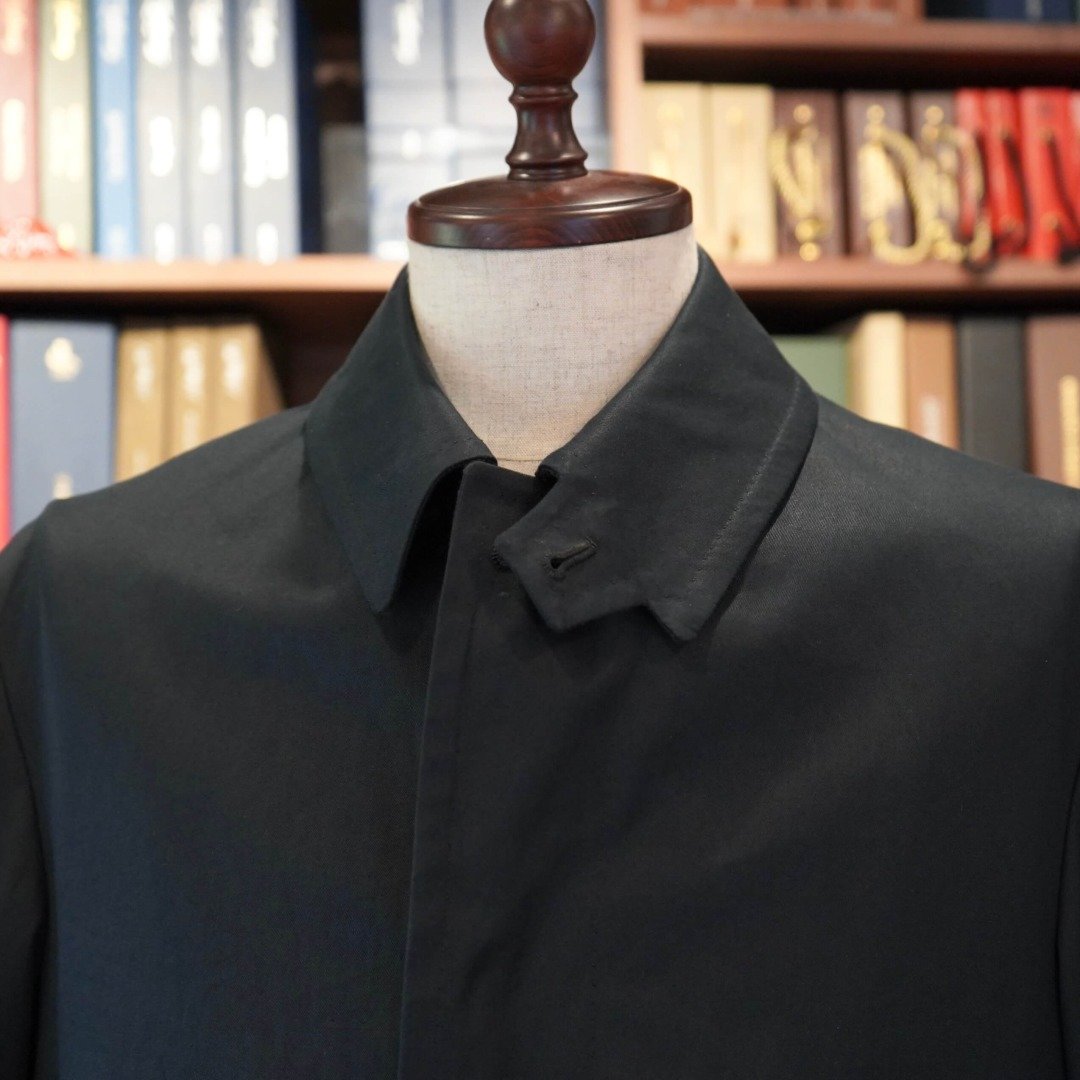 One of the most distinctive details is the trapezoid-shaped collar tab, designed to fasten beneath the chin when the collar is turned up.
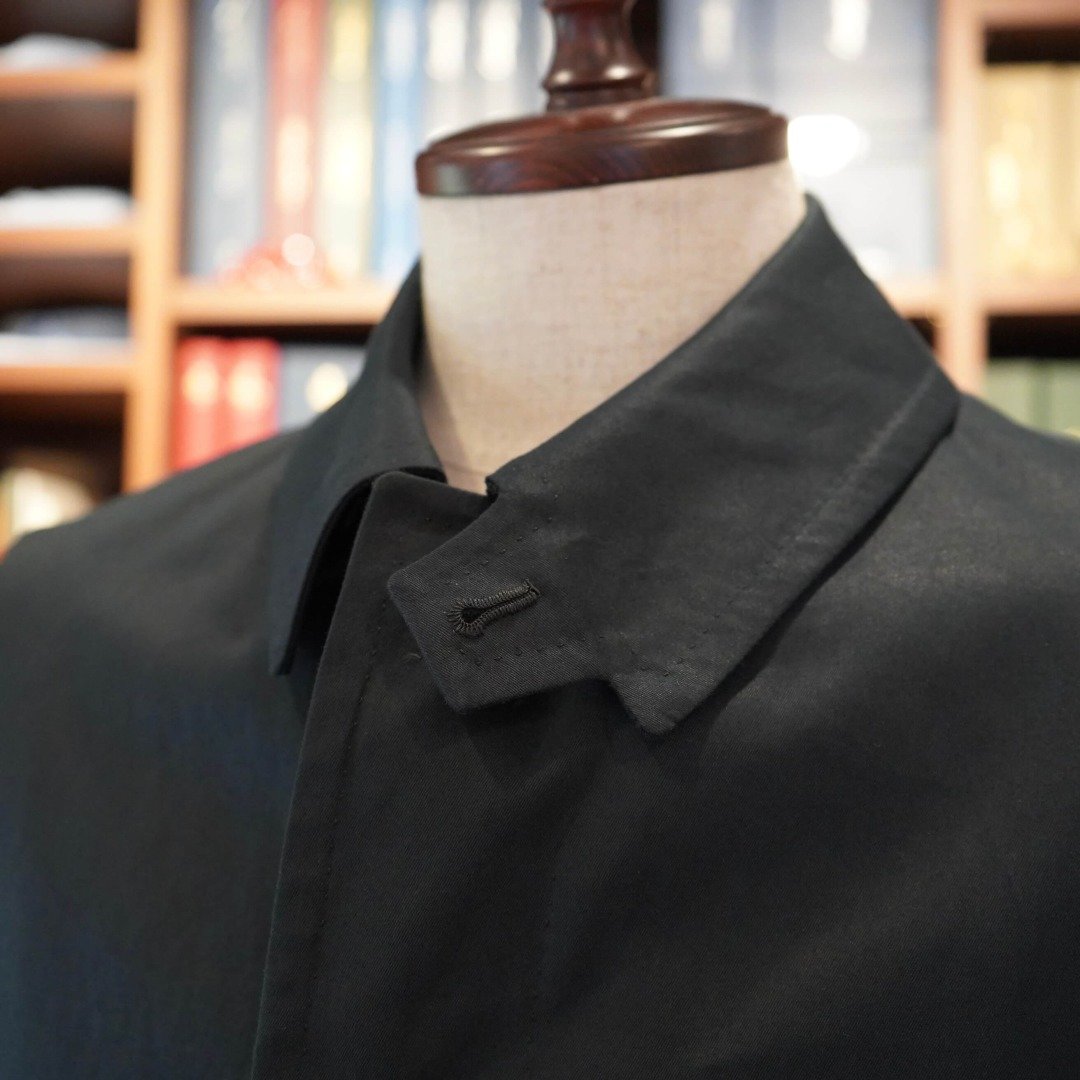 The tab is not a separate piece but is integrated into the collar itself. Hand-sewn buttonholes and decorative stitching give this area a strong sense of character.
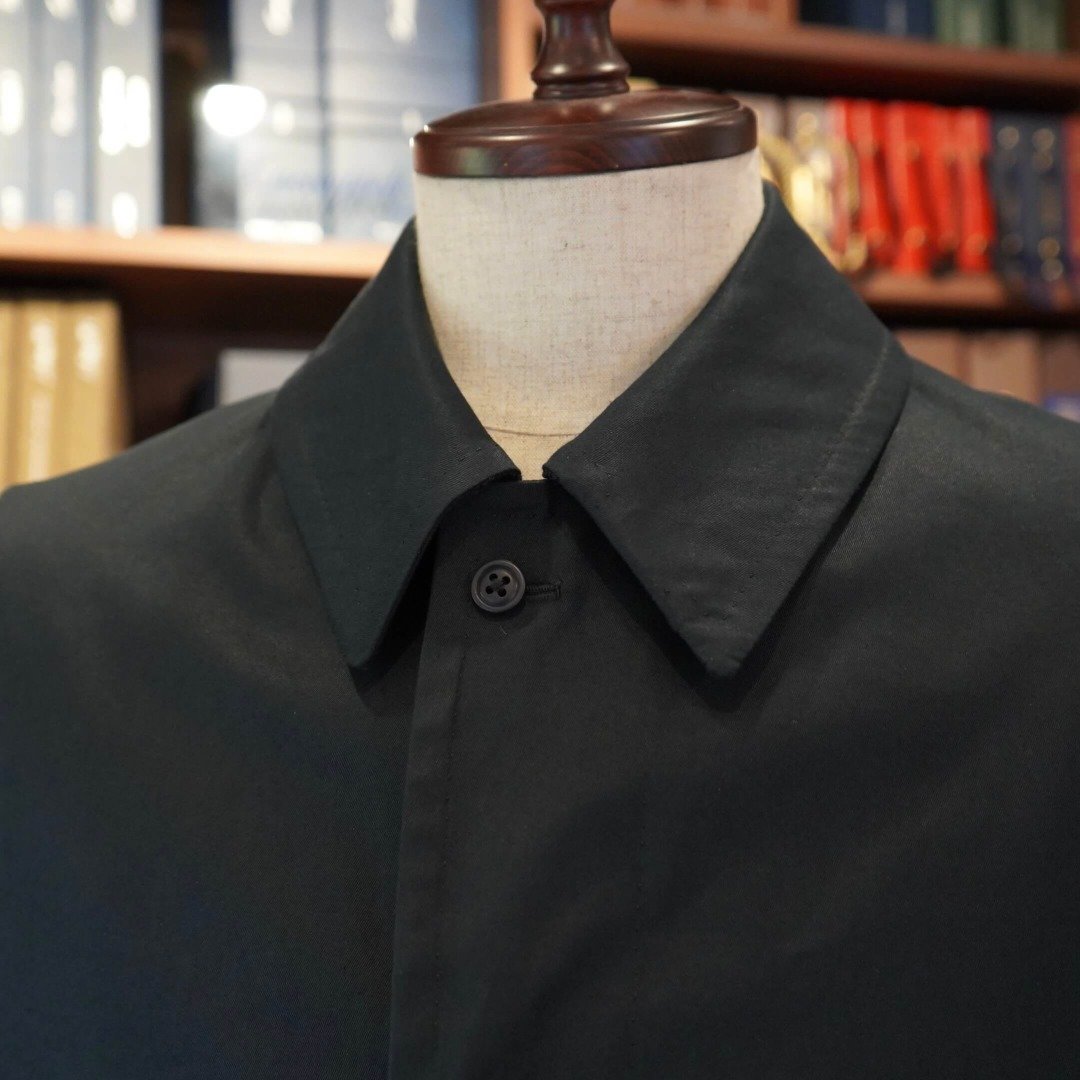
With the tab tucked beneath the collar, the sharper shape of the collar becomes more apparent. Rather than a wide-spread shape, we aimed for a more closed, regular-style collar and refined its proportions through the fitting process.
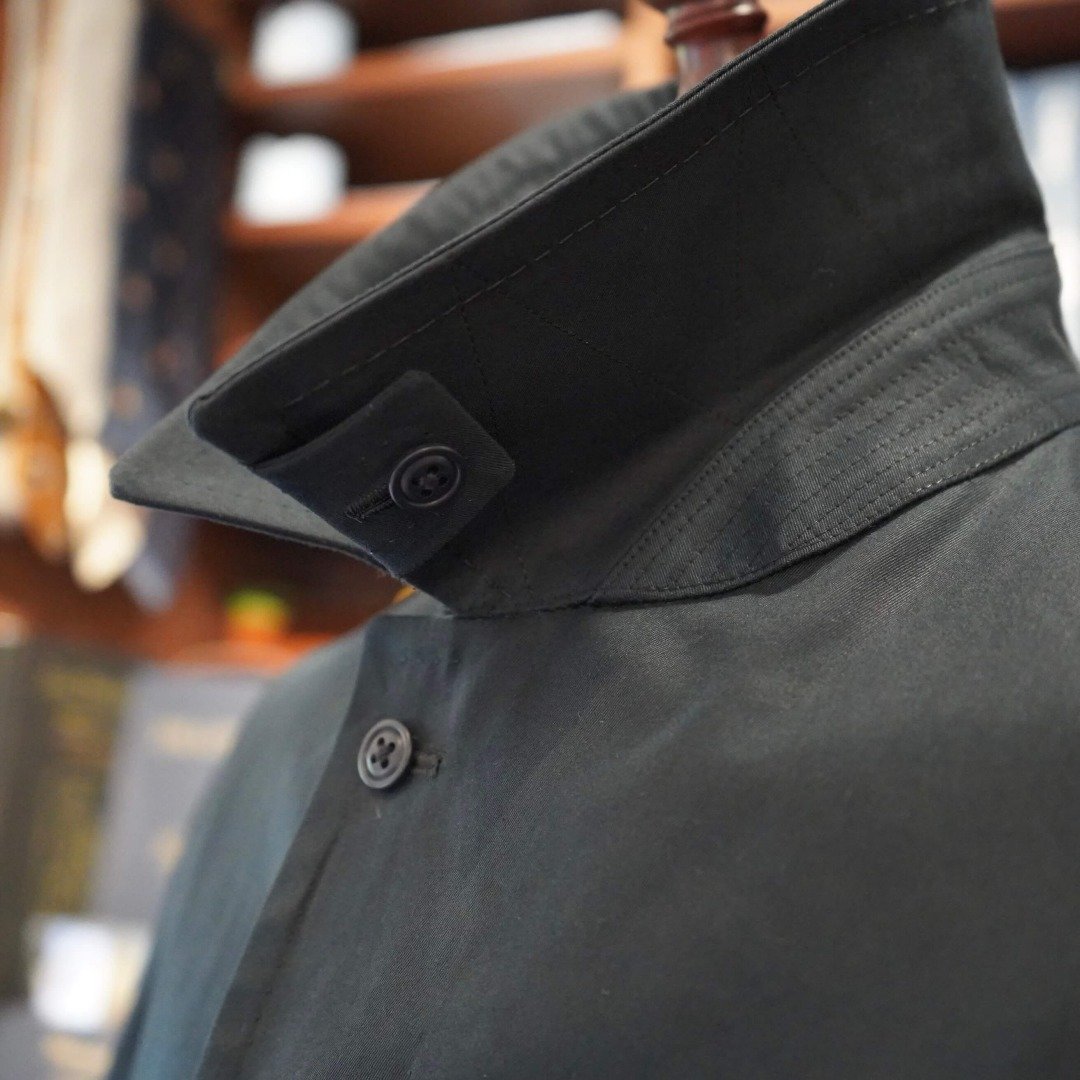
The tab can easily be stored inside the collar, but since I particularly like this detail, I plan to wear it exposed for a while.
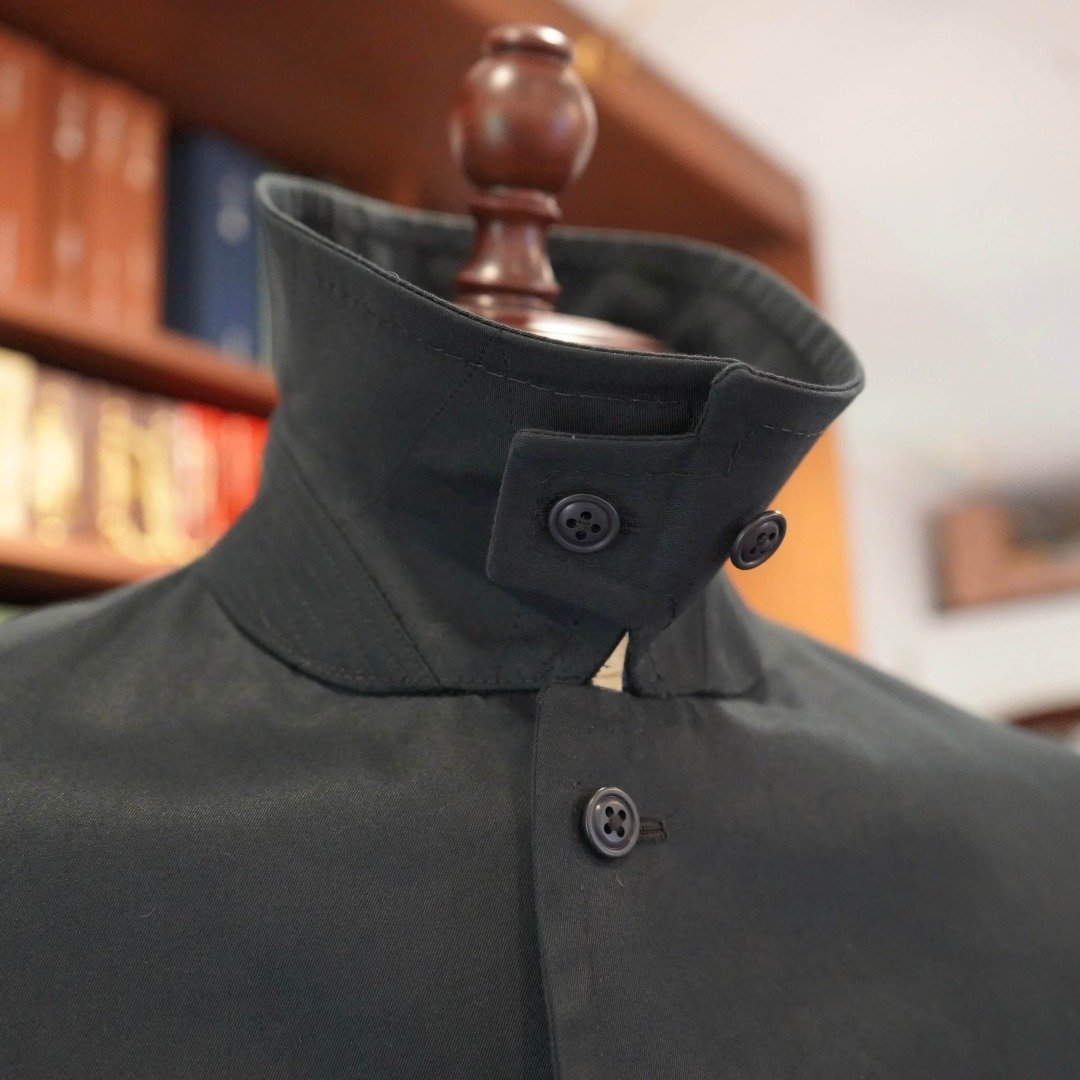
When the collar is turned up, the tab can be fastened beneath the chin. I may rarely use it this way in practice, but it was important to me that the detail should function properly rather than being purely decorative.
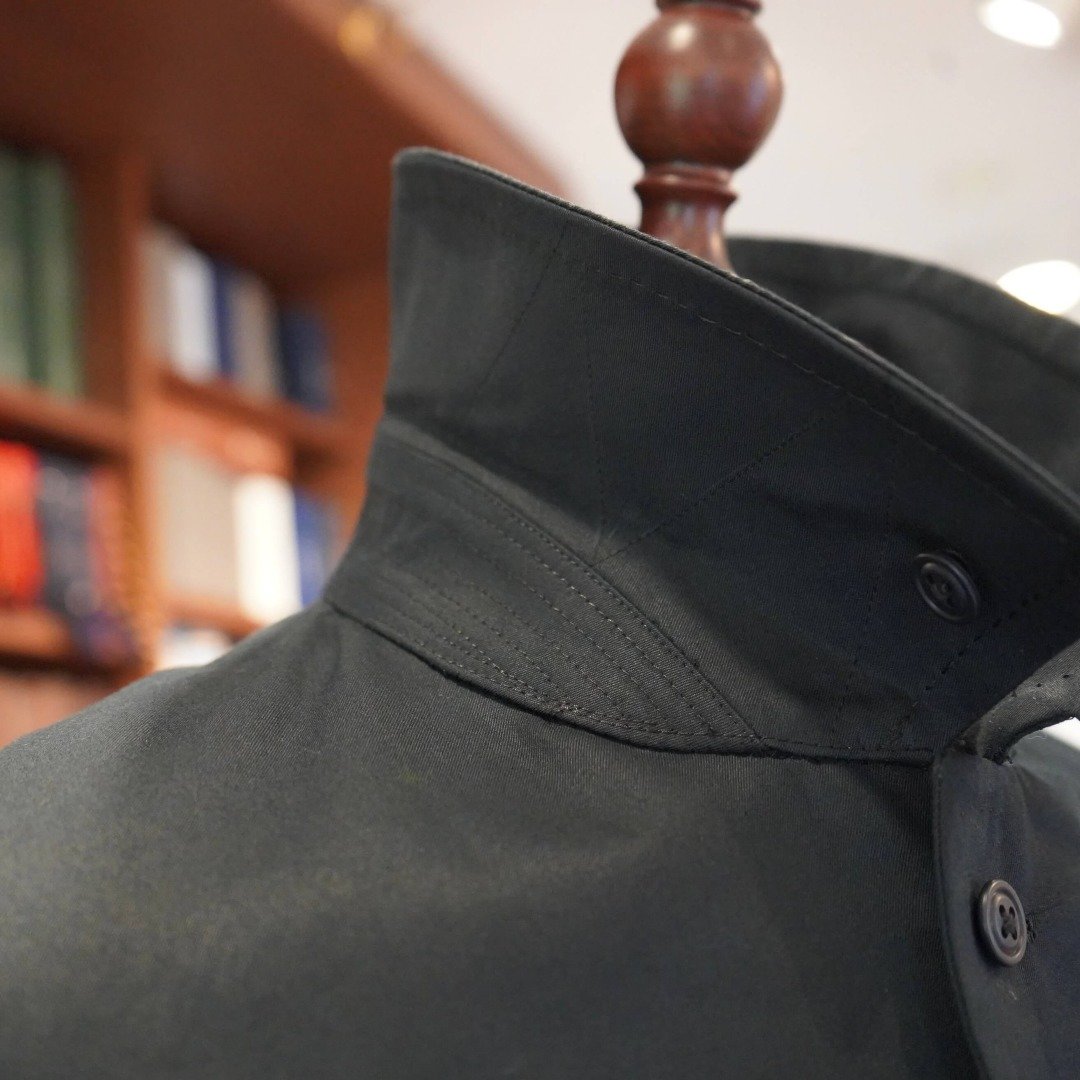
The collar is finished with machine stitching. I am very fond of hand-stitching, but for this particular coat, machine stitching felt more appropriate to the design, and I think it works beautifully here.
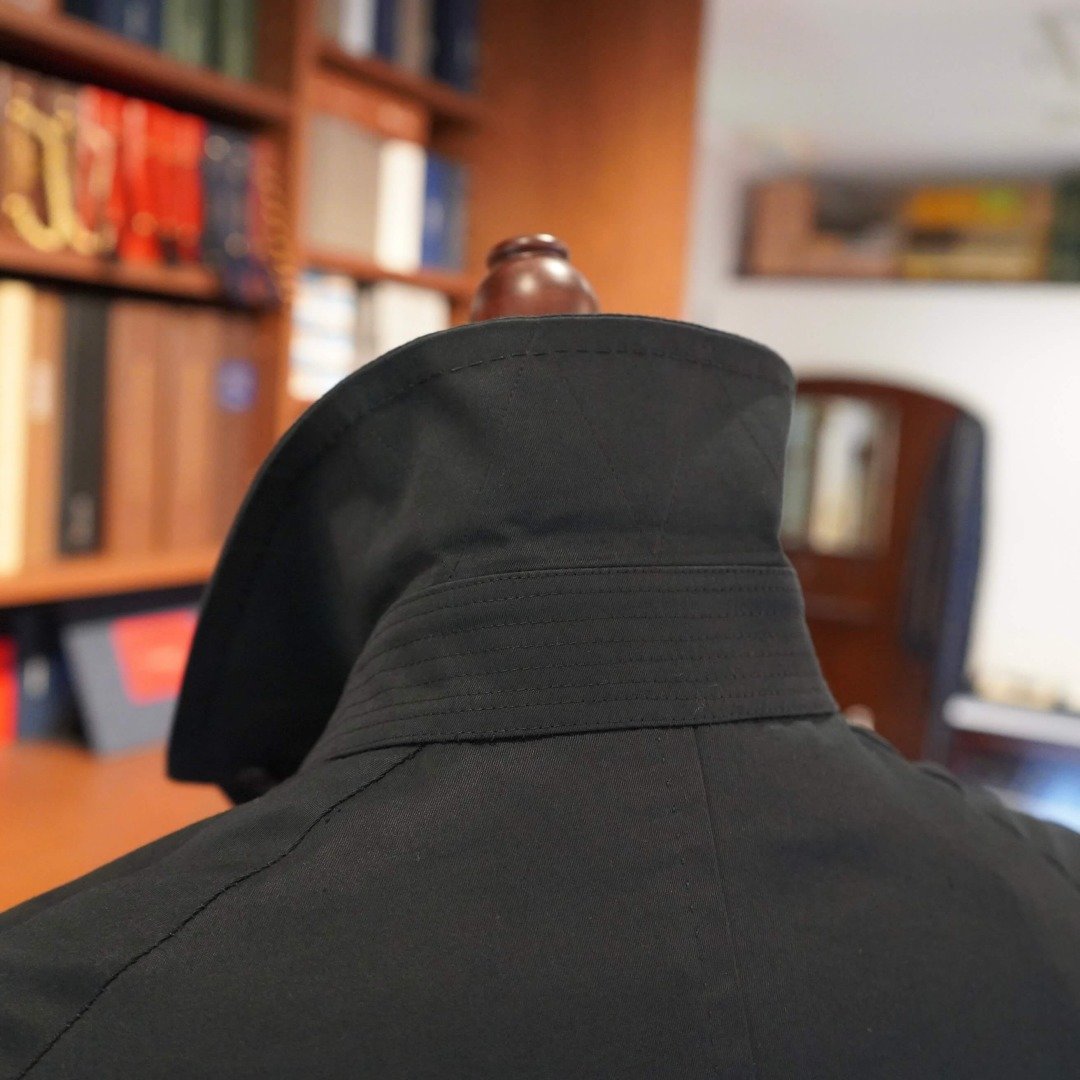
The parallel rows of stitching are another detail I particularly enjoy. I could spend a long time simply looking at them.
Split Raglan
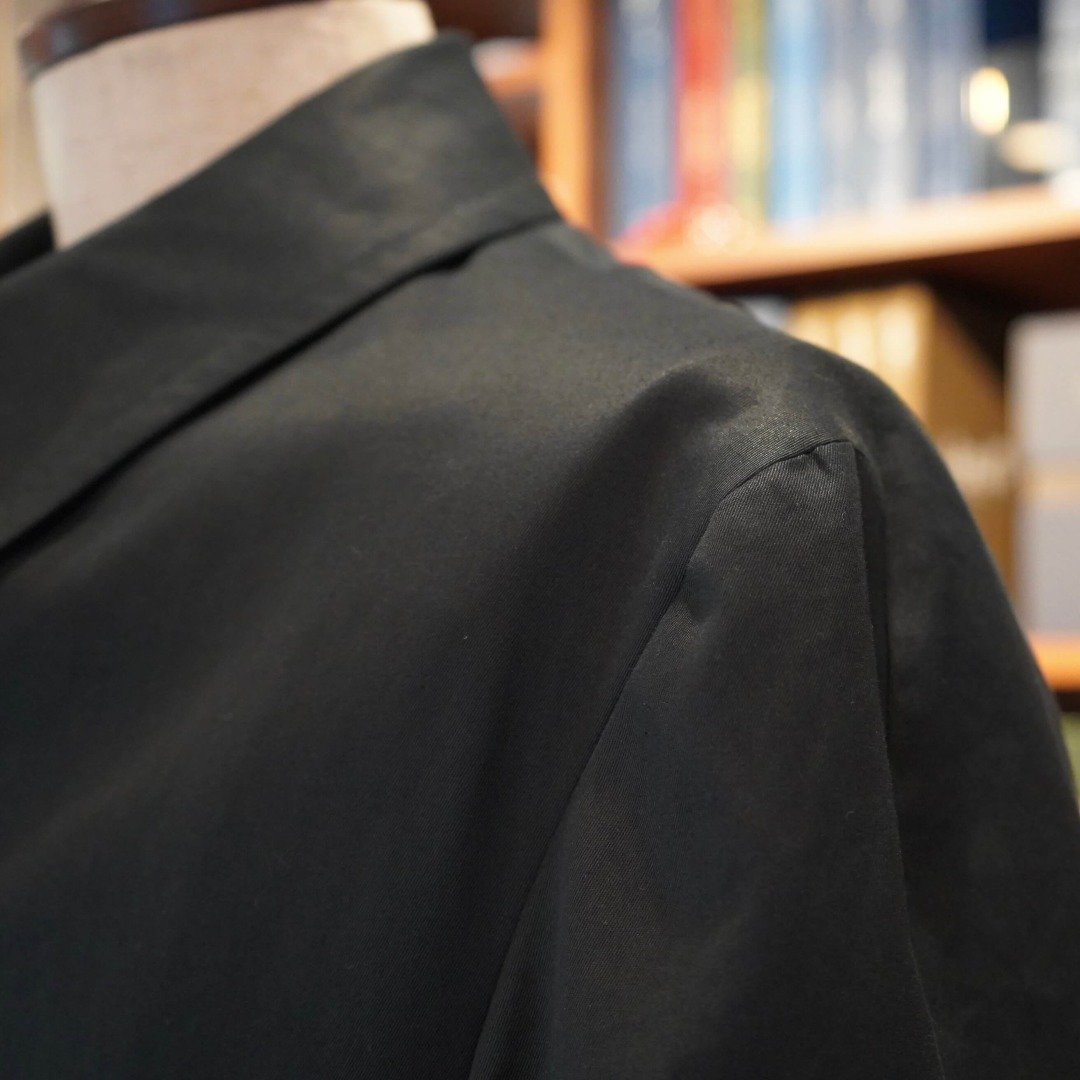
One of the key features of this coat is its sleeve construction. From the front, the sleeves appear to be set-in, much like those of a traditional jacket...
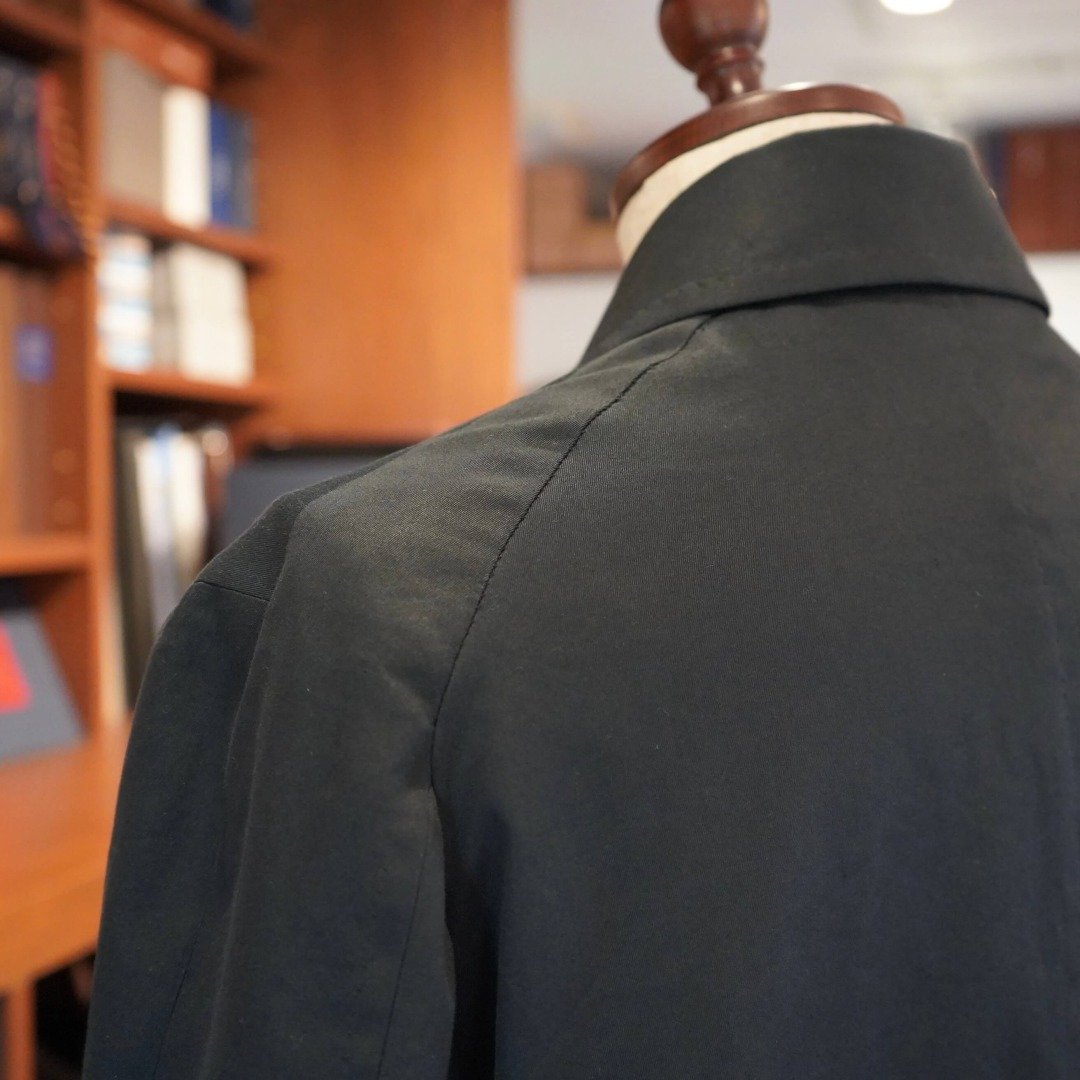
But from the back, they appear to be raglan sleeves.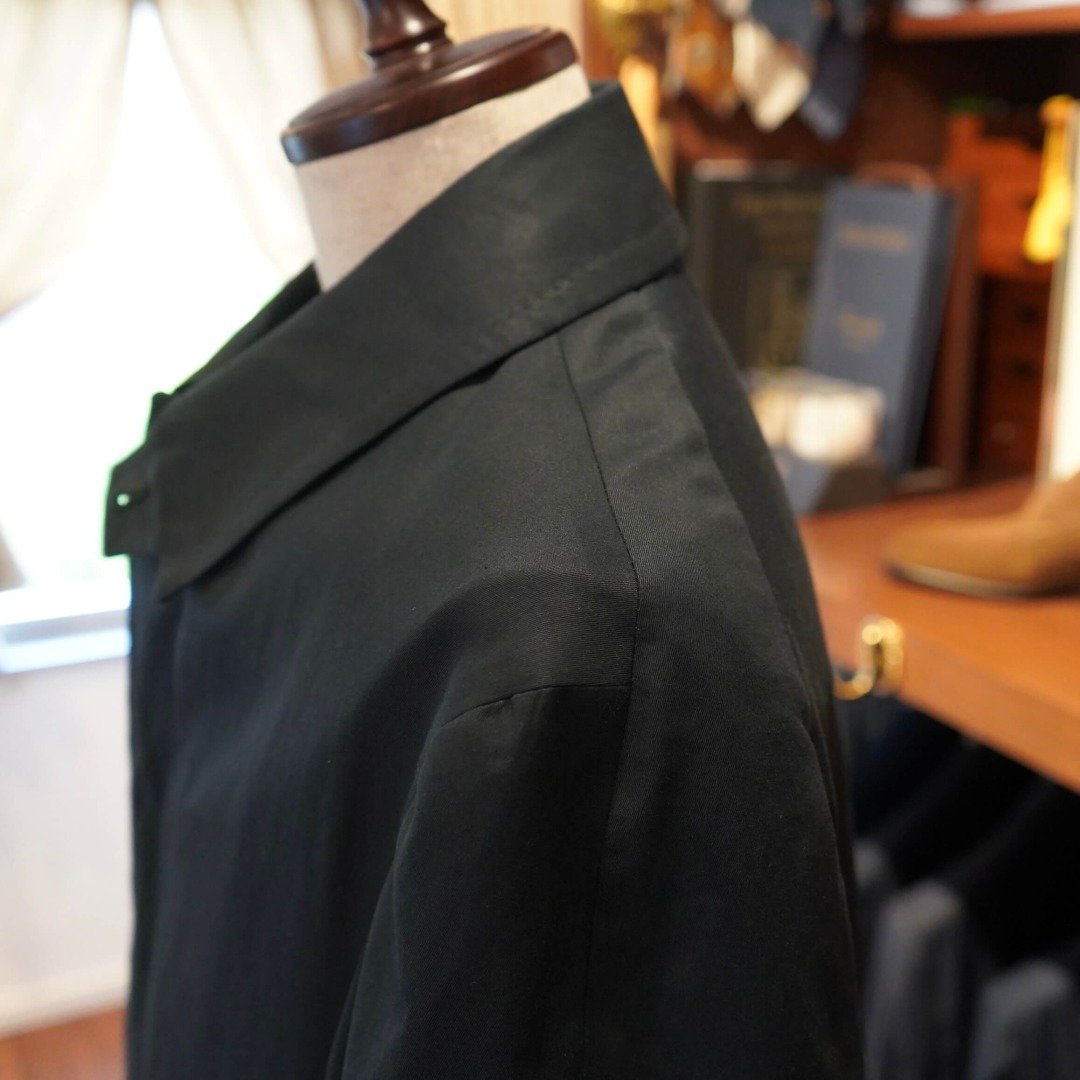
The coat actually uses a "split raglan" construction, combining a set-in sleeve at the front with a raglan sleeve at the back, meeting at the shoulder seam. This type of construction can be found in traditional outerwear and combines the cleaner appearance of a set-in sleeve from the front with some of the ease associated with a raglan sleeve.
It is not a detail we often see in made-to-order or bespoke coats, and even Mr. Kojima had not previously made one in this form. The finished result, however, turned out beautifully. From the front, it retains the elegance of a set-in sleeve, while from the back it has the softer character of a raglan. For someone like me who enjoys subtle individuality rather than obvious decoration, this combination feels particularly appealing.
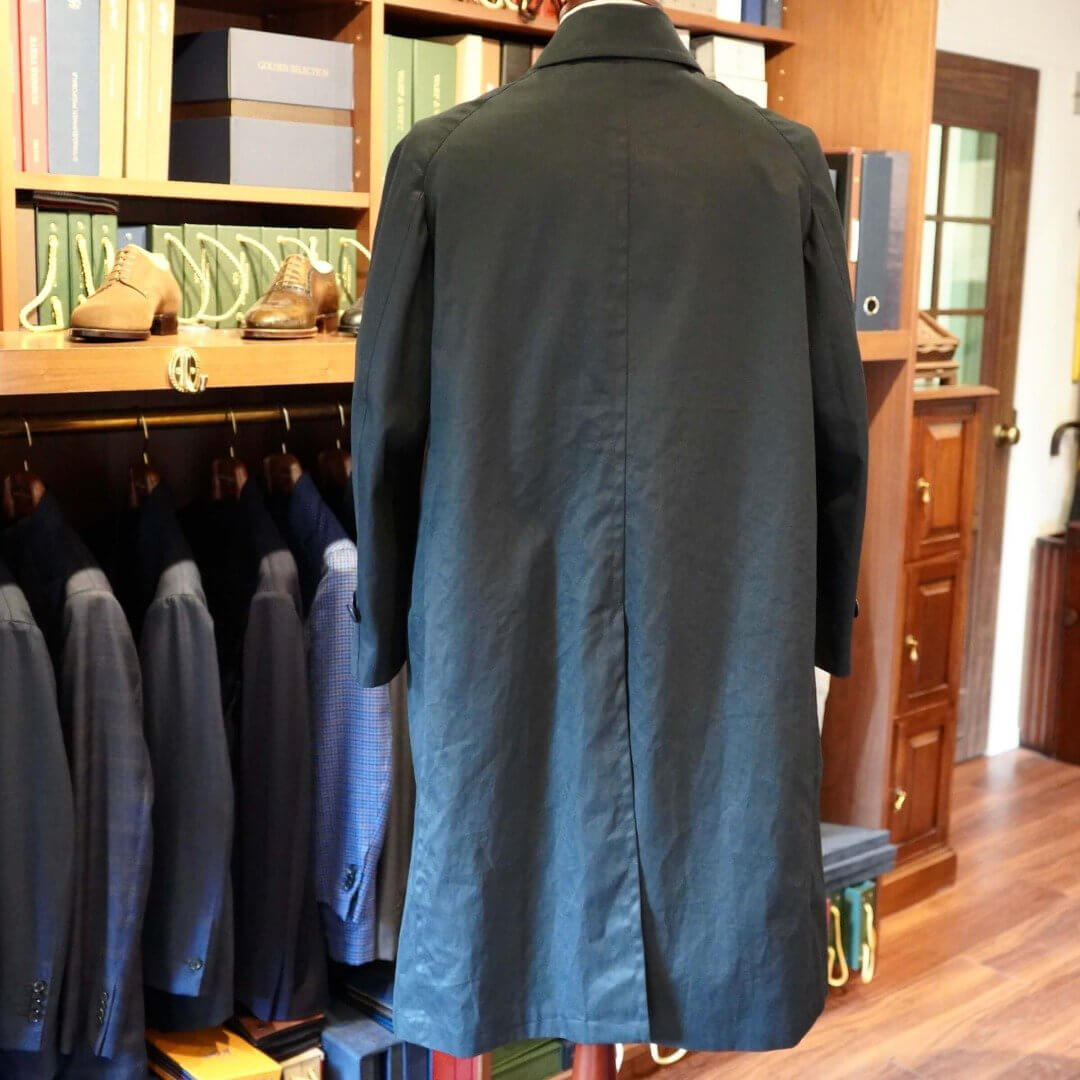
The back was also deliberately kept simple, without tabs or buttons. A single hand-stitched seam runs down the center, adding a subtle point of interest. I also really like the natural wrinkles that develop around this area.
Sleeve Tabs, Hip Pockets, Fly Front
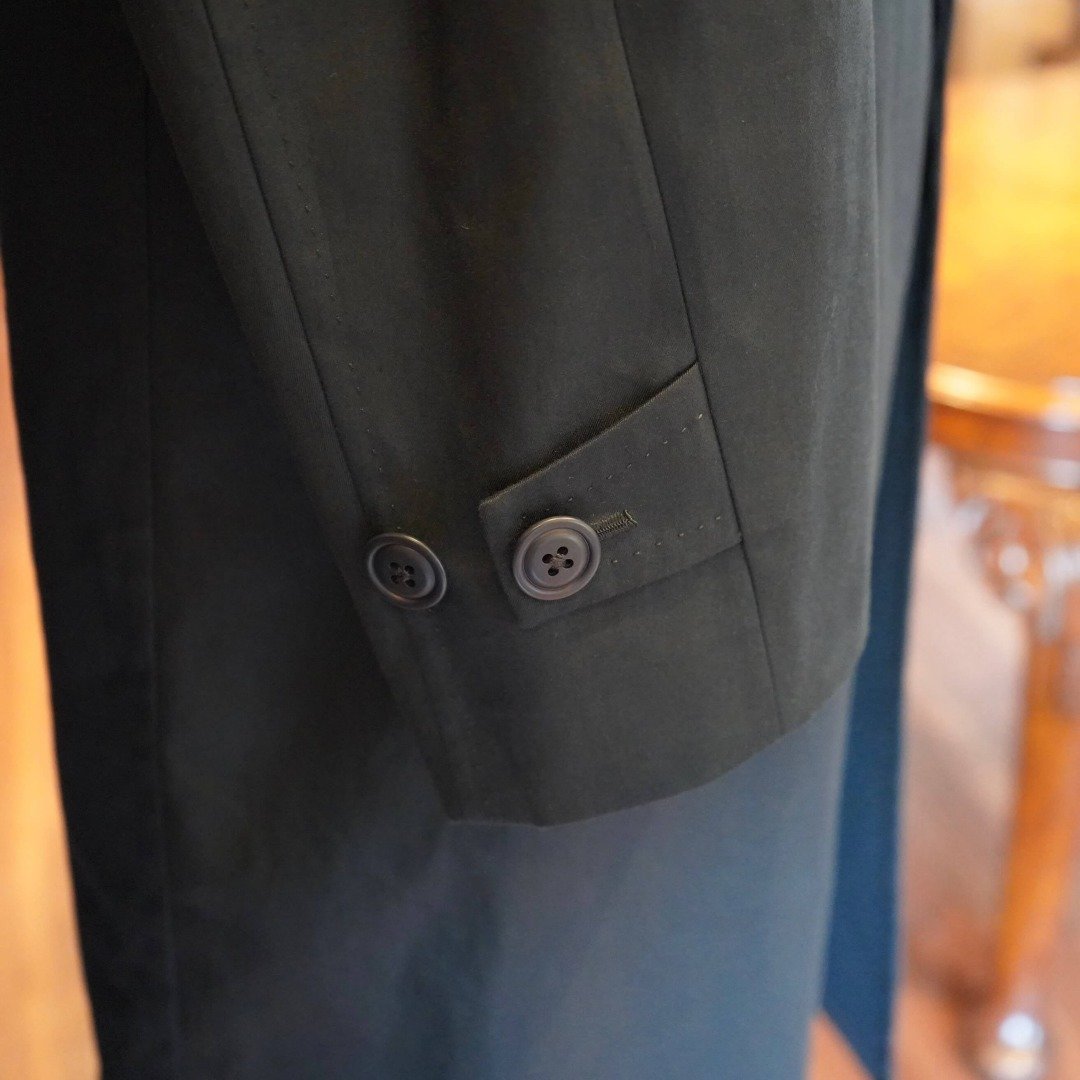
The sleeve tabs echo the trapezoidal shape of the collar tab, an unusual choice compared with the rectangular or pointed tabs more commonly seen.
They allow the cuffs to be tightened against wind and rain. Longer tabs or belts are more common, but I particularly like these shorter versions. The lower edge of each tab also runs parallel to the angle of the cuff, giving the detail a clean and considered appearance.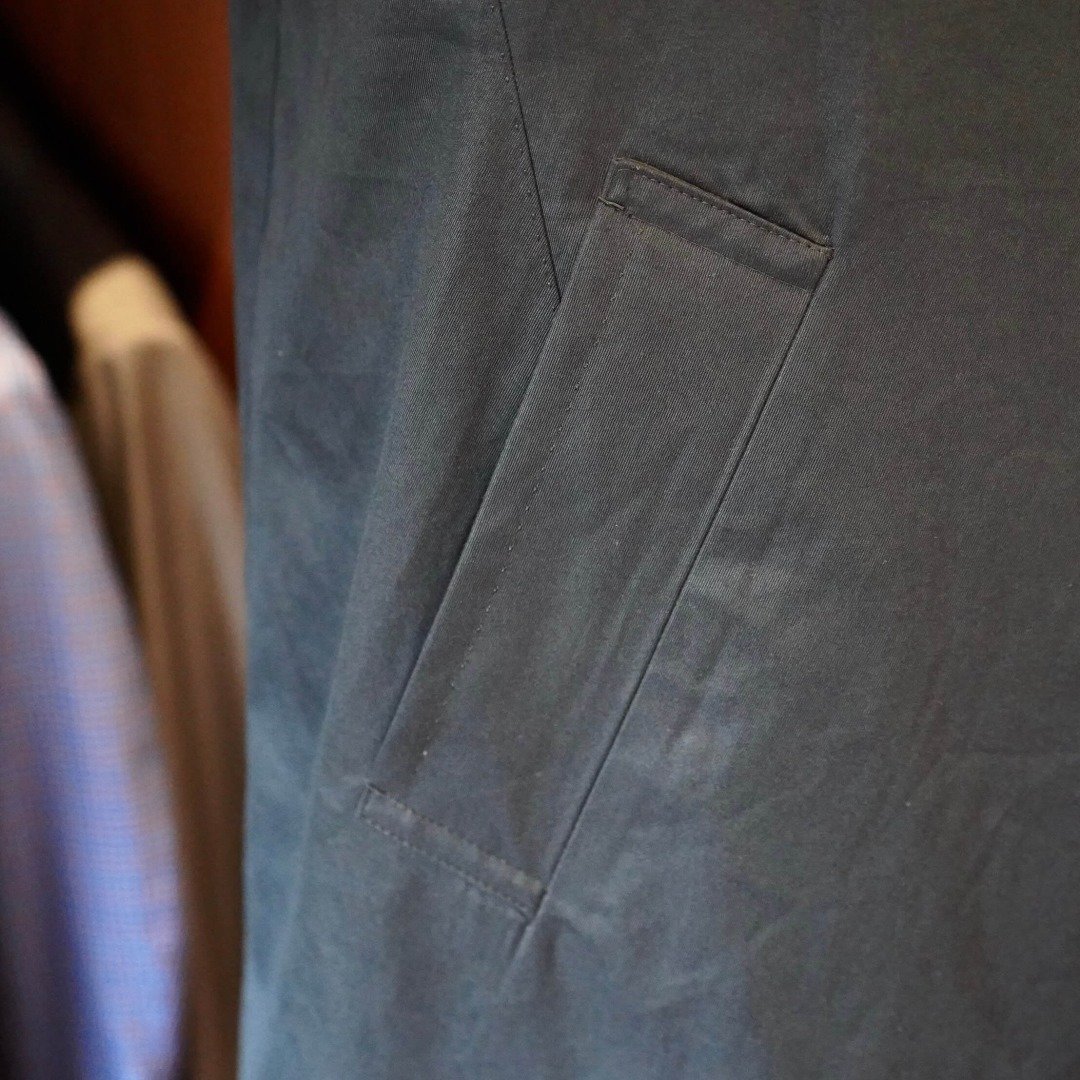
The hip pockets, which are often finished with buttons on coats of this type, were deliberately kept simple and clean.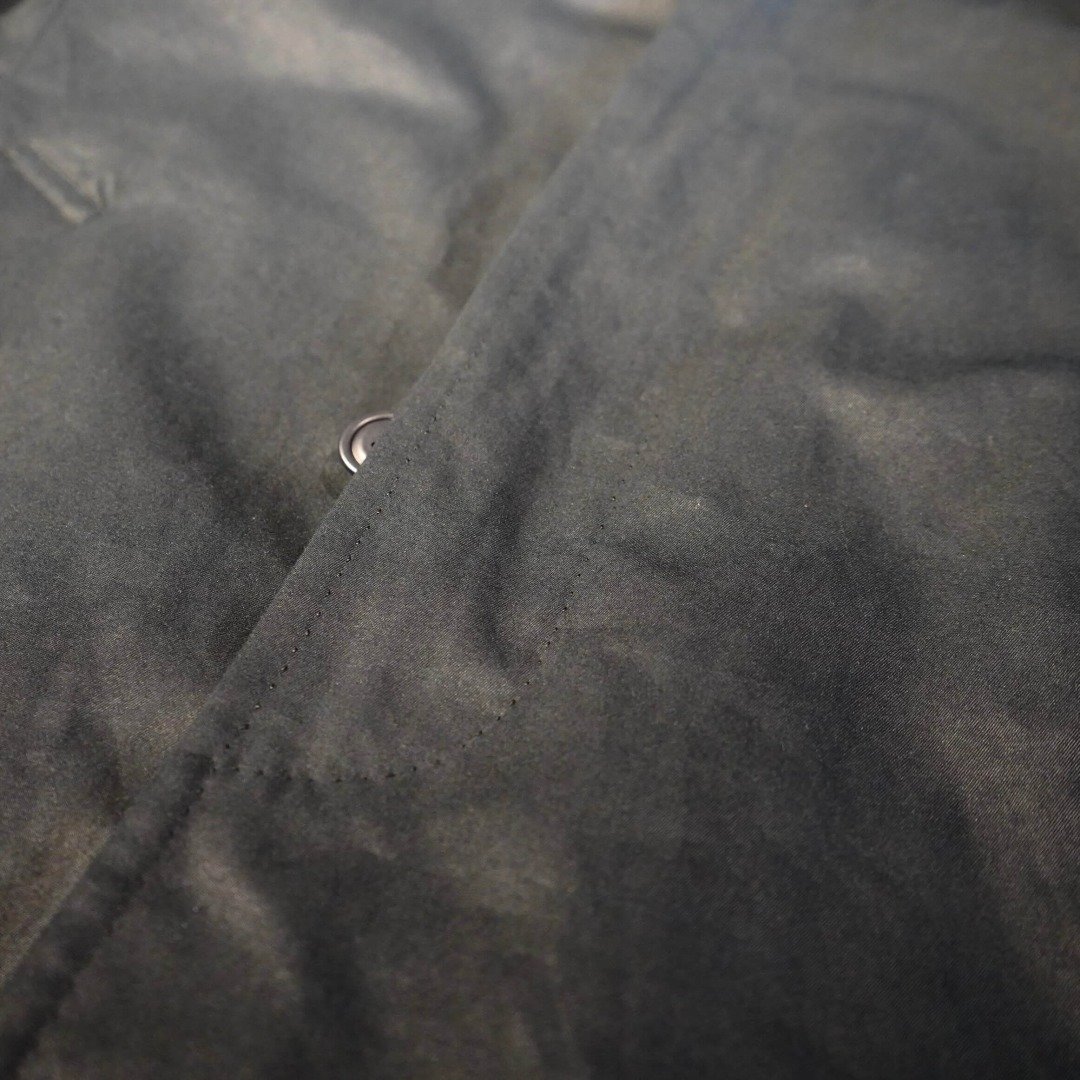 The stitching along the fly front is done by hand.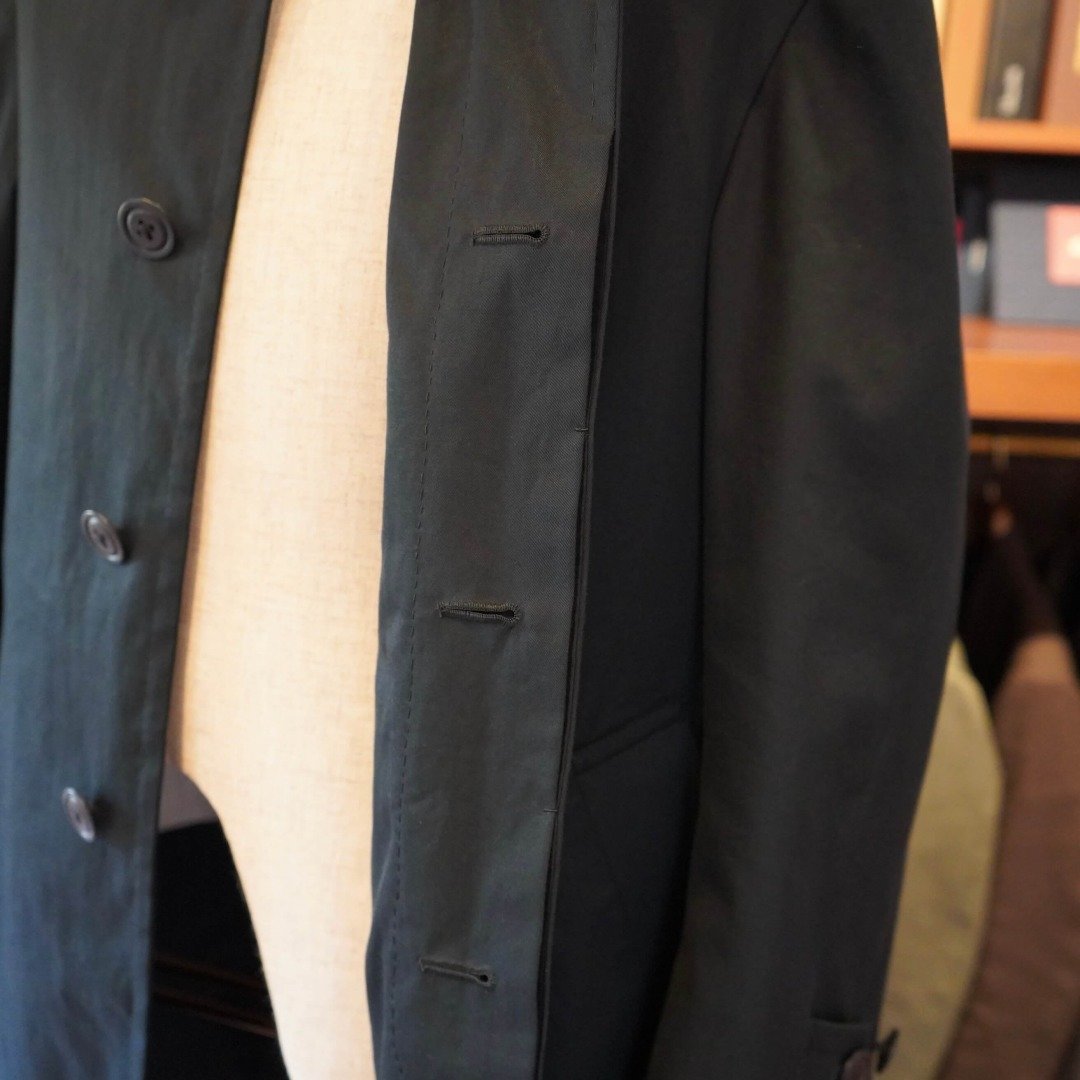
Inside the fly front, the buttonholes are also sewn by hand.
Two-Piece Body and Side Darts
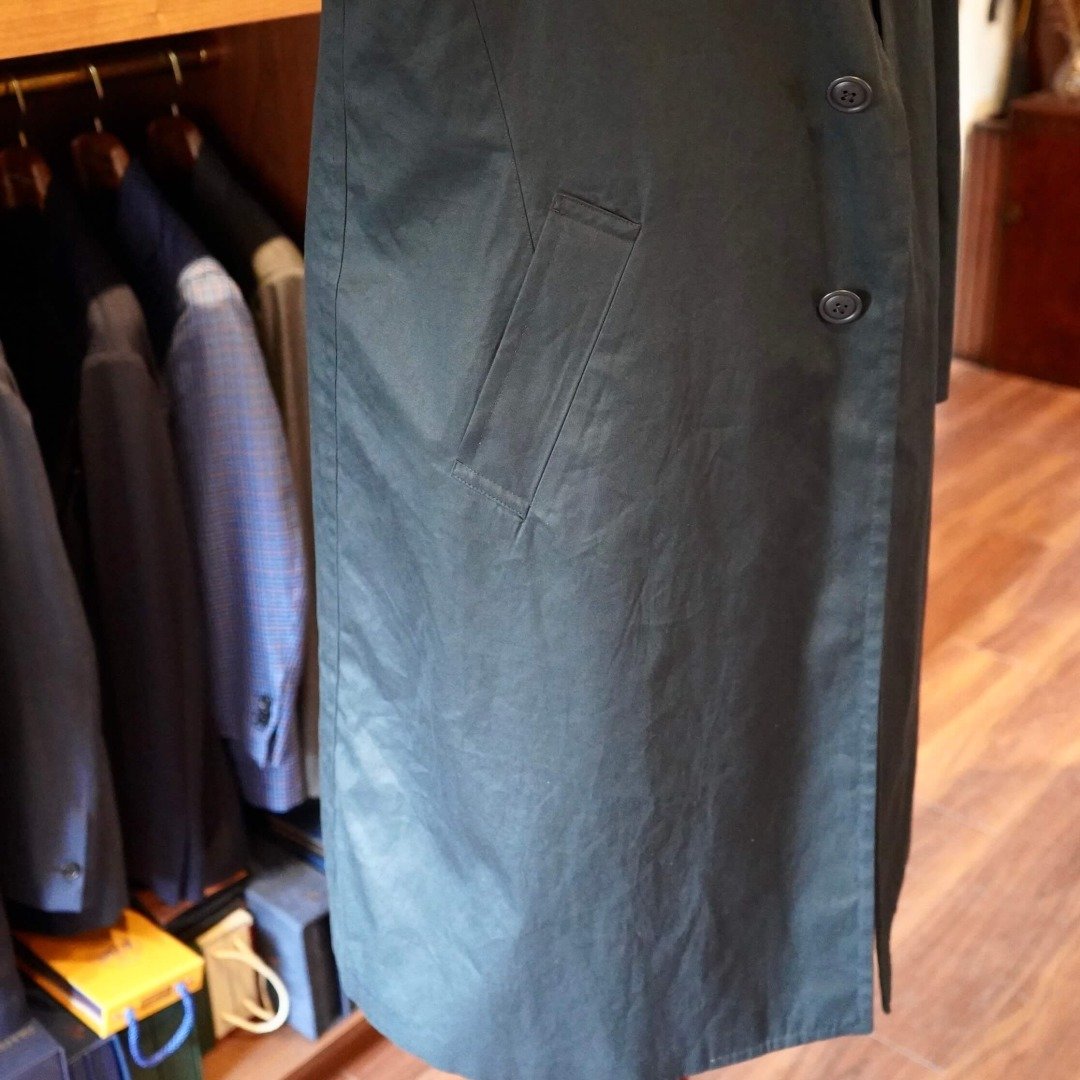
This side view may appear simple at first glance, but it reveals one of the more distinctive elements of the coat's construction.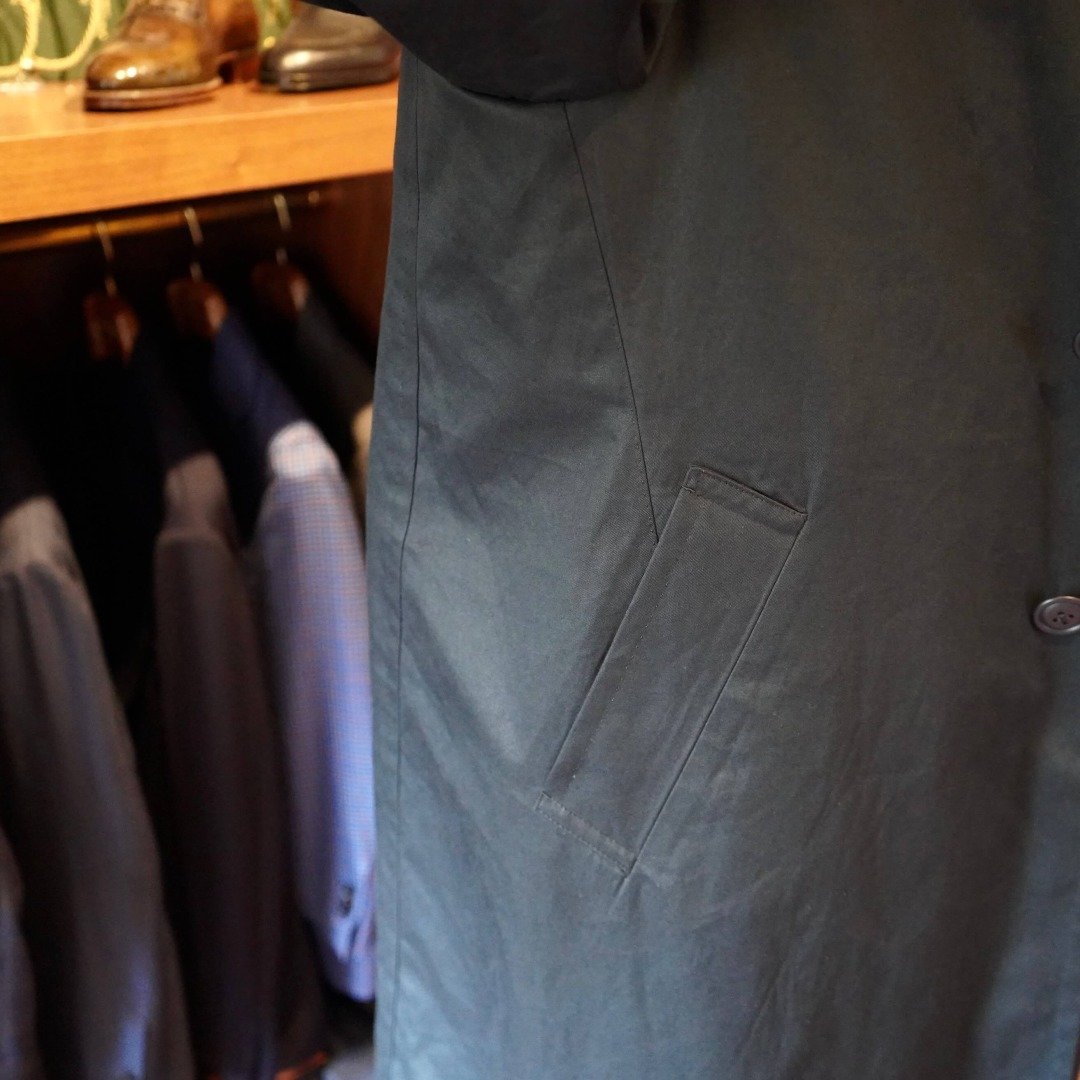
The coat uses the two-piece body construction characteristic of our Bespoke Line, eliminating the separate side body panel, known as saibara in Japanese tailoring, and creating the body from front and back panels. This simple construction contributes to the clean appearance of the coat. When the arm is raised, you can see the diagonal dart running from beneath the arm toward the hip pocket, which provides the necessary shaping without adding a separate side panel.
Lining
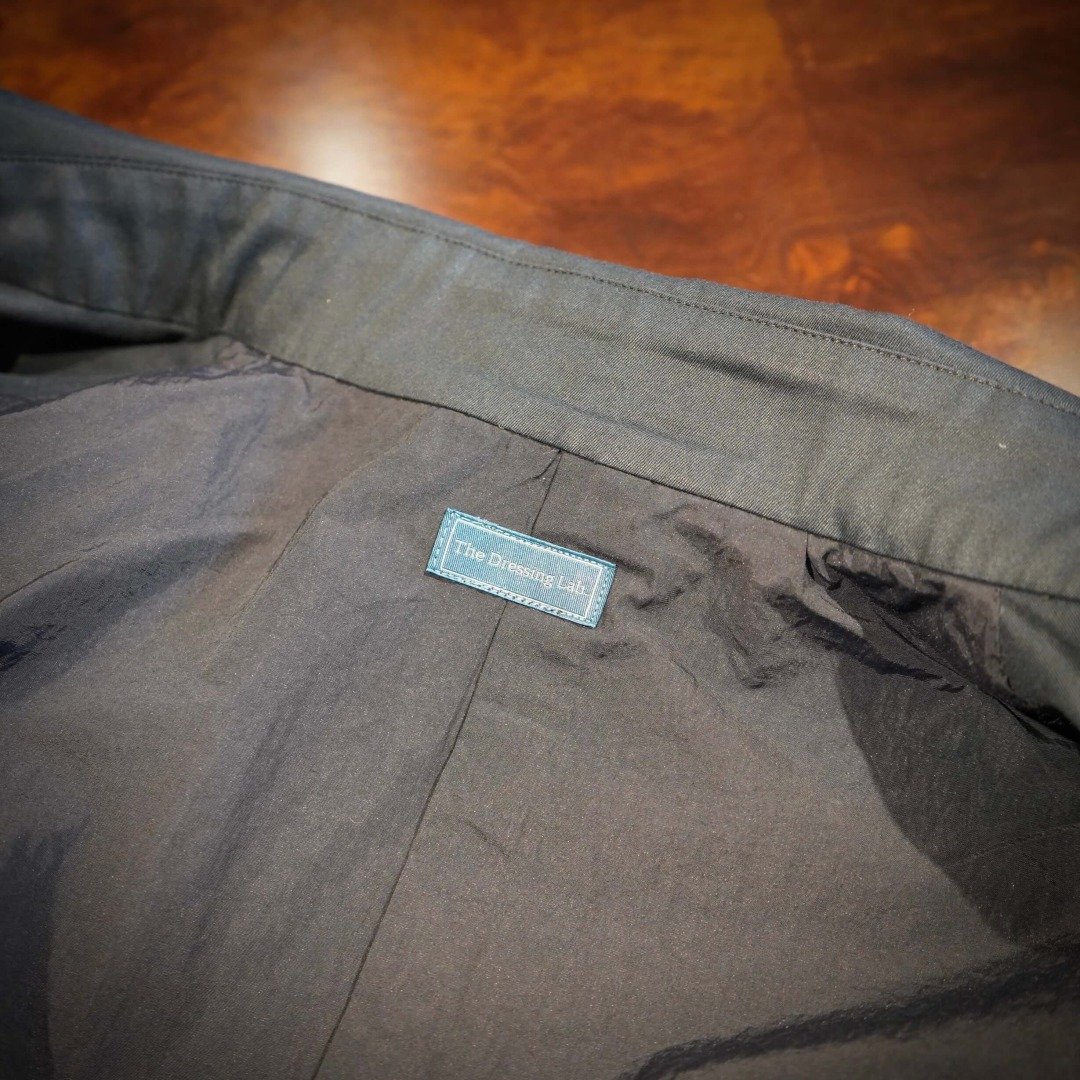
Rather than placing the brand label near the inside pocket, I chose to have it stitched onto the center back lining as a small reference to the military-inspired concept.
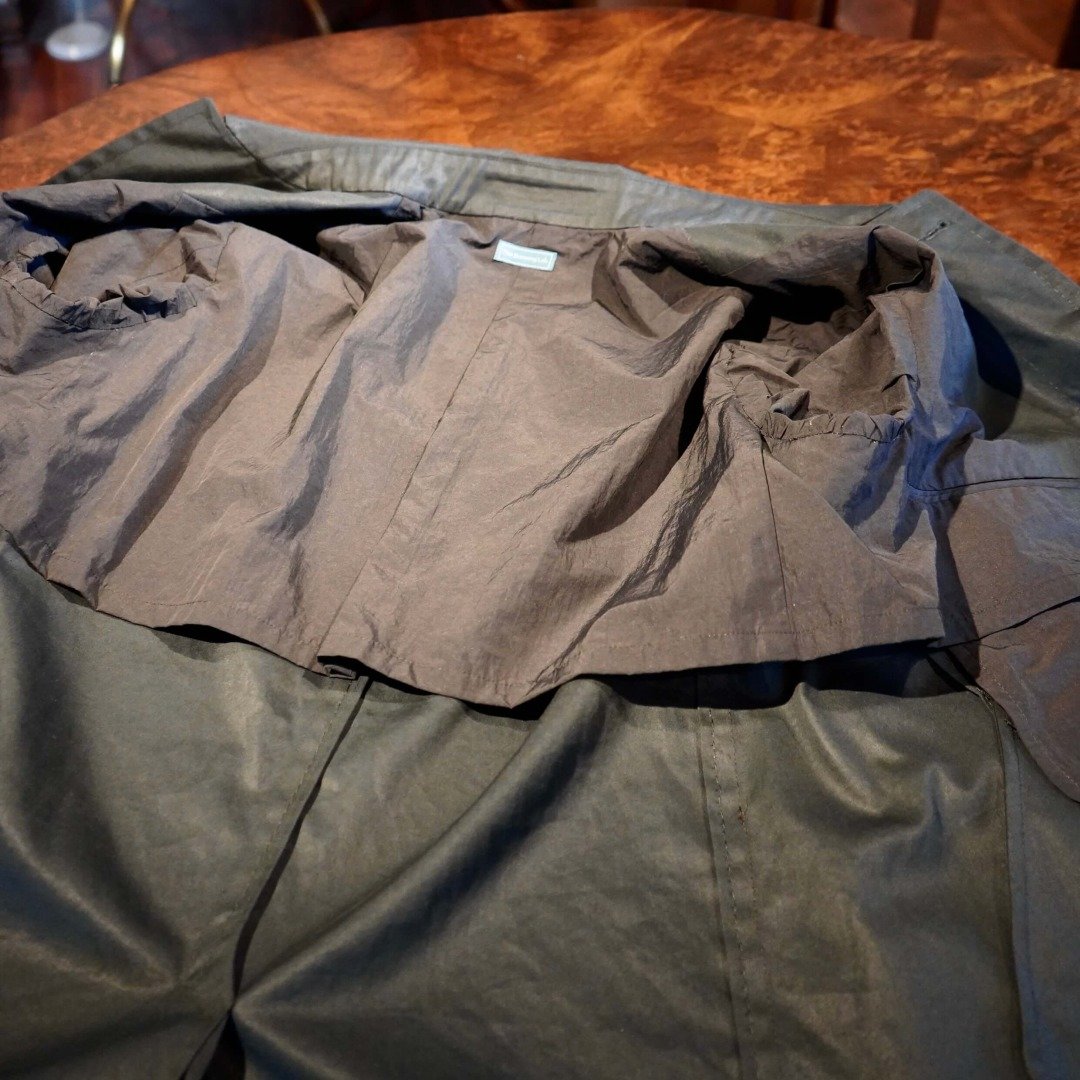
While traditional all-weather coats may use self-fabric linings, we chose an Olmetex cotton-nylon blend instead. This keeps the coat lighter and allows it to move more smoothly when worn. I particularly like the subtle contrast in both color and texture between the outer fabric and lining.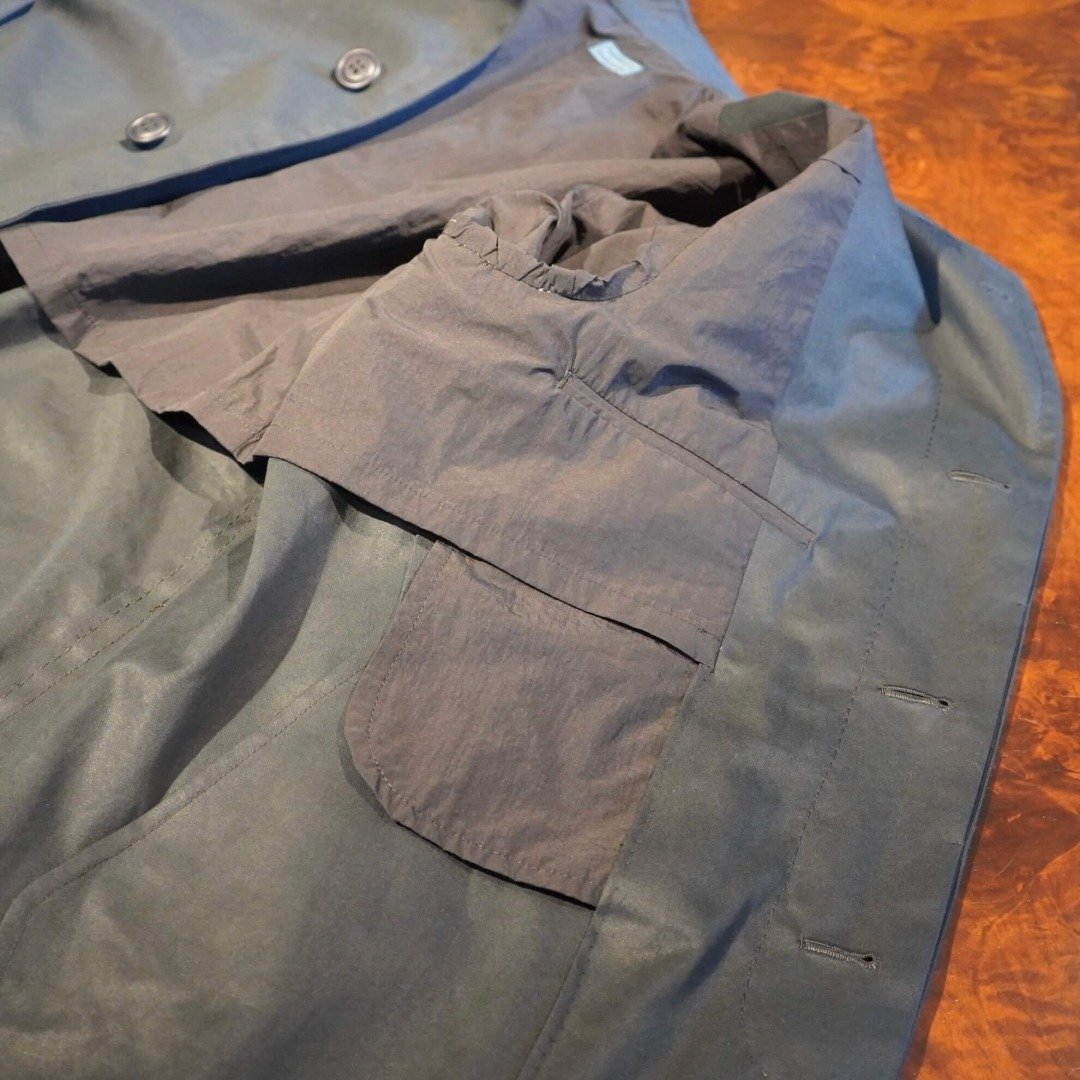
The area around the inner pocket has an almost playful character. Even details that remain hidden when the coat is worn have been carefully considered, and I feel this reflects Mr. Kojima's enjoyment of the craft.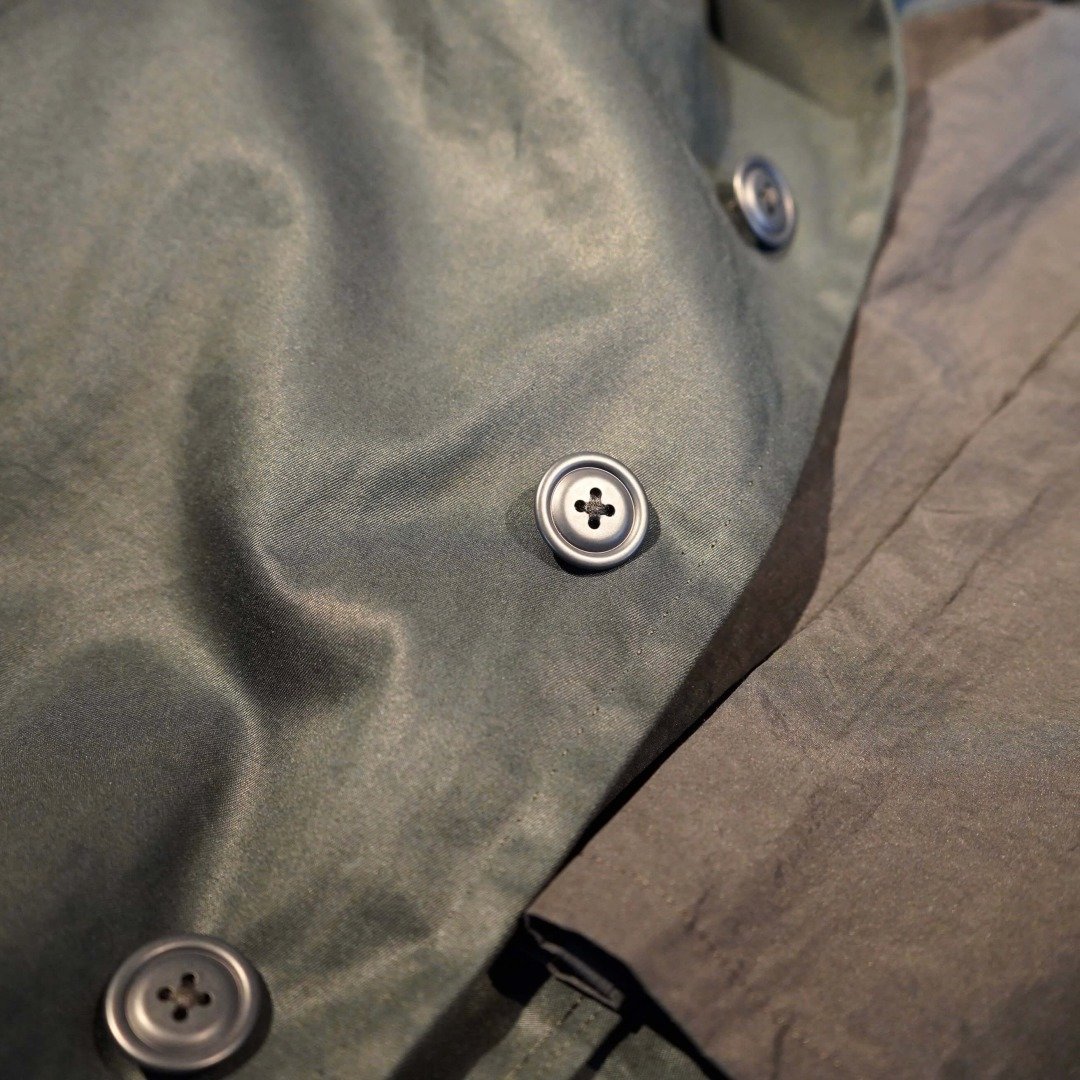
The buttons are replica plastic military-style buttons. They are lightweight, easy to fasten, and suit the character of the fabric very well.
With so many distinctive details hidden within an otherwise simple silhouette, this Bespoke Staincollar Coat was a particularly enjoyable project to create. In the next article, I will show you how it looks when worn. I hope you will enjoy Part 2 as well.
Photo Gallery
Posted by Tomohiro Hayashi
The Dressing Lab specializes in bespoke tailoring. While we can tailor most items given some time, we do not have ready-to-wear garments available for immediate purchase.
We deal exclusively in high-quality custom-made items, requiring at least one month for completion of any piece. For those desiring bespoke services or in cases where fittings are necessary due to body shape, it may be required to visit our salon 2 to 3 times.
We kindly ask for your understanding of the above conditions before placing an order. We eagerly await your consultations and reservations.
*Please make sure to reserve an appointment before visiting our store.
We gladly welcome appointments for consultations or viewings, so please don't hesitate to reach out to us.