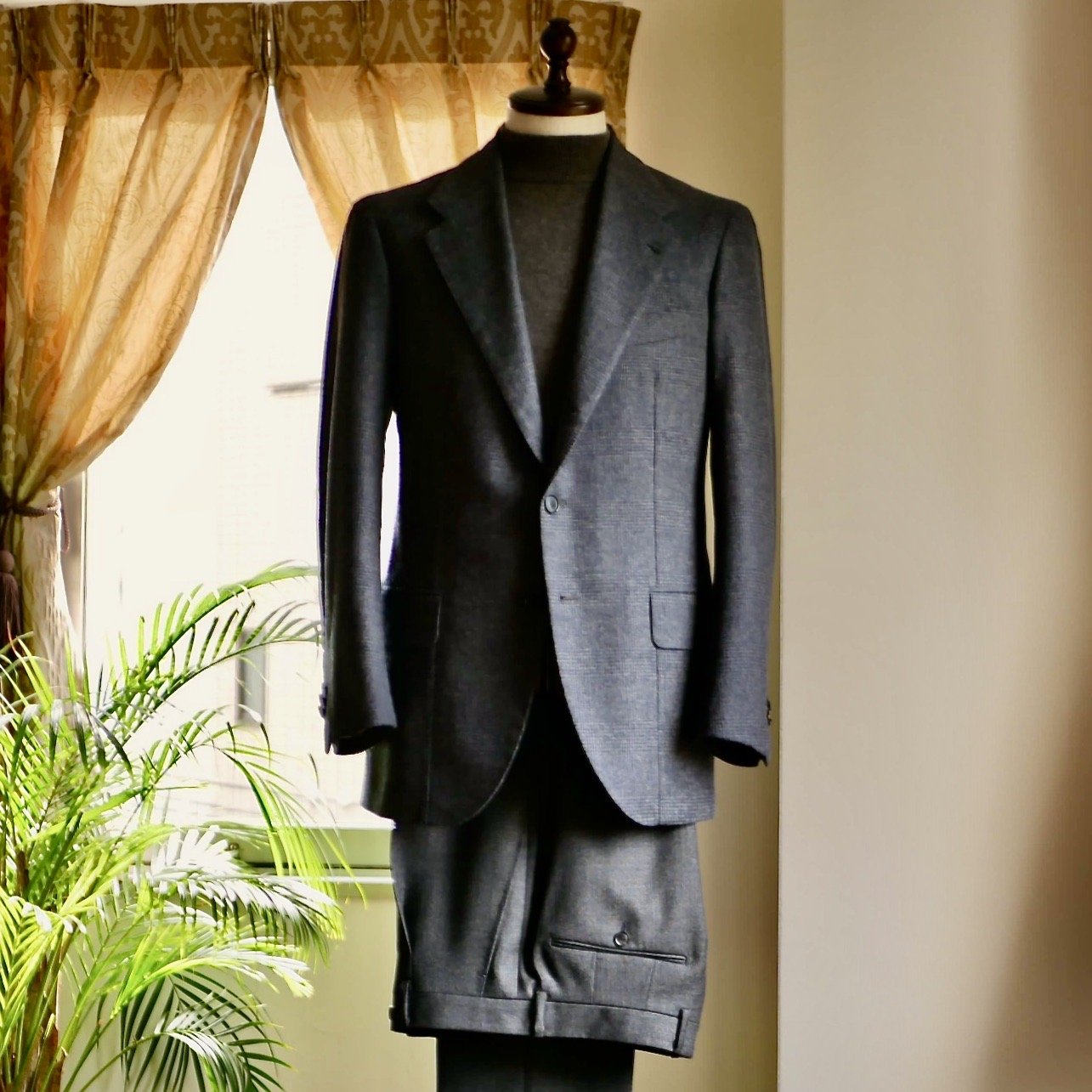
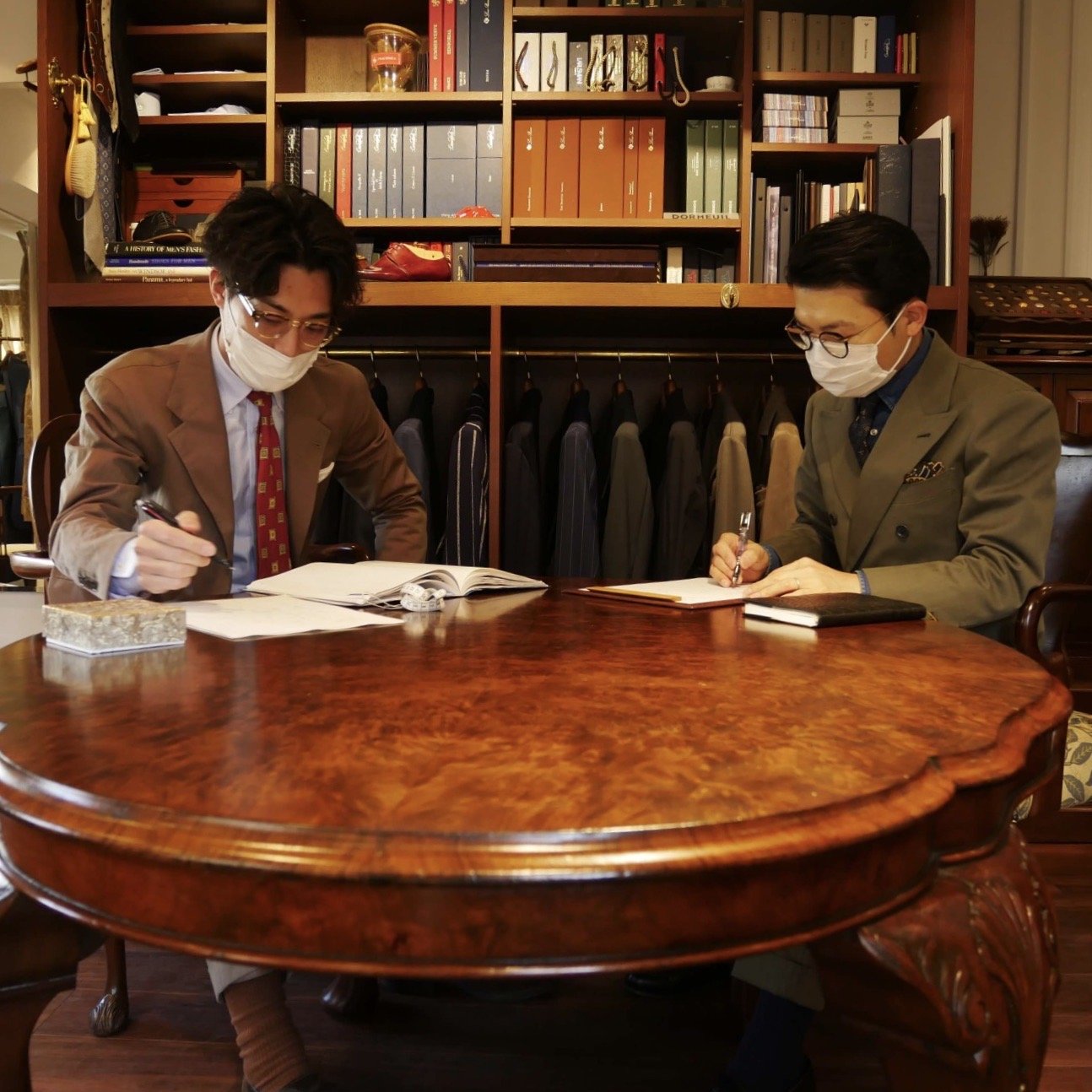
My First Bespoke Coat Made with Camel Hair: The Double-Breasted Chesterfield Coat

Tomohiro Hayashi
I had my beloved double-breasted Chesterfield coat made to order through bespoke tailoring. With personalized details and the perfect fabric I had envisioned, the result is a coat I hope to wear for a lifetime. I invite you to take a look.
Motivation Behind the Order
I have long worn coats from our Staincollar Coat collection, Raglan Coat collection, and Spritumn Coat collection. However, when it came to Chesterfield coats, I owned only one: a navy double-breasted Chesterfield coat made more than ten years ago.
That coat was made from a wool-cashmere fabric by Dormeuil, and it accompanied me on business trips to Italy, so it holds many memories. However, after many years of heavy wear, and because it had been made quite slim when I was younger, it no longer suited my needs after I became independent. It now rests quietly in the closet, watching over my other clothes.
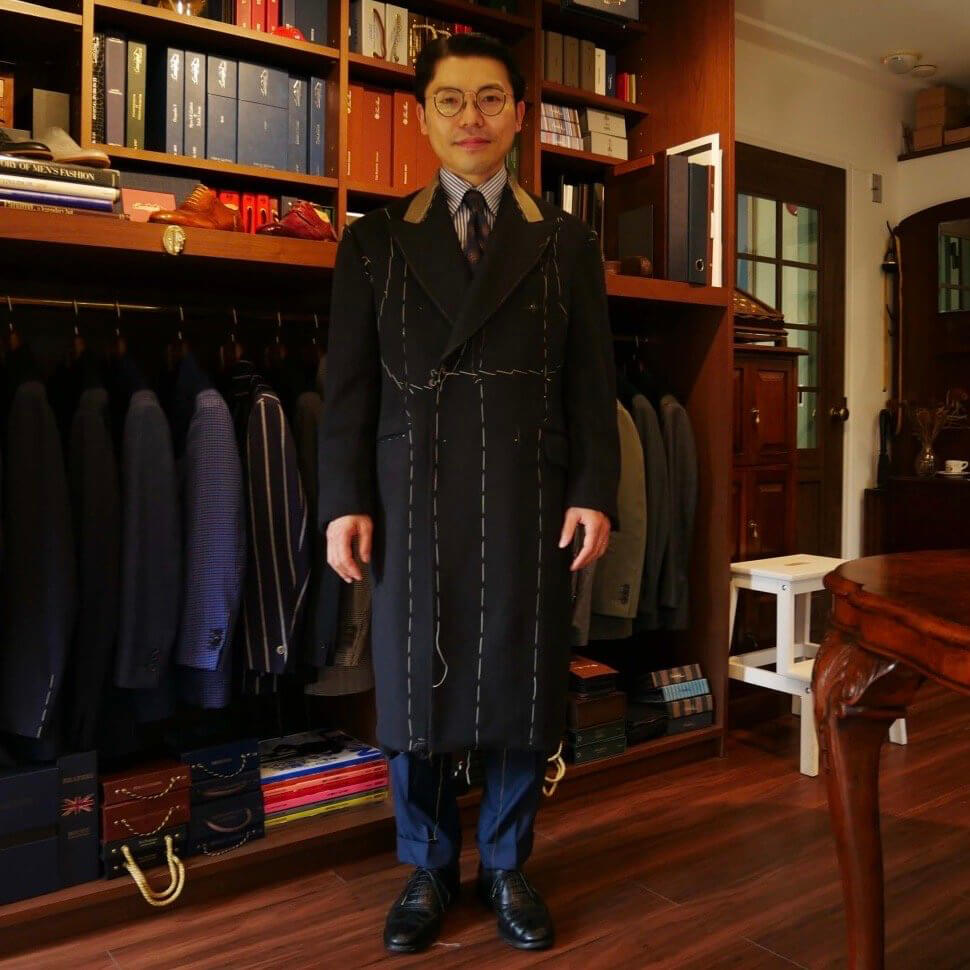 A year has passed since we launched our Bespoke Line. I have become increasingly drawn to the charm of bespoke tailoring, having already ordered three suits. The next natural choice was a coat. I was also drawn to more casual, military-inspired pieces such as duffle coats, which are one of our tailor Mr. Kojima's specialties. However, for my first bespoke coat, I decided to challenge myself with a classic Chesterfield coat.
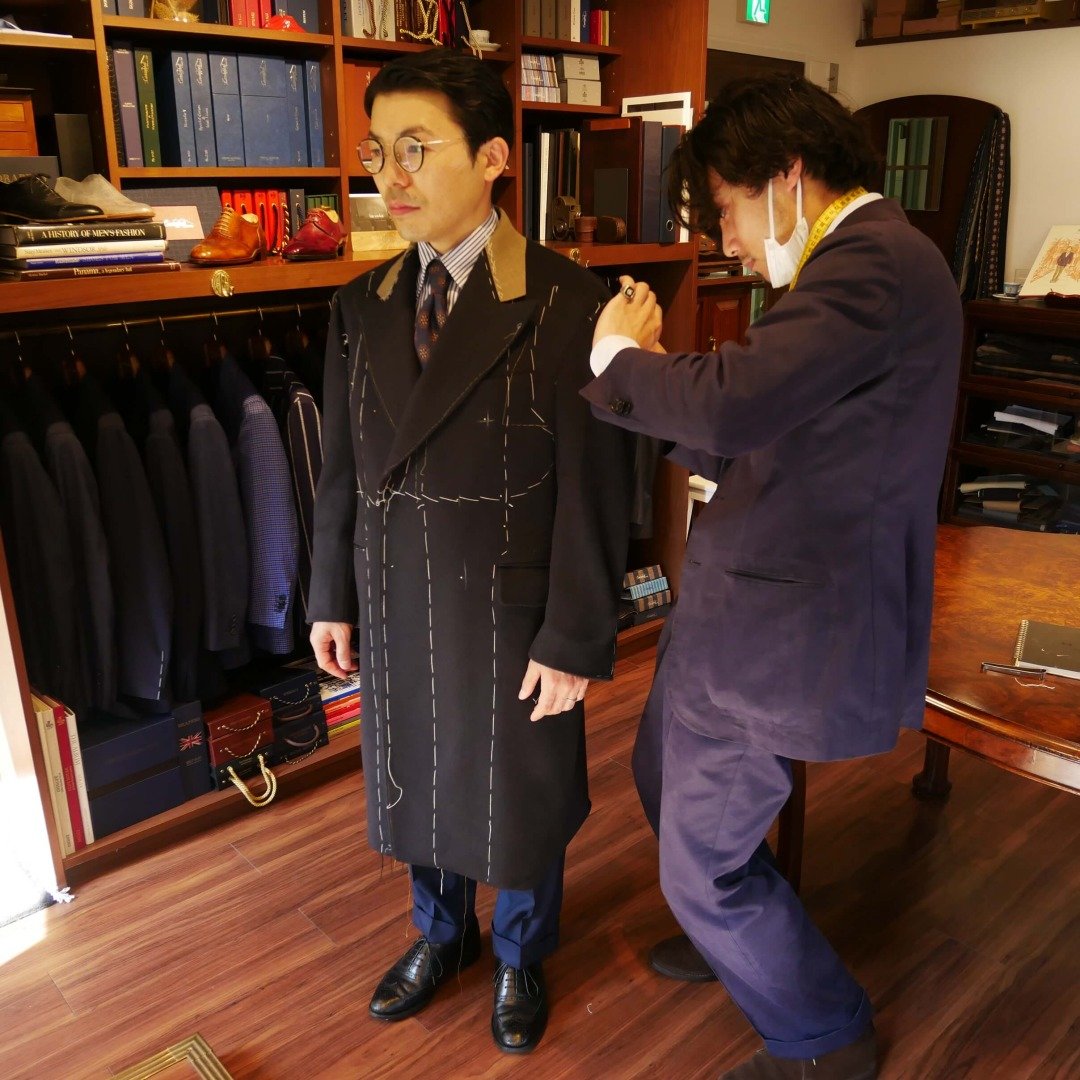
Chesterfield coats come in single-breasted and double-breasted styles. Both are beautiful, but personally I have a strong preference for the double-breasted version.
Why do I prefer it? The double-breasted version, with its broader lapels and layered structure, helps give more presence to my relatively slight frame. It also offers better insulation thanks to the overlapping front panels. Above all, I enjoy the feeling of being securely wrapped by the coat.
That said, Chesterfield coats, whether single-breasted or double-breasted, have always felt somewhat intimidating to me. Unlike Staincollar Coats, Raglan Coats, or trench coats, which are rooted in military or practical outerwear and therefore feel relatively casual, the Chesterfield coat is an elegant and formal coat with aristocratic associations. That refinement is appealing, but it also makes the coat feel a little harder to approach casually.
Since I was going bespoke, I wanted to soften that sense of formality and create a double-breasted Chesterfield coat that felt more like "me."

Concept
If I were to sum it up, the concept was "a double-breasted Chesterfield coat that reflects who I am." I wanted something with a soft and relaxed feeling, almost like a coat handed down from my grandfather. Nothing too polished or stiff, but something easygoing enough to pair with casual outfits. When I list these elements, I even find myself wondering whether it is reasonable to ask this much of a double-breasted Chesterfield coat. But that is exactly where bespoke tailoring becomes so interesting. I brought my full vision to Mr. Kojima and entrusted it to him.
 I shared my concept along with vintage photographs of double-breasted coats that captured the atmosphere I wanted. Drawing on his extensive experience and creativity, Mr. Kojima proposed subtle yet unconventional details to move the coat away from a standard formal image. Through our discussion, we shaped a new vision of what a double-breasted Chesterfield coat could be.
Fabric
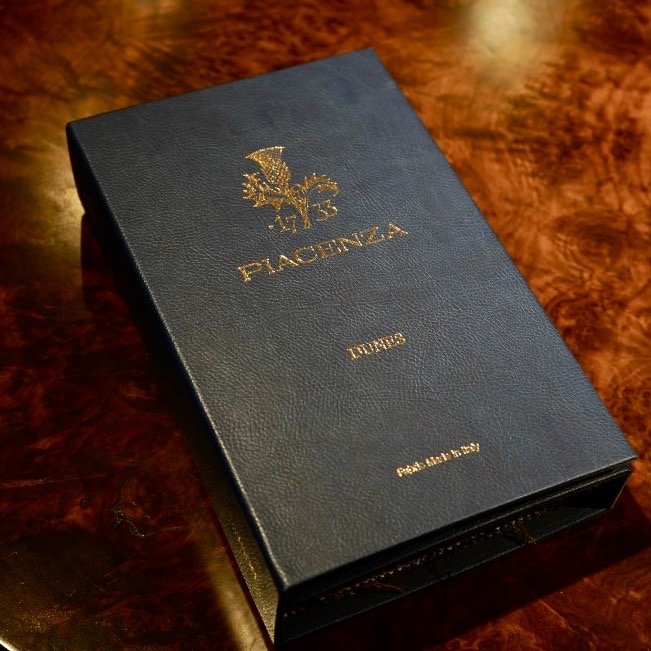
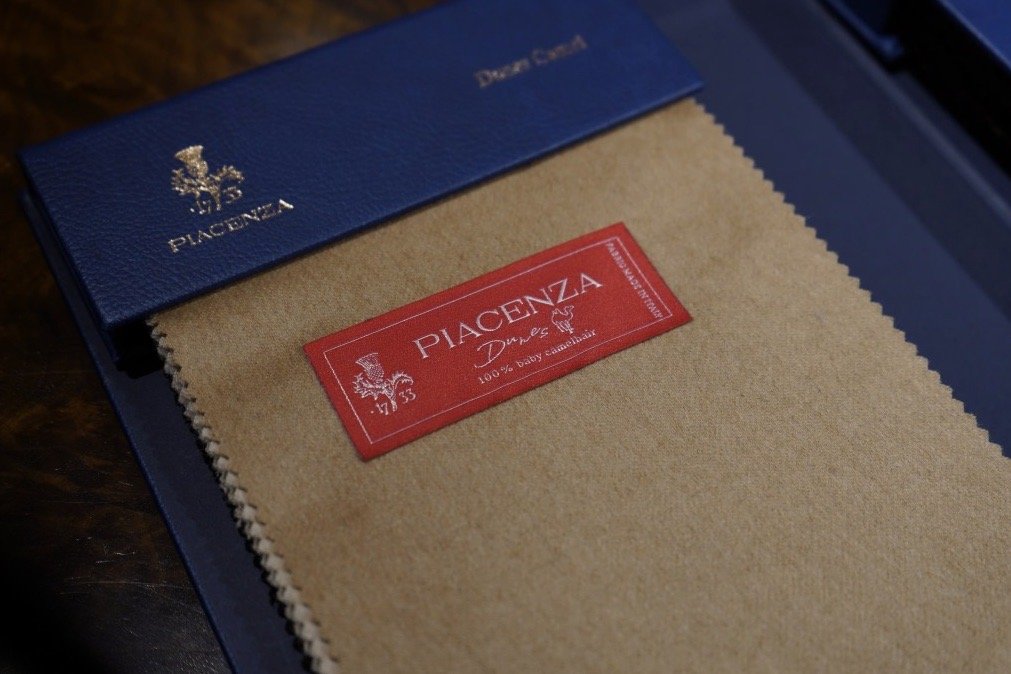
Choosing the right fabric was essential for bringing this concept to life. I ultimately selected a baby camel hair cloth from Piacenza, Italy, from their "DUNES" collection. This luxurious fabric is woven from camel hair rather than wool.
At first, I had intended to choose cashmere in midnight blue, aiming for a timeless coat that I could wear for many years. However, as beautiful as cashmere is, combining it with midnight blue made the coat feel too elegant and luxurious, which risked moving away from the relaxed atmosphere I had in mind.
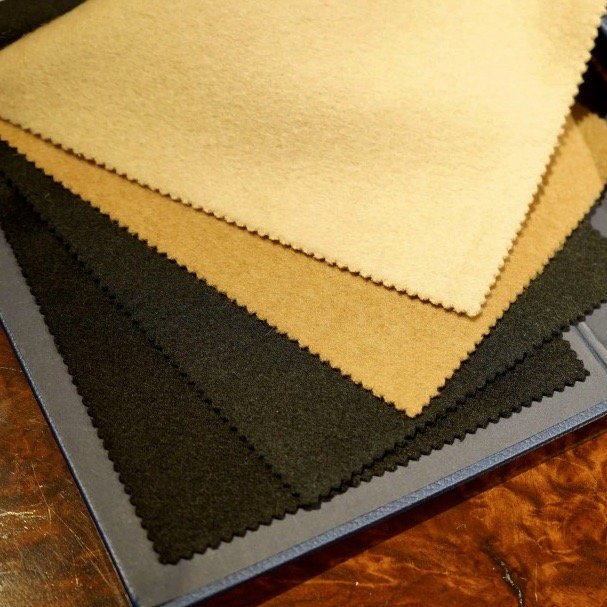
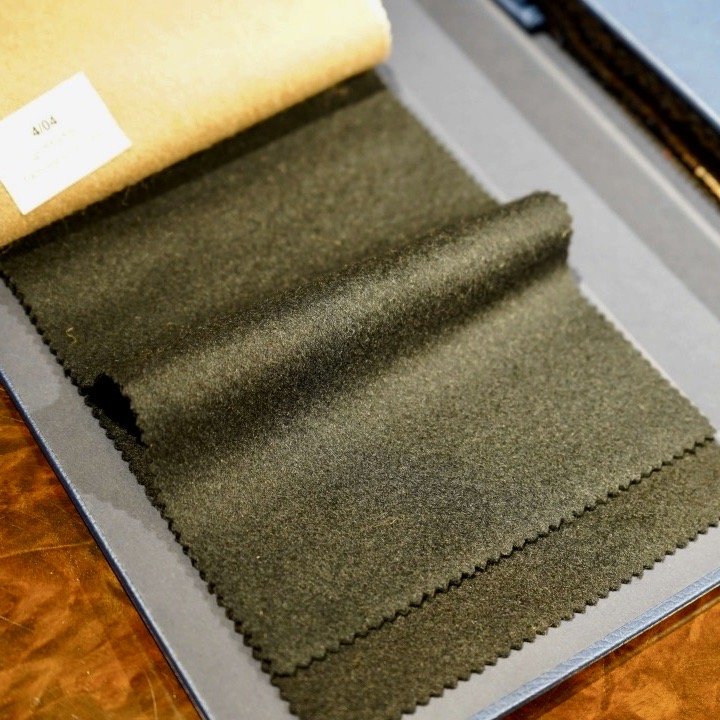
That was when I discovered Piacenza's camel hair. The color was exactly right: a muted midnight blue, closer to black than blue, with understated depth. Unlike wool, camel hair cannot be bleached, so it is usually used in its natural color or dyed in darker tones. For that reason, camel hair coats are often found in camel, navy, or black. This special navy, almost black, was exactly what I had been imagining.
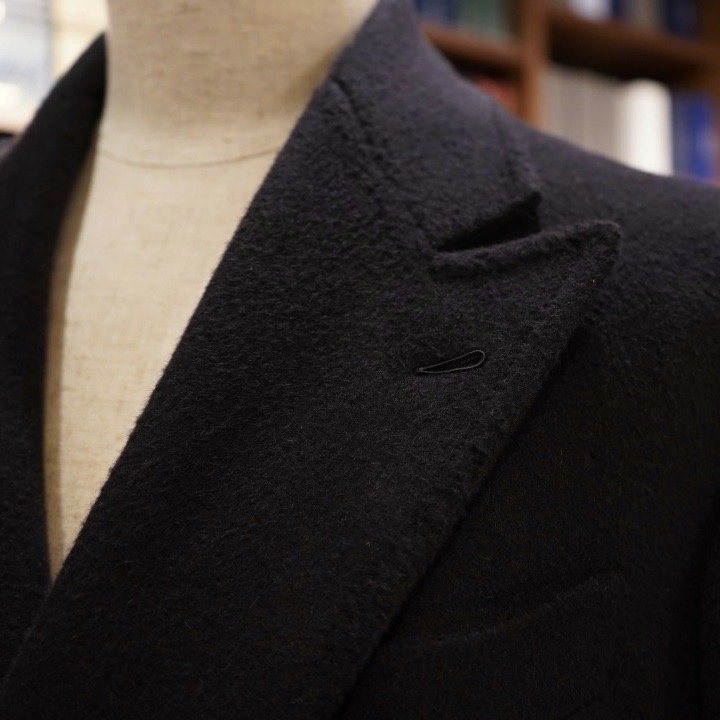
The texture is also distinctive. While cashmere has a glossy sheen and silky touch, camel hair feels fluffier and more matte. This subtle ruggedness suited the concept beautifully.
Details
After the basted fitting and intermediate fitting stages, the long-awaited double-breasted Chesterfield coat was finally completed.
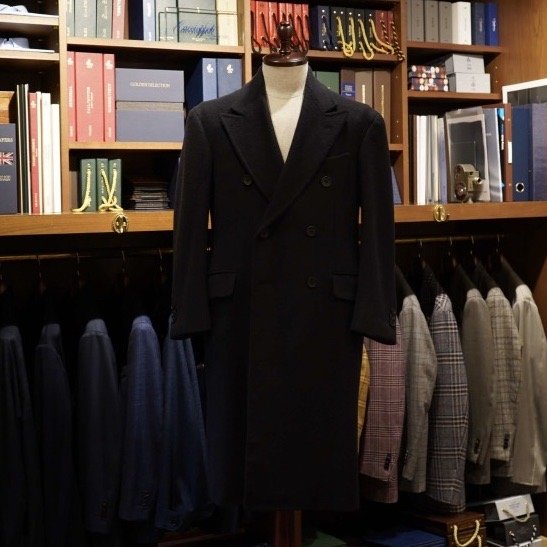
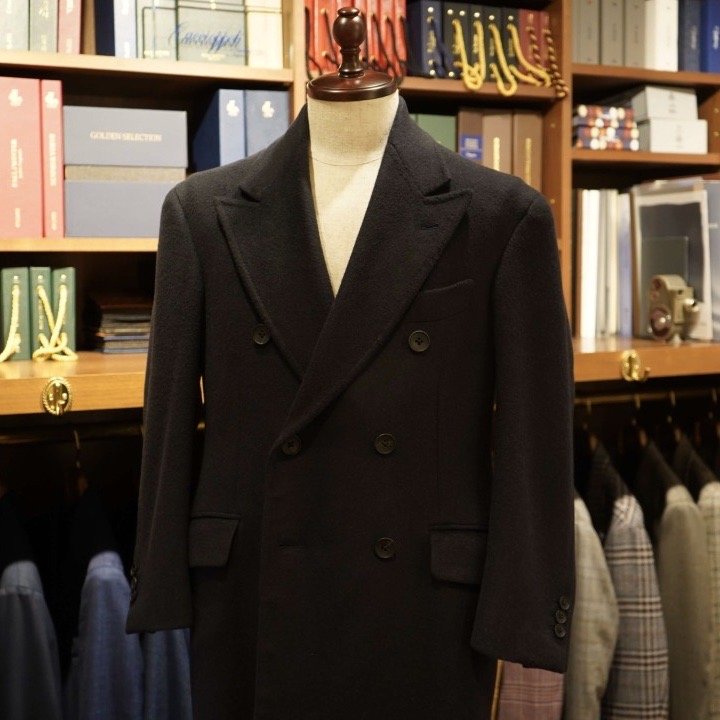
I tried it on right away.
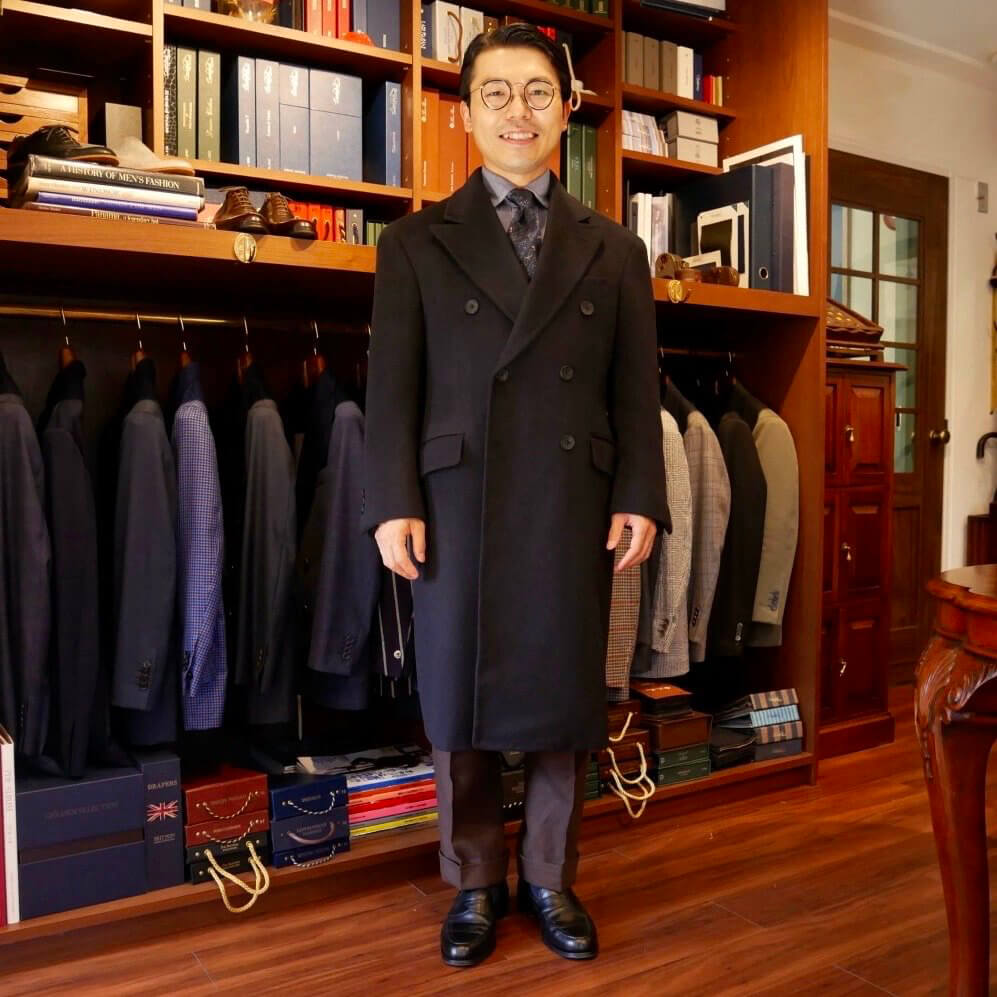
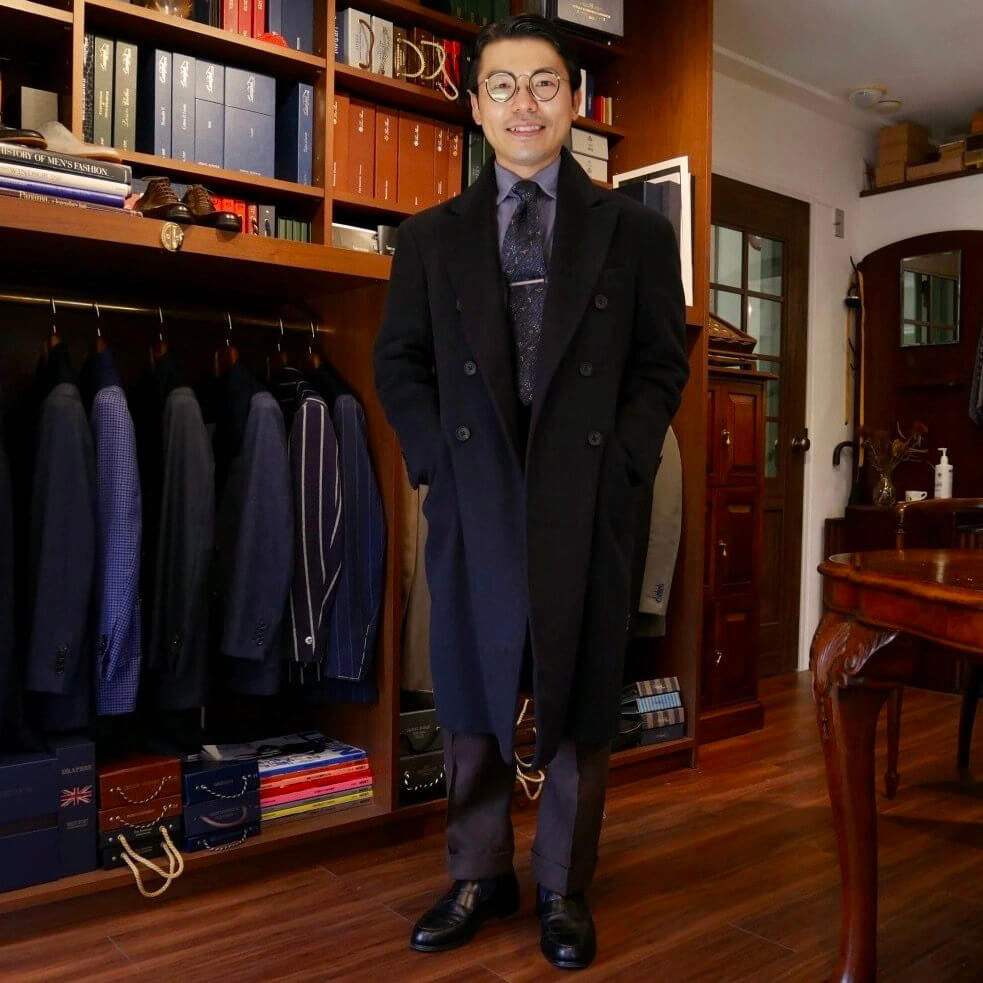
The coat length falls well below the knees, offering generous coverage. The silhouette is roomy, especially around the waist, giving it a more relaxed fit compared with many modern Chesterfield coats. The shoulders are also set slightly wider to create a more casual and laid-back impression.
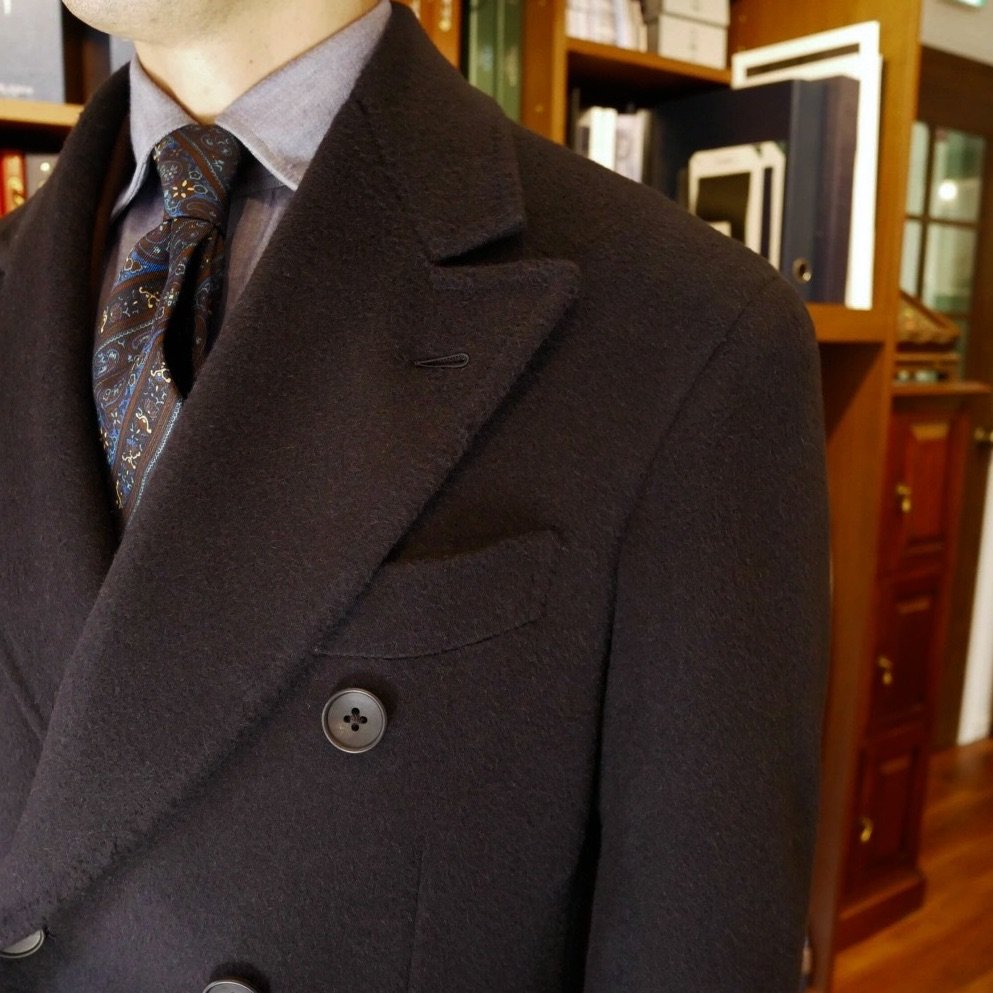 The peak lapel is a signature feature of a double-breasted Chesterfield coat. The angle of the peak was kept low, and the tips were rounded to soften the overall impression. We also widened the gap between the lapel and the collar to make the coat feel more approachable.
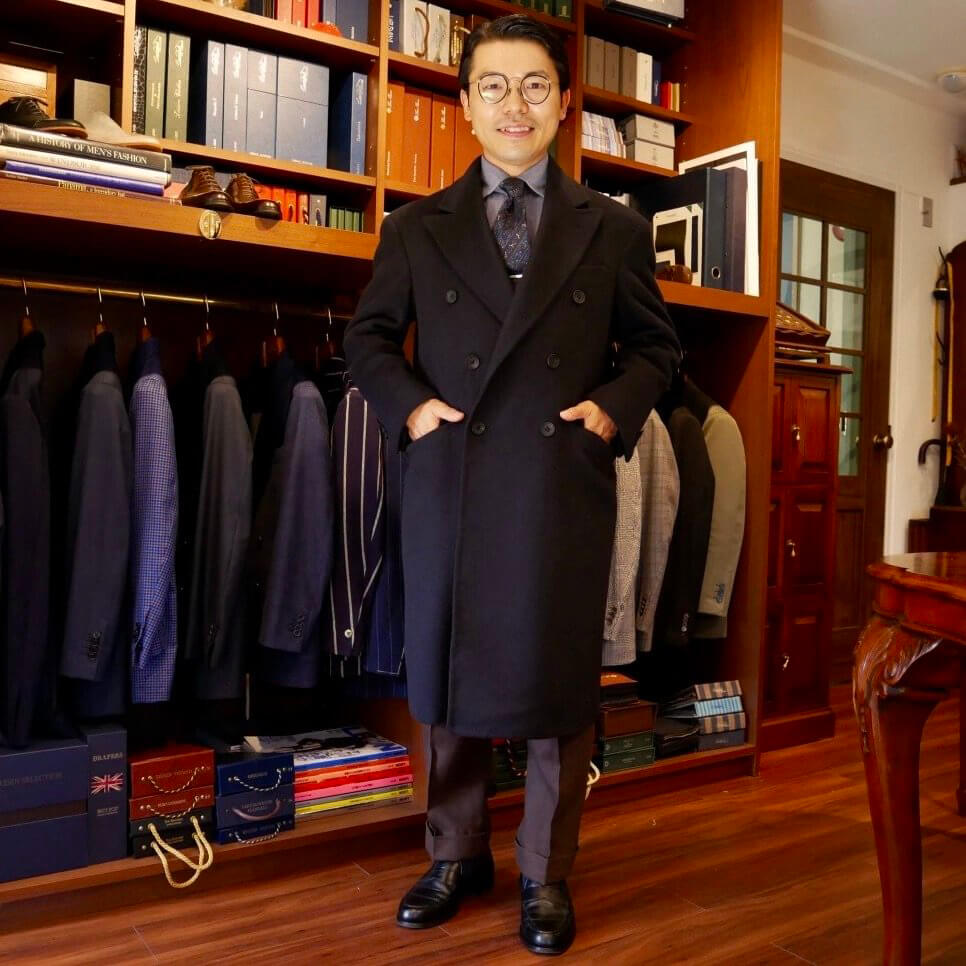 The roll of the lapel was another important point. We designed it to roll more deeply, allowing the third button to be fastened like a "3-roll-2" jacket. While this is a more relaxed styling choice, it gives the coat a casual yet intentional look. It also works beautifully with a hands-in-pockets stance like this.
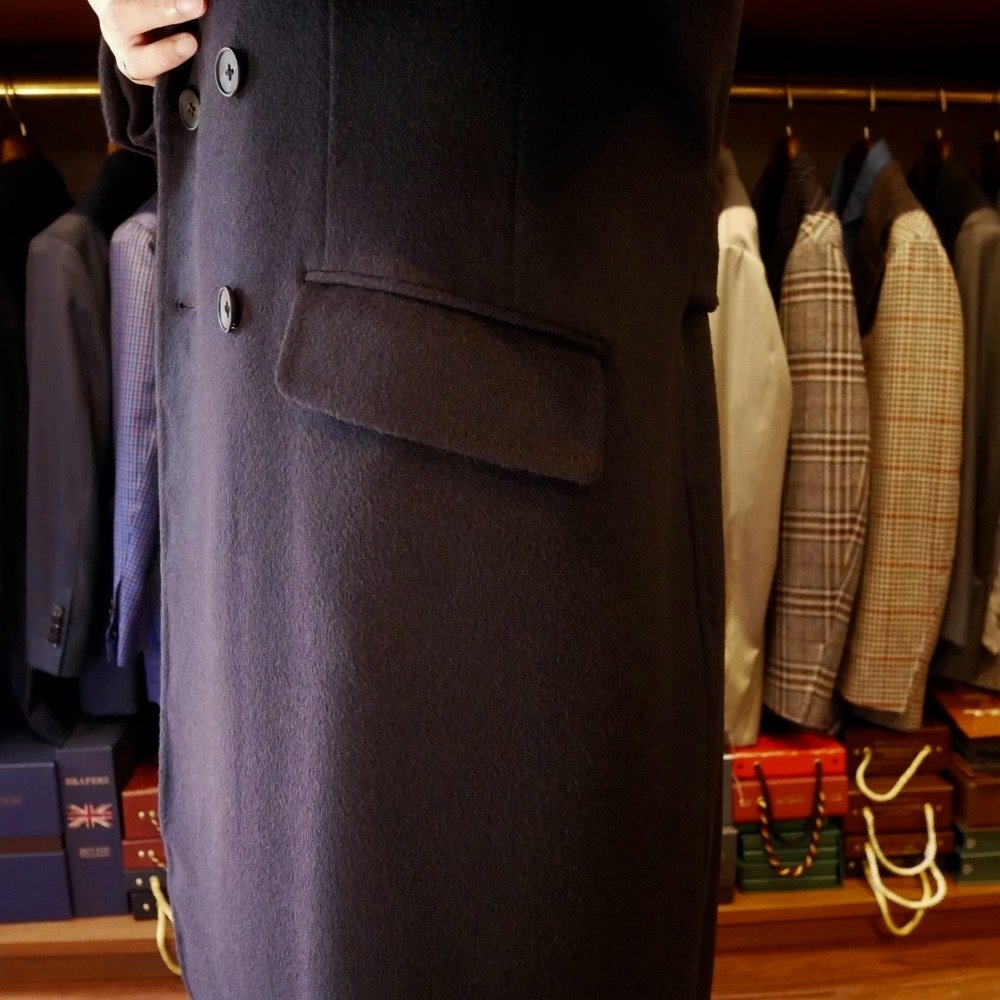 The waist pockets are slightly slanted, a style known as slant pockets. This is my first garment with this detail. Originally designed for easier access while on horseback, slant pockets add a sporty touch and soften the formal structure of the coat. Although they may look quite angled in the photo, the slant is actually subtle when seen from the front. The idea of using slant pockets on a double-breasted Chesterfield coat was a brilliant suggestion from Mr. Kojima. It is a creative detail I would not have thought of myself, and now it is one of the parts I truly love.
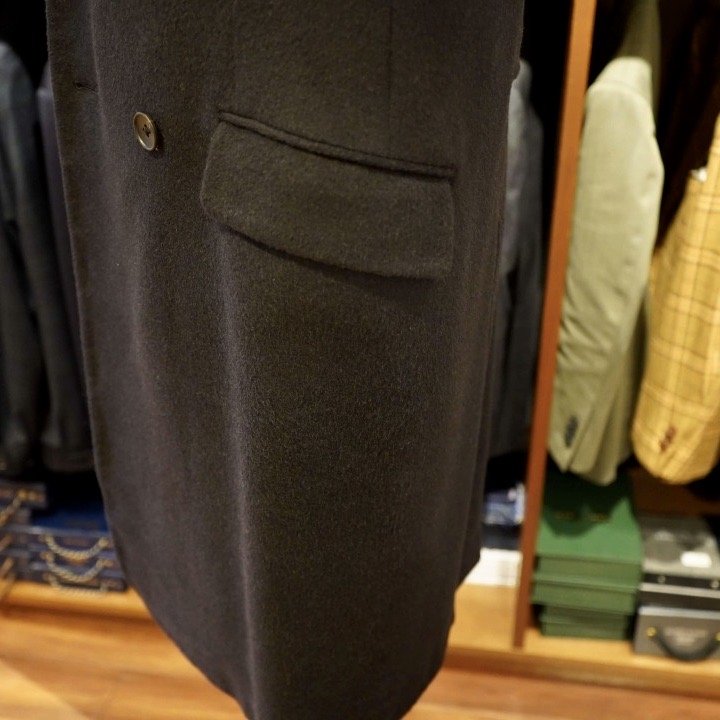
There is another hidden detail here. If you look closely around the pocket area, you will notice that there is no side seam. Traditionally, a Chesterfield coat is made with three panels: the front body, side body, and back. This coat, however, eliminates the side body and uses only the front and back panels. Reducing seams makes it more difficult to create a three-dimensional shape, but the result is a simpler and softer appearance. These subtle, almost invisible elements of craftsmanship are what make bespoke tailoring so fascinating.
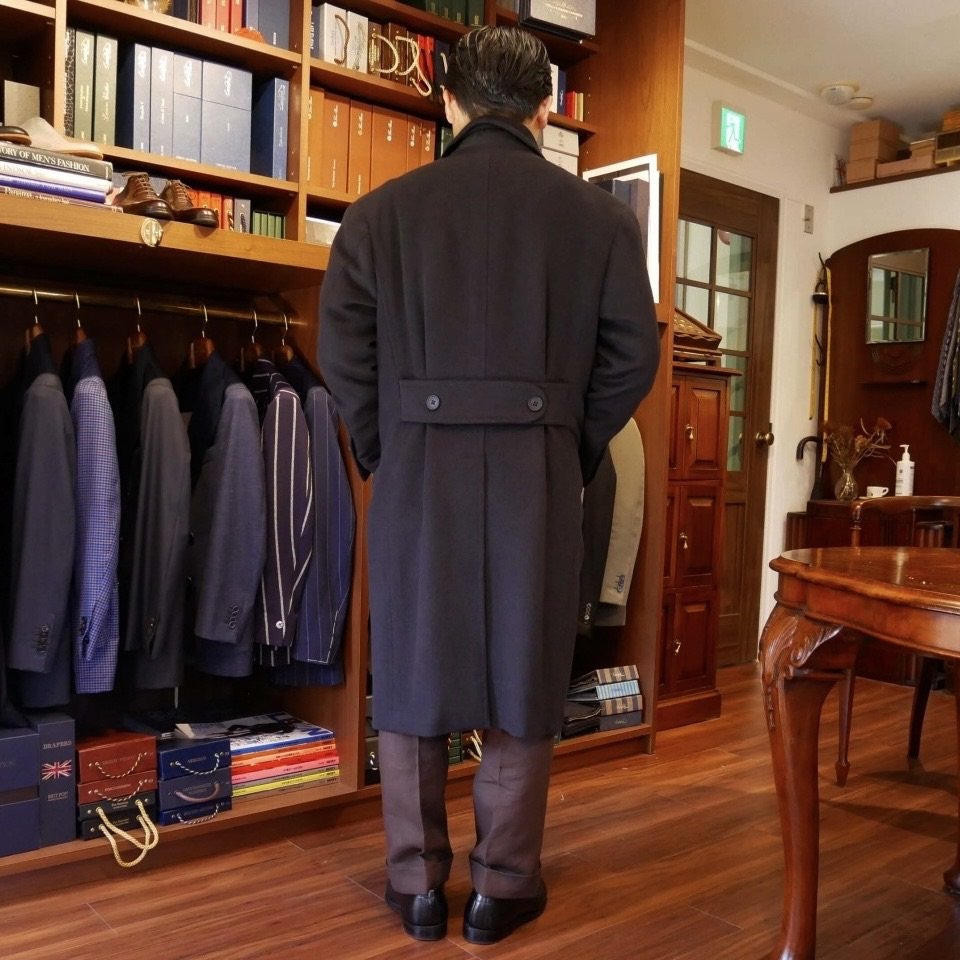
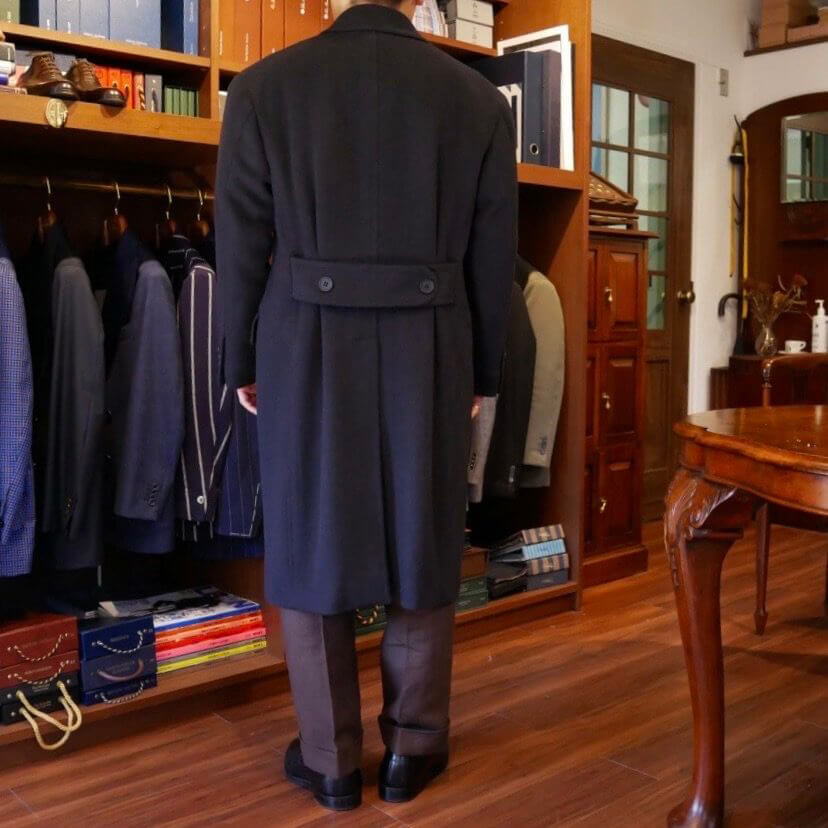 The back details also stay true to the concept. The back belt naturally draws the eye, but the real highlight is the wide action pleats on both sides.
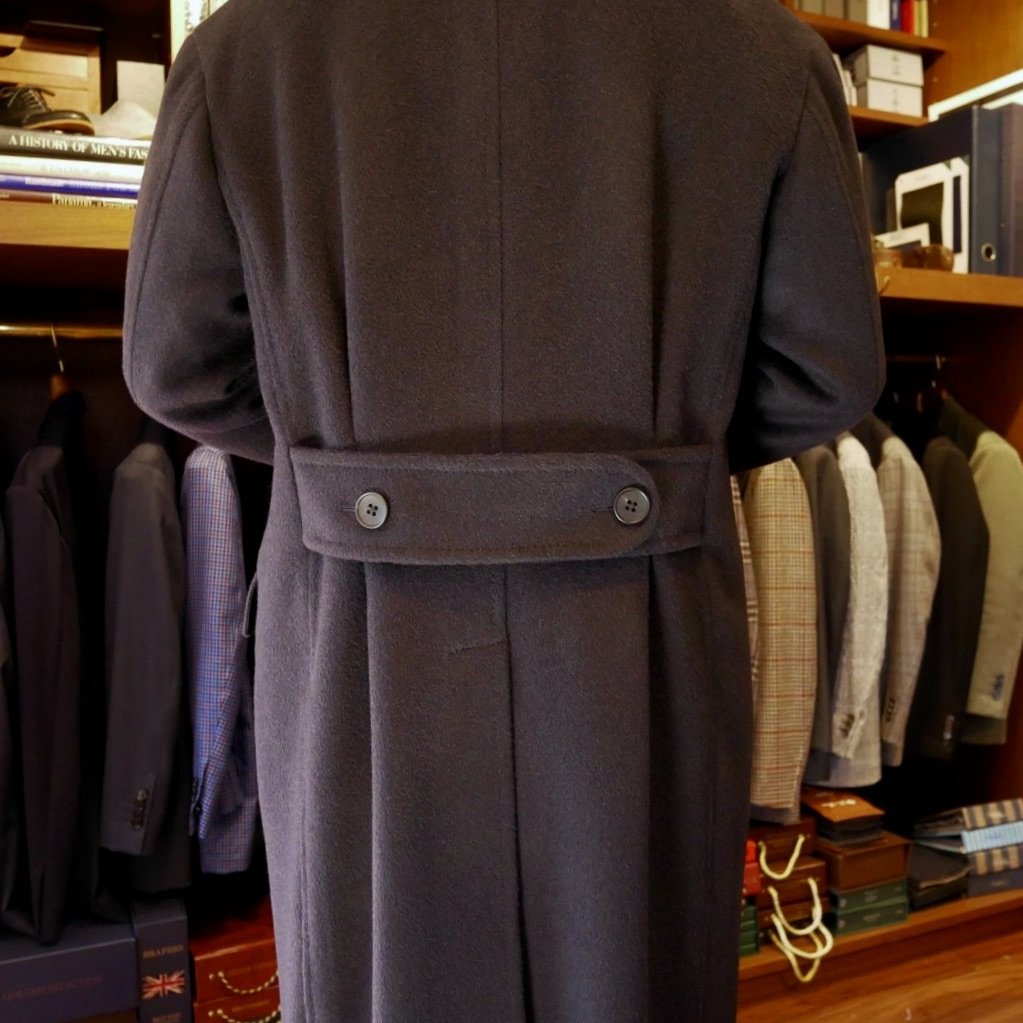
These pleats are often found on sports coats such as polo coats. Chesterfield coats usually have a clean, tailored back, but these pleats give this coat a more dynamic and sporty impression. I believe they create a tasteful contrast without compromising the dignity of the coat.
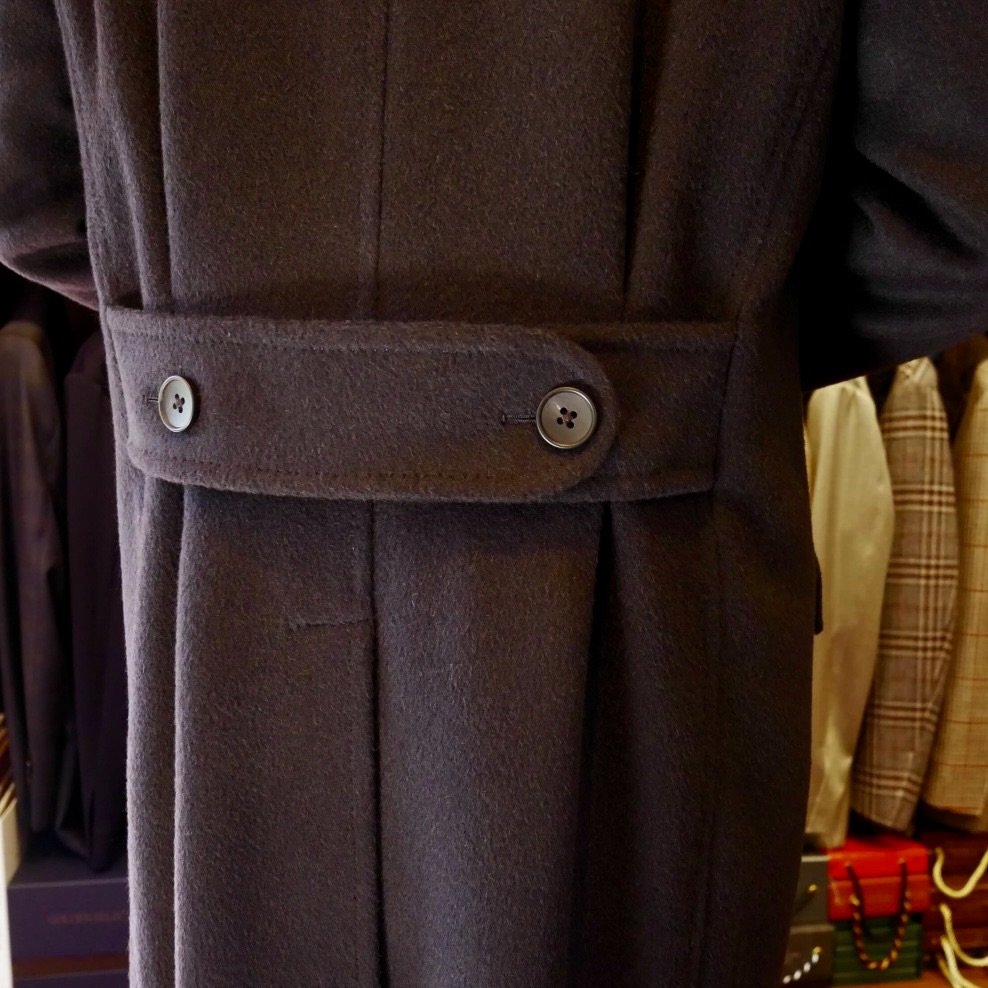 Even the back belt design was treated as a playful accent. The curved cut softens the impression of the garment.
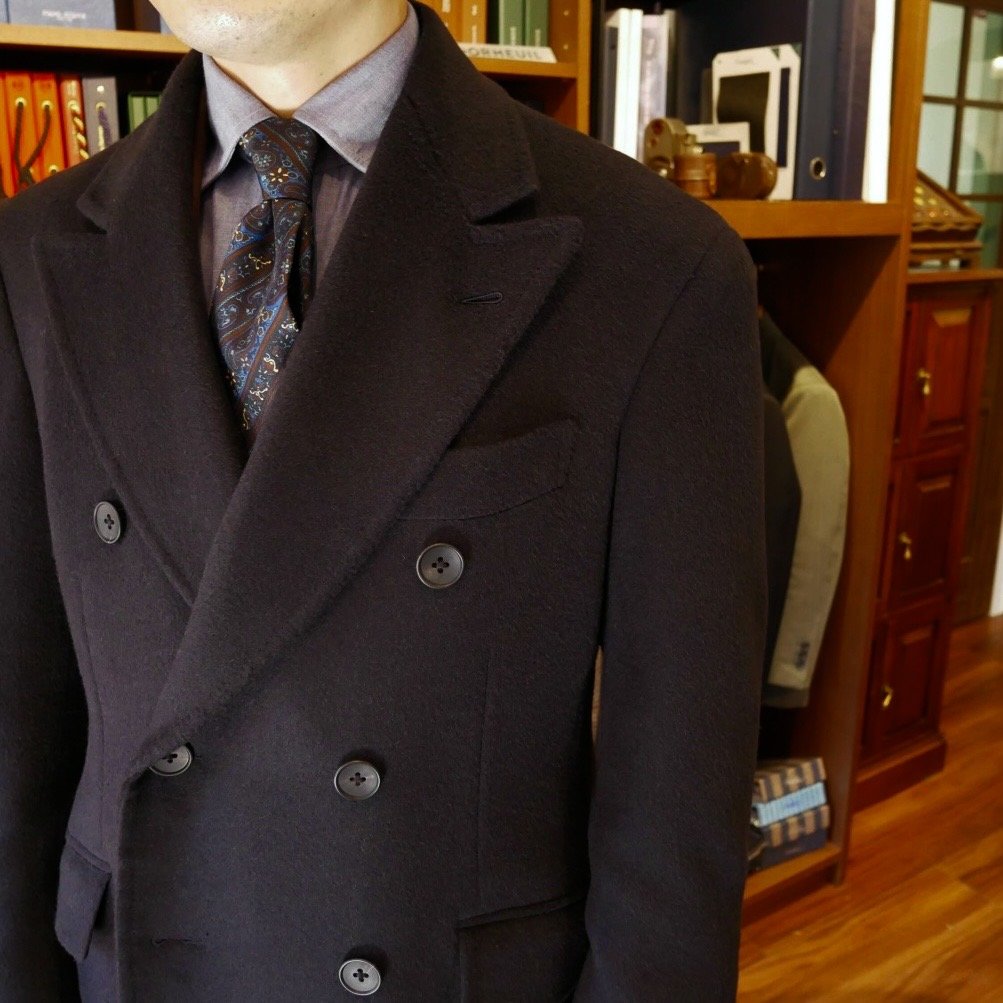 The shoulder line gives a slightly sloped and natural silhouette. No shoulder pads were used. Instead, the shoulders were made wider and allowed to drop slightly. Together with the upward curve of the collar, this design emphasizes the natural roundness of the shoulders. I particularly like how it looks from this angle.
A Bespoke Coat for a Lifetime
Thanks to Mr. Kojima's wonderful guidance, I now have a coat that I hope to wear for a lifetime, and it turned out even better than I had imagined. This coat reflects my personal taste beautifully. It combines high-level tailoring and a special fabric, yet when worn, it looks effortless and natural. From the moment I put it on, it felt as if I had already been wearing it for years. I look forward to aging together with this coat, throwing it over a sweater and going to a café with a newspaper and coffee in hand. I can already picture it.
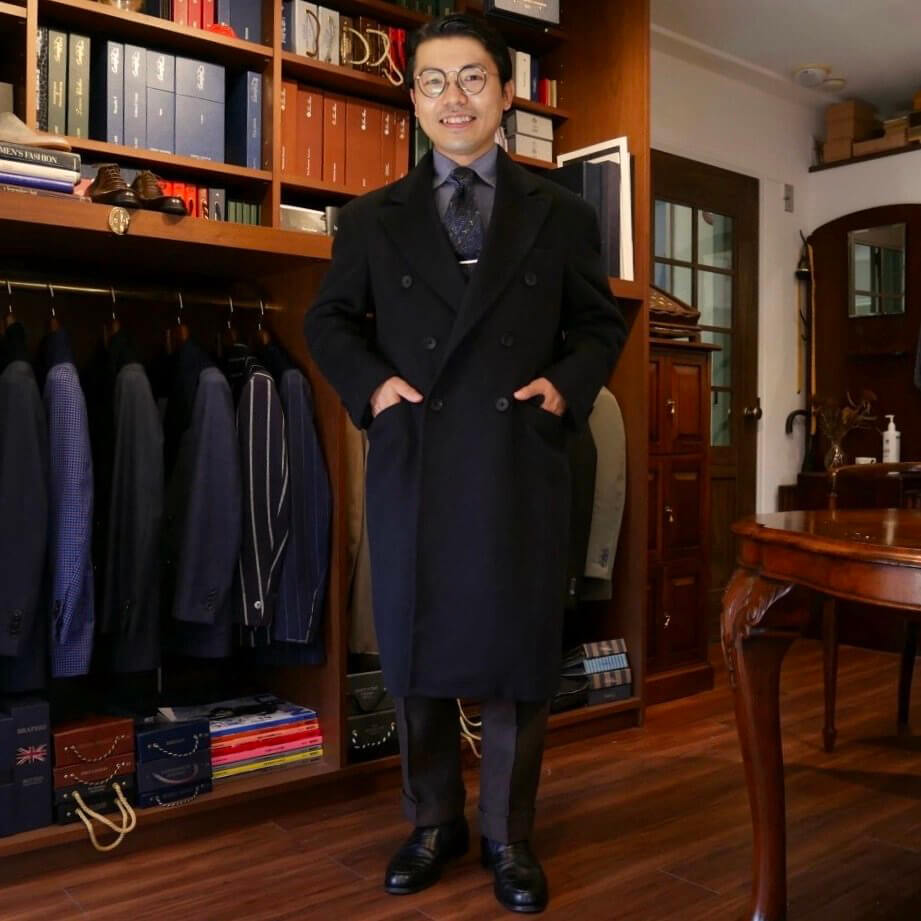 This bespoke experience reminded me once again of what makes bespoke tailoring so special. One of the true advantages of bespoke over ready-to-wear is not only being able to choose your favorite fabric or achieve a beautiful fit. It is also the ability to tune a garment to the personality and character of the person wearing it. And when that tuning is developed through dialogue, it can become remarkably precise.
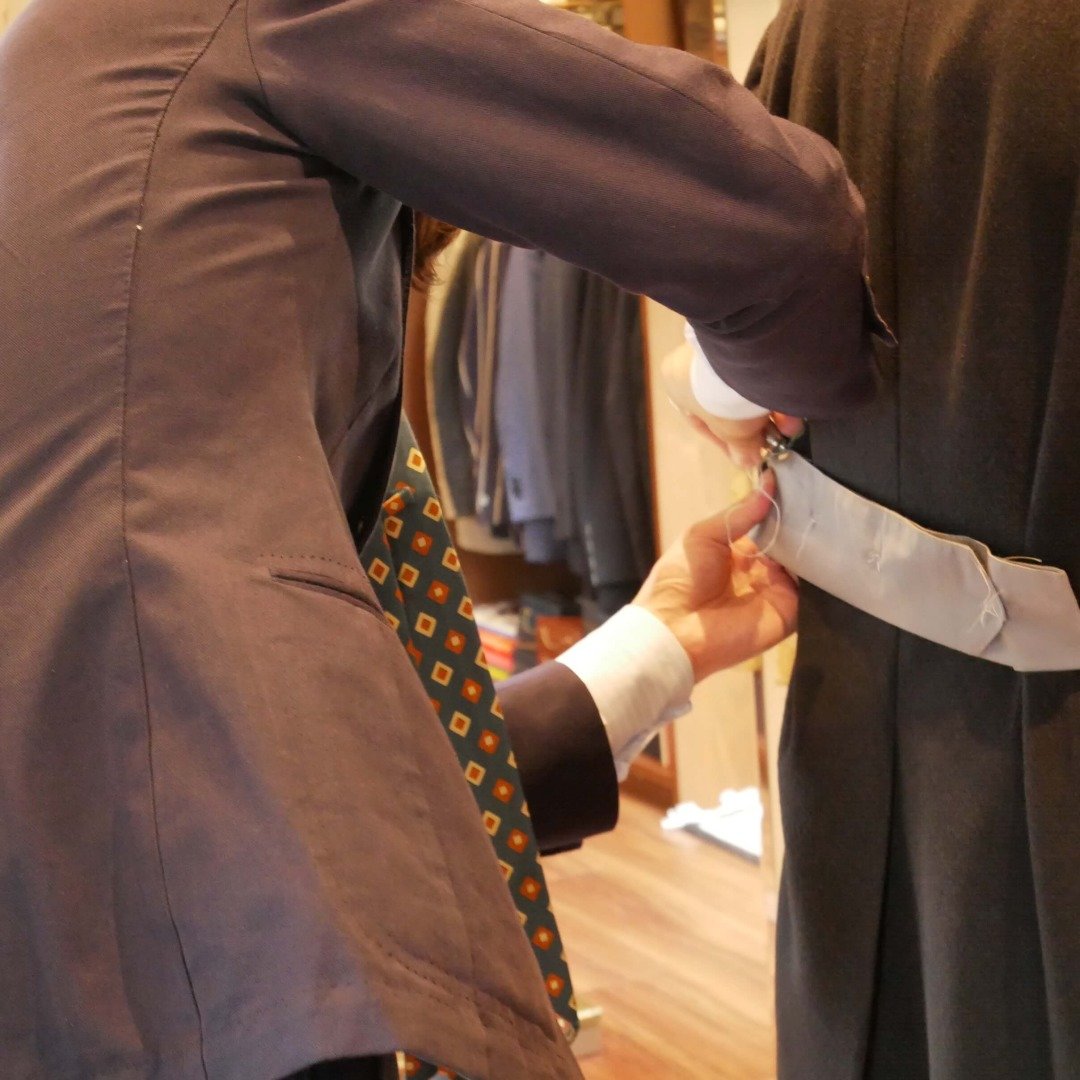
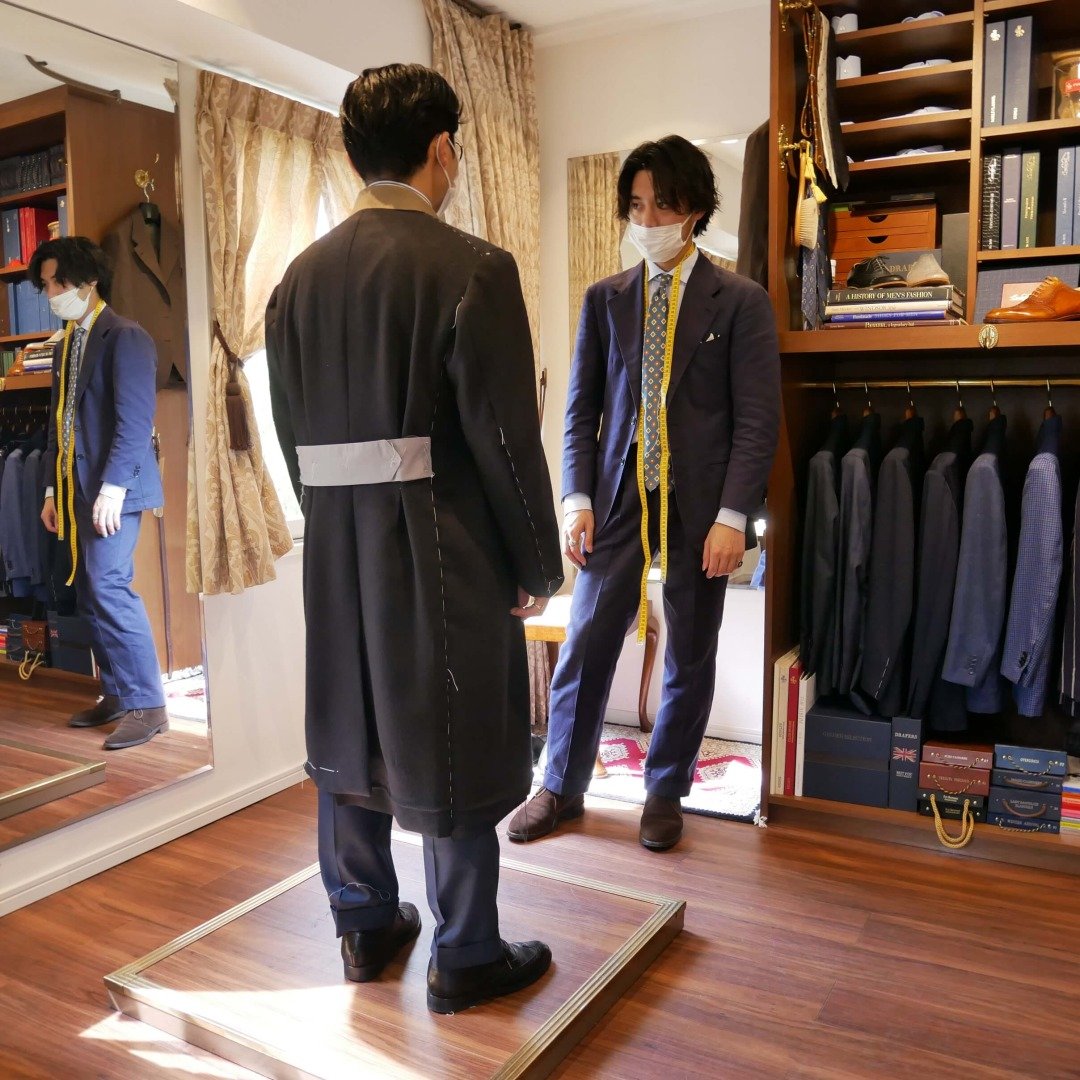
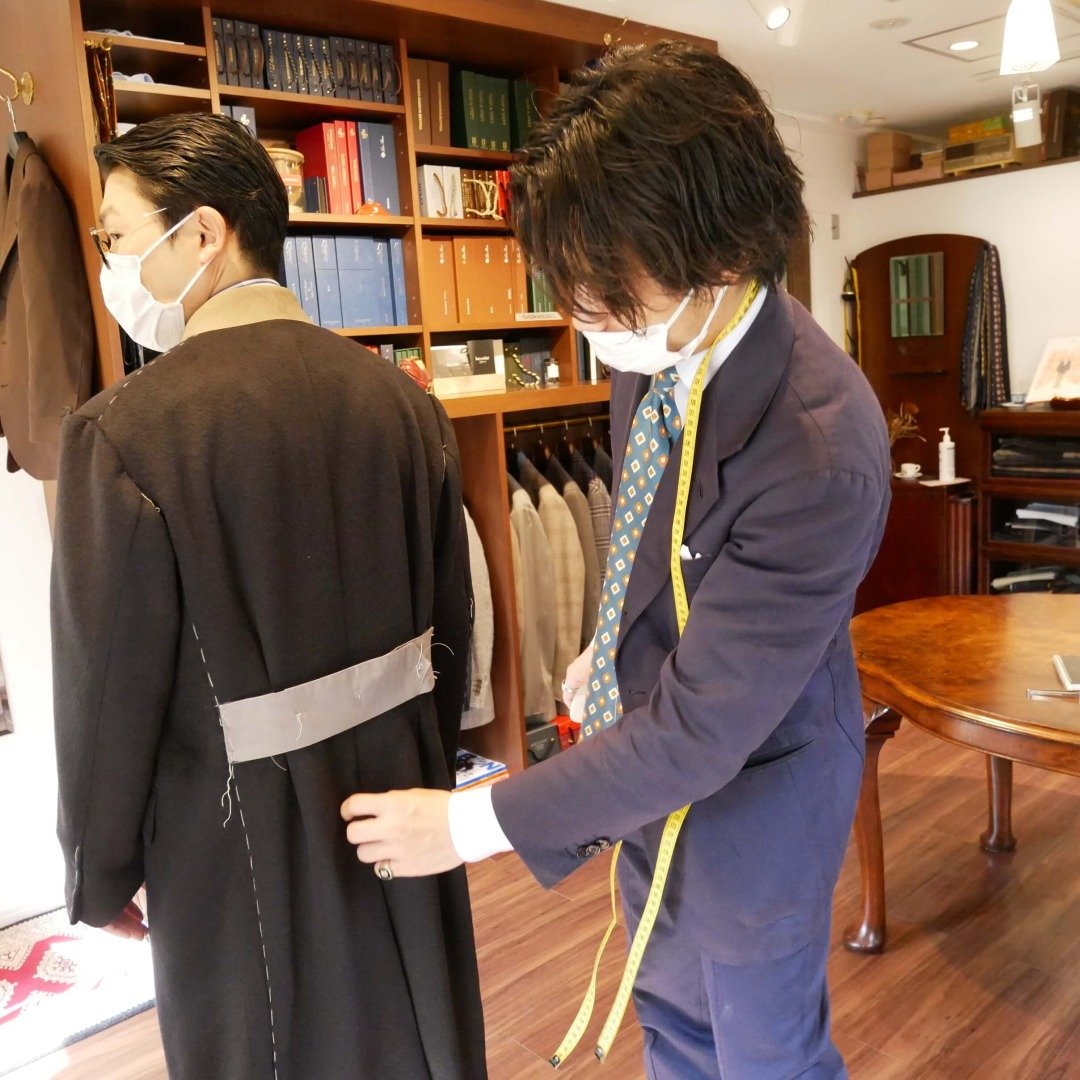
It is not simply because a paper pattern is drafted from scratch. It is because the customer and tailor meet several times through the process, including the first meeting, the basted fitting, and the intermediate fitting, spending a total of around 3 to 4 hours together. That level of communication allows the tailor to understand not only the garment the customer wants, but also the person themselves. That is why, when the finished piece is finally worn, the customer can feel, "Yes, this is exactly what I wanted."
The deeper the conversation, the greater the understanding and trust, and the better the result. This experience has reaffirmed my belief that bespoke tailoring is truly wonderful. As one of Mr. Kojima's biggest fans, I am already thinking about my next commission. I look forward to sharing that journey with you as well.
Photo Gallery
Posted by Tomohiro Hayashi
The Dressing Lab specializes in bespoke tailoring. While we can tailor most items given some time, we do not have ready-to-wear garments available for immediate purchase.
We deal exclusively in high-quality custom-made items, requiring at least one month for completion of any piece. For those desiring bespoke services or in cases where fittings are necessary due to body shape, it may be required to visit our salon 2 to 3 times.
We kindly ask for your understanding of the above conditions before placing an order. We eagerly await your consultations and reservations.
*Please make sure to reserve an appointment before visiting our store.
We gladly welcome appointments for consultations or viewings, so please don't hesitate to reach out to us.