Bespoke Line: 1st Fitting Study Session

Tomohiro Hayashi
We recently had the opportunity to host a bespoke measurement study session with our master tailor, Mr. Kojima. In addition to learning the essential techniques of bespoke measurement, the session offered valuable insights that can be immediately applied to our MTM fittings, as well as a deeper understanding of bespoke craftsmanship as a whole. It was an intense, meaningful, and highly rewarding experience—and it has only deepened our appreciation for bespoke tailoring. We hope you enjoy reading about it.
Recently, we had the pleasure of welcoming Mr. Kojima, the master tailor of our Bespoke Line, to our store. Along with discussing this season's bespoke order events, I also received an in-depth lesson on the first fitting process used in our Bespoke Line. I would like to share some of the highlights with you.
The Difference Between MTM and Bespoke Measurement Methods
There are significant differences in both the process and measurement methods between MTM (Made-to-Measure) and our Bespoke Line, even when making a single suit.
With MTM, we first take the customer's basic body measurements, then proceed with a fitting using a size sample, or gauge garment, as a reference. The finished garment is typically completed in approximately 1 to 1.5 months. At the time of delivery, a final fitting is conducted, and any necessary adjustments are made.
In contrast, our Bespoke Line begins with much more detailed measurements at the first fitting. Based on these measurements, a completely original pattern is drafted from scratch, followed by a basted fitting. The pattern is then revised, an intermediate fitting is conducted, and only after that do we proceed to the final sewing stage and completion.
Purpose of the Lesson
Until now, at our Bespoke Line order events held every few months, Mr. Kojima has personally conducted the first fittings for our customers. However, depending on the timing, this could sometimes lead to longer delivery times or make it difficult for busy customers to attend on the scheduled event dates.
To make the process more convenient for our customers, we decided that I would learn the first fitting process for the Bespoke Line so that we could accept bespoke orders more flexibly throughout the year.
In addition, by learning how bespoke garments are drafted directly from body measurements rather than relying on gauge garments, I believe we can further improve the accuracy of our MTM fitting process as well.
Contents of the Lesson
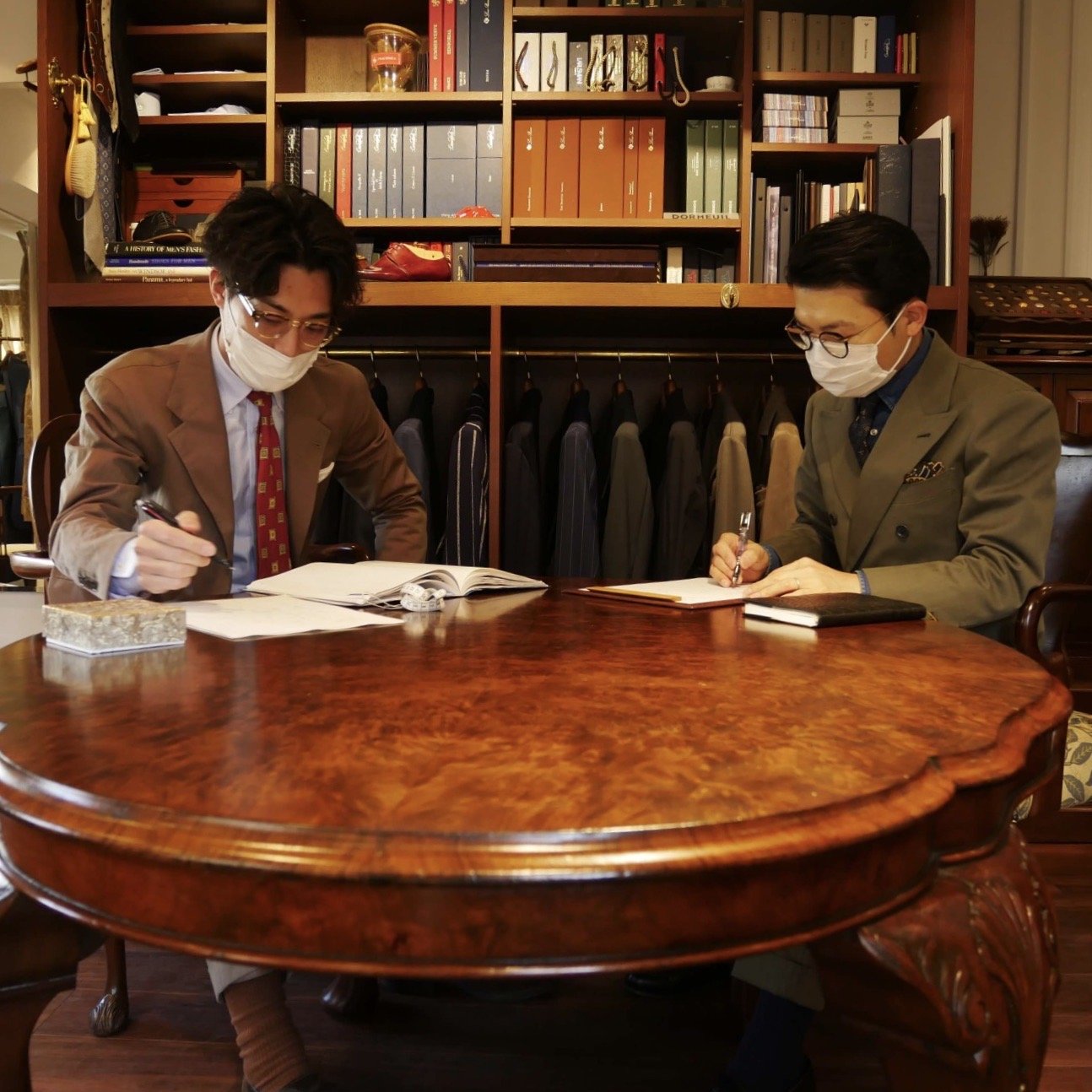
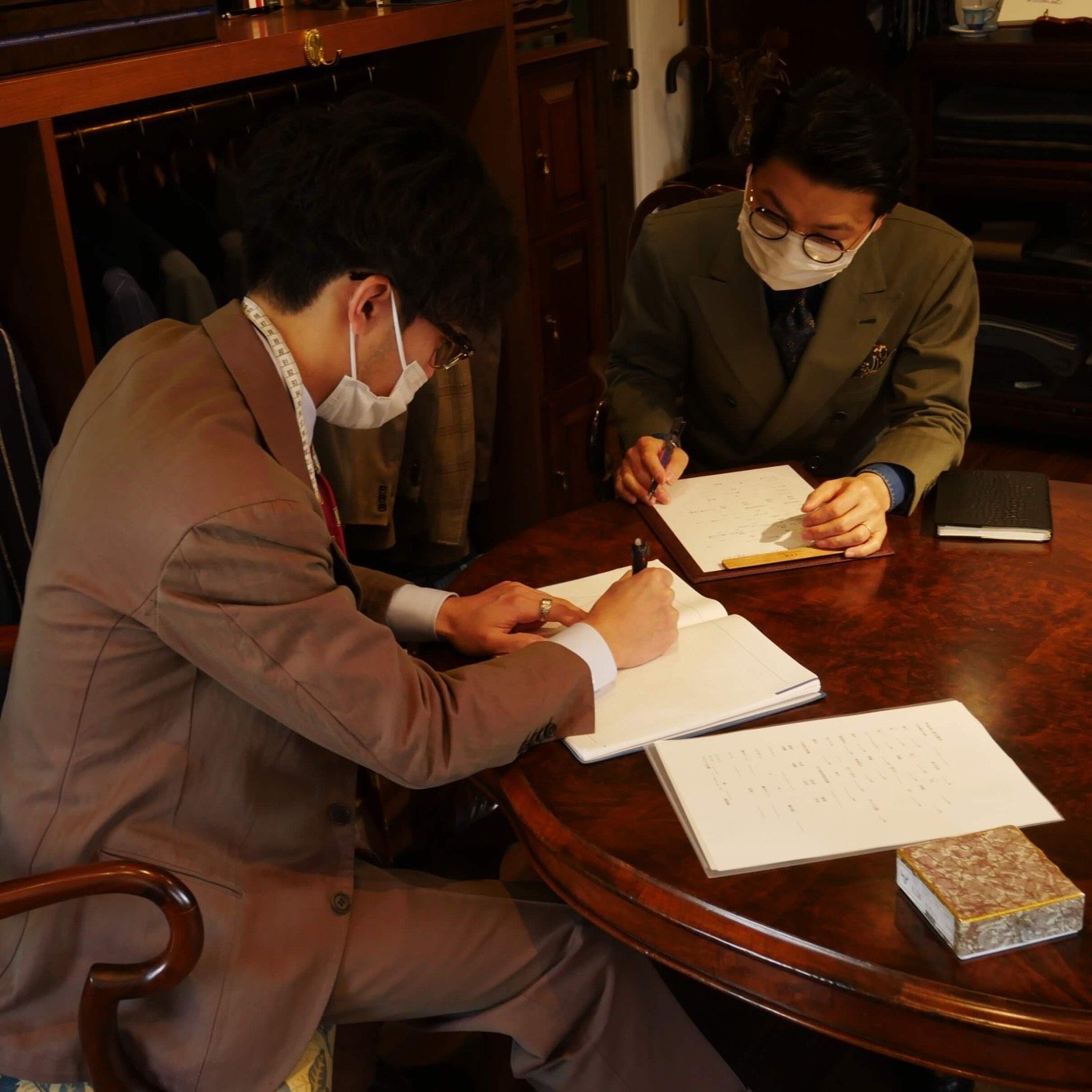 First, we began with the theory. Using a dedicated bespoke measurement sheet, Mr. Kojima drew a simplified pattern diagram in my notebook and explained exactly which parts of the body each technical term referred to.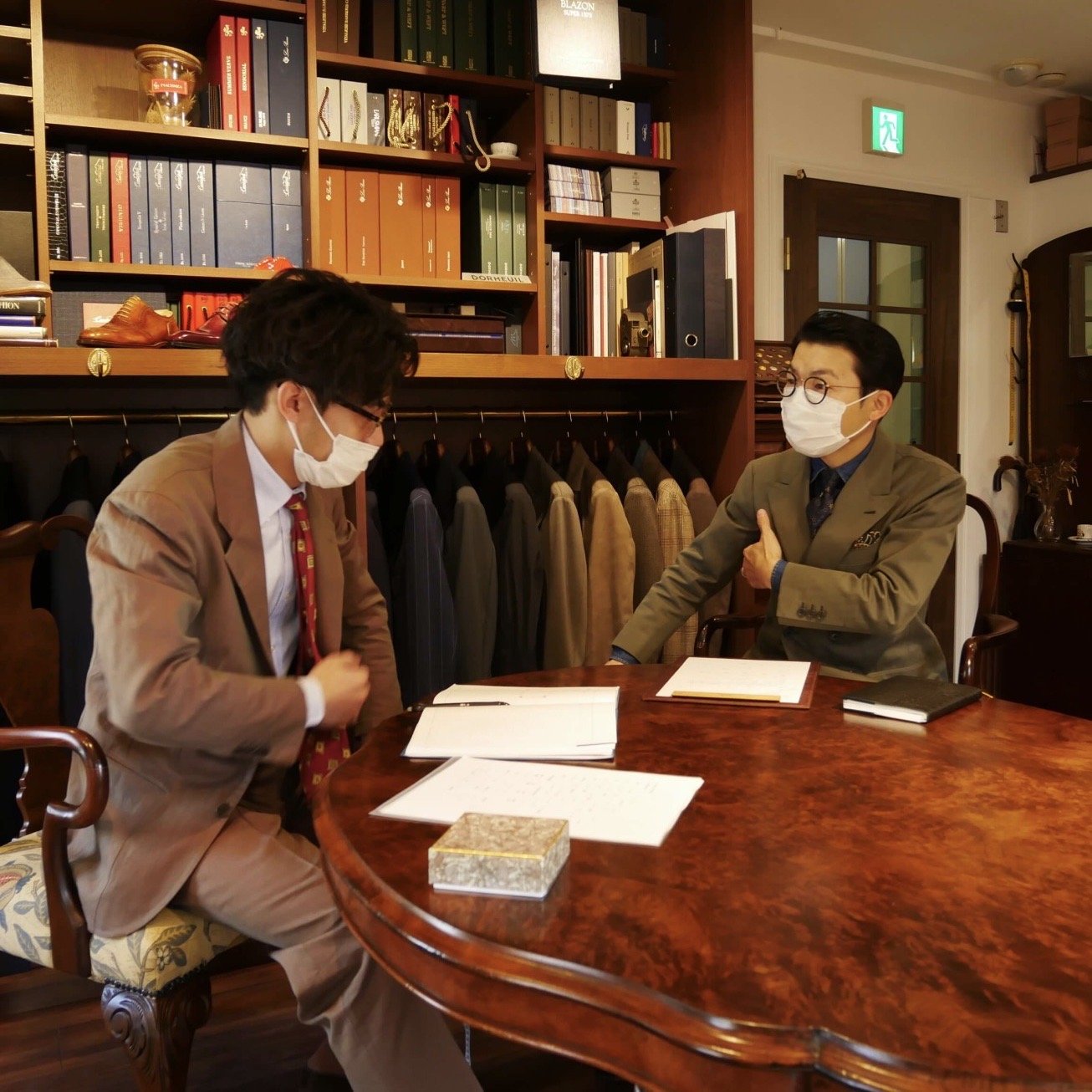
We carefully reviewed what needed to be measured and how each measurement should be taken.
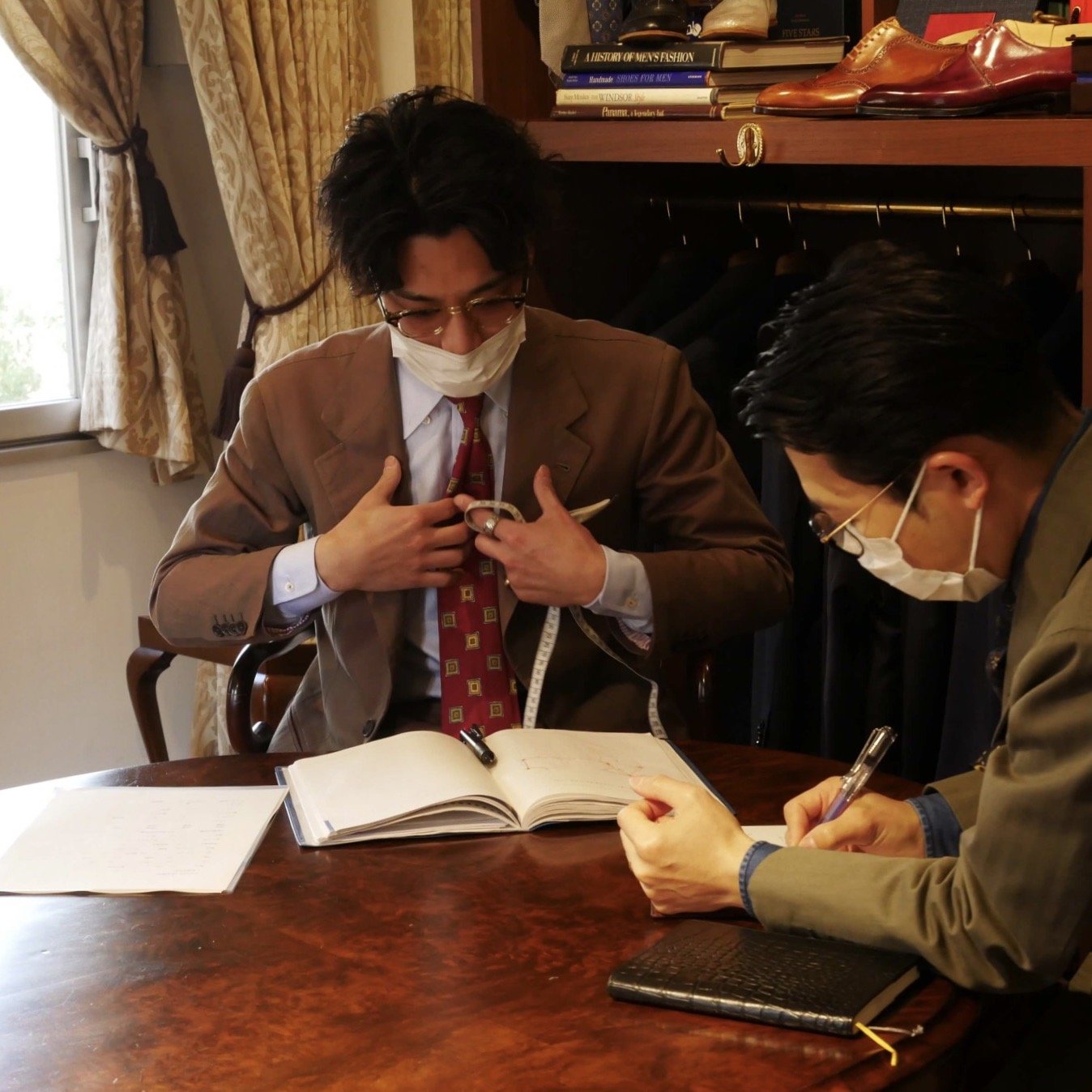
Mr. Kojima's explanations, based on many years of measuring, drafting, and checking garments, were both convincing and easy to understand. The number of measurement points has been carefully refined to include only those truly necessary for drafting the pattern.
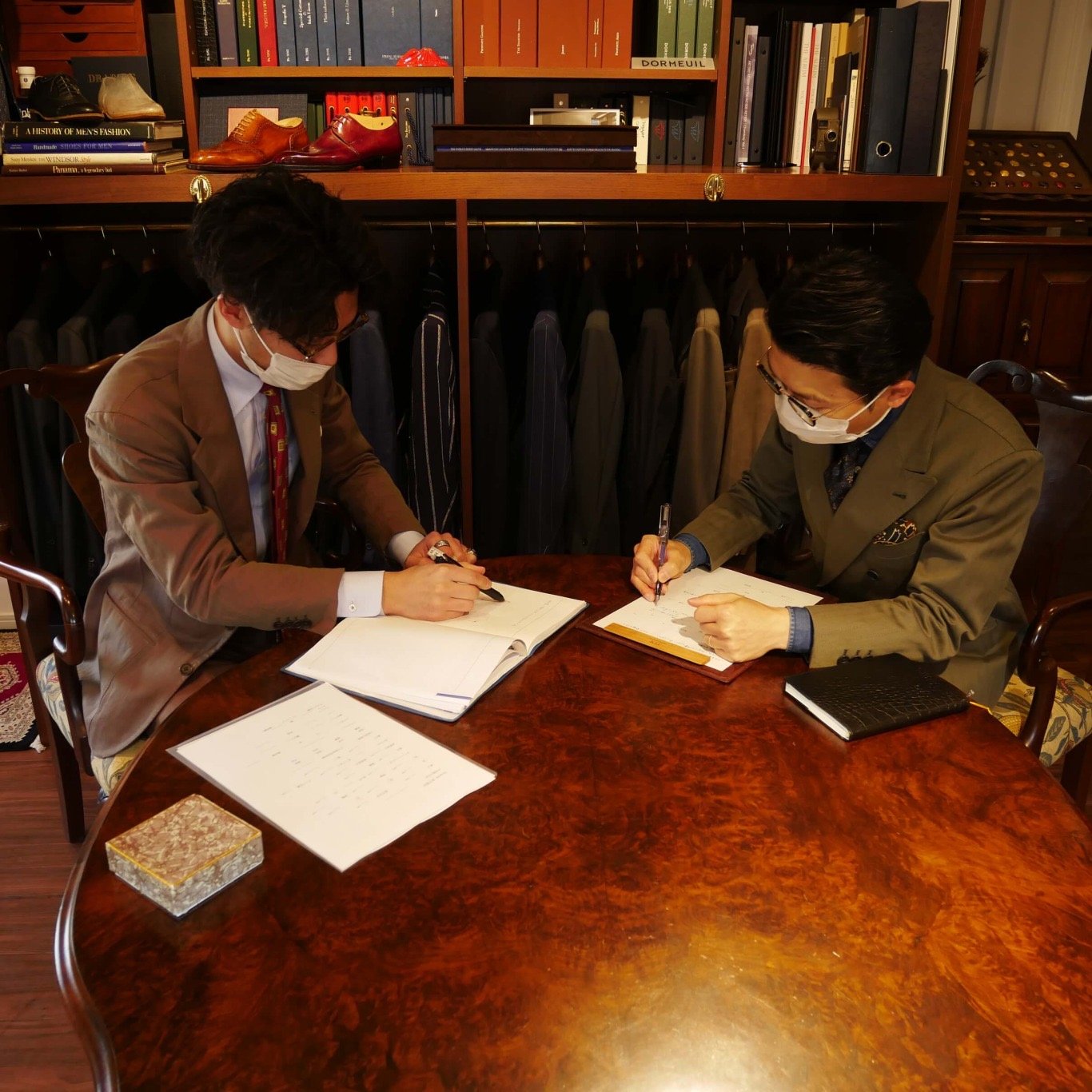
Beyond simply learning how to take measurements, we also studied how each measurement is translated into the pattern. Deepening my understanding of pattern drafting was particularly fascinating.
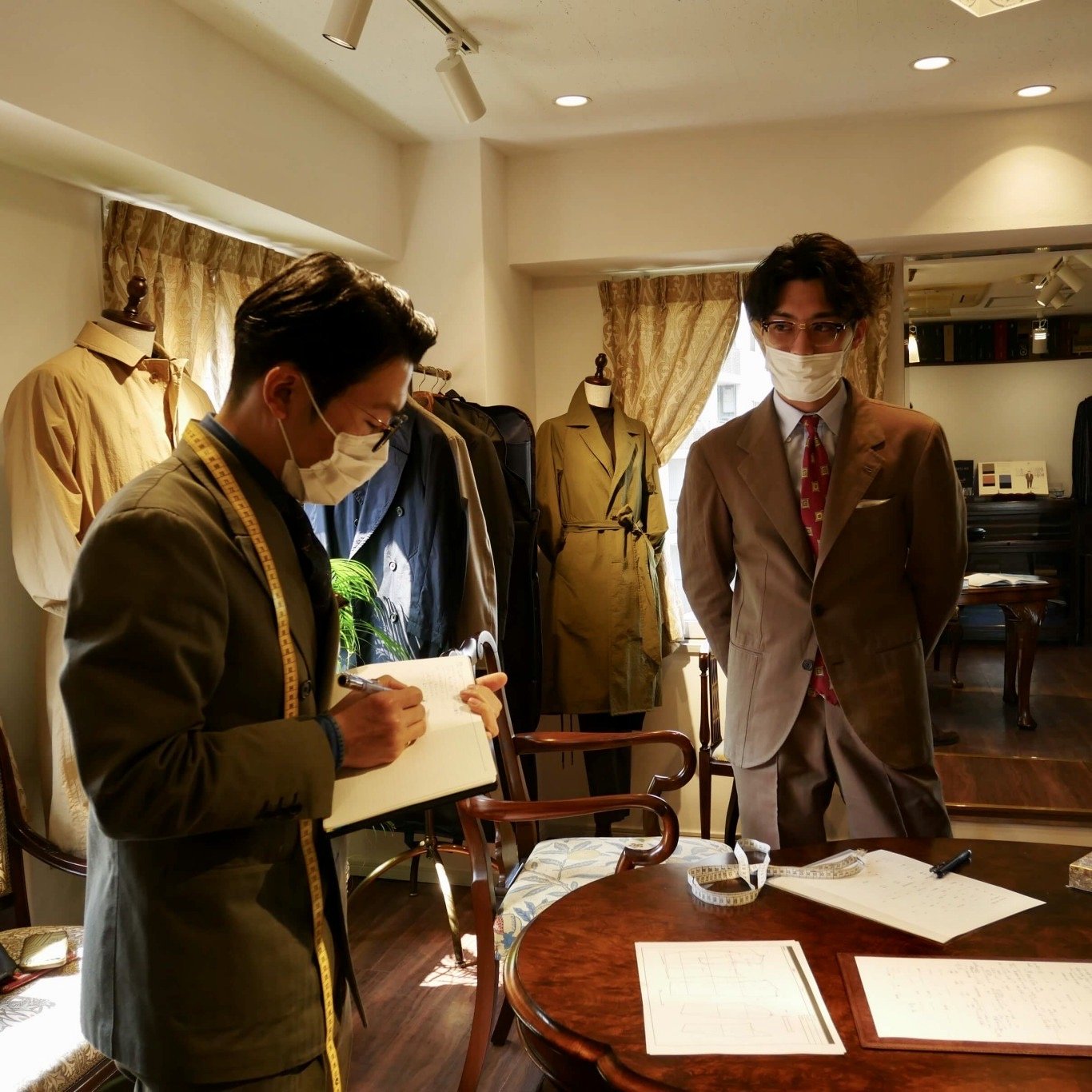
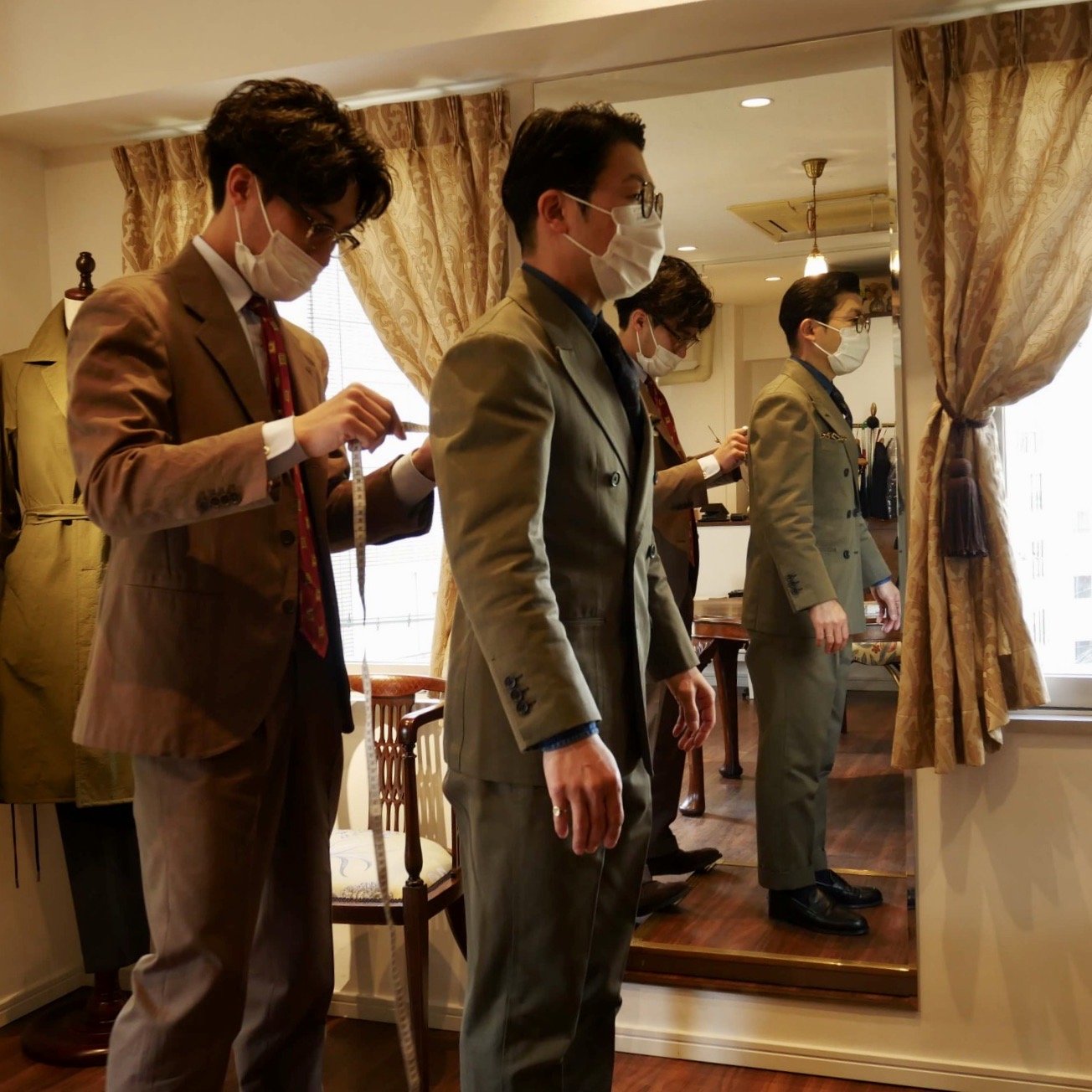 After covering the fundamentals in theory, we moved on to practical measurement training. I had previously assisted by recording measurements during bespoke orders, but actually taking the measurements myself revealed many subtle points, including how much tension should be applied to the measuring tape.
Mr. Kojima first took my direct body measurements while explaining each point. Normally, measurements would be taken over a shirt, but for this demonstration I remained in my jacket.
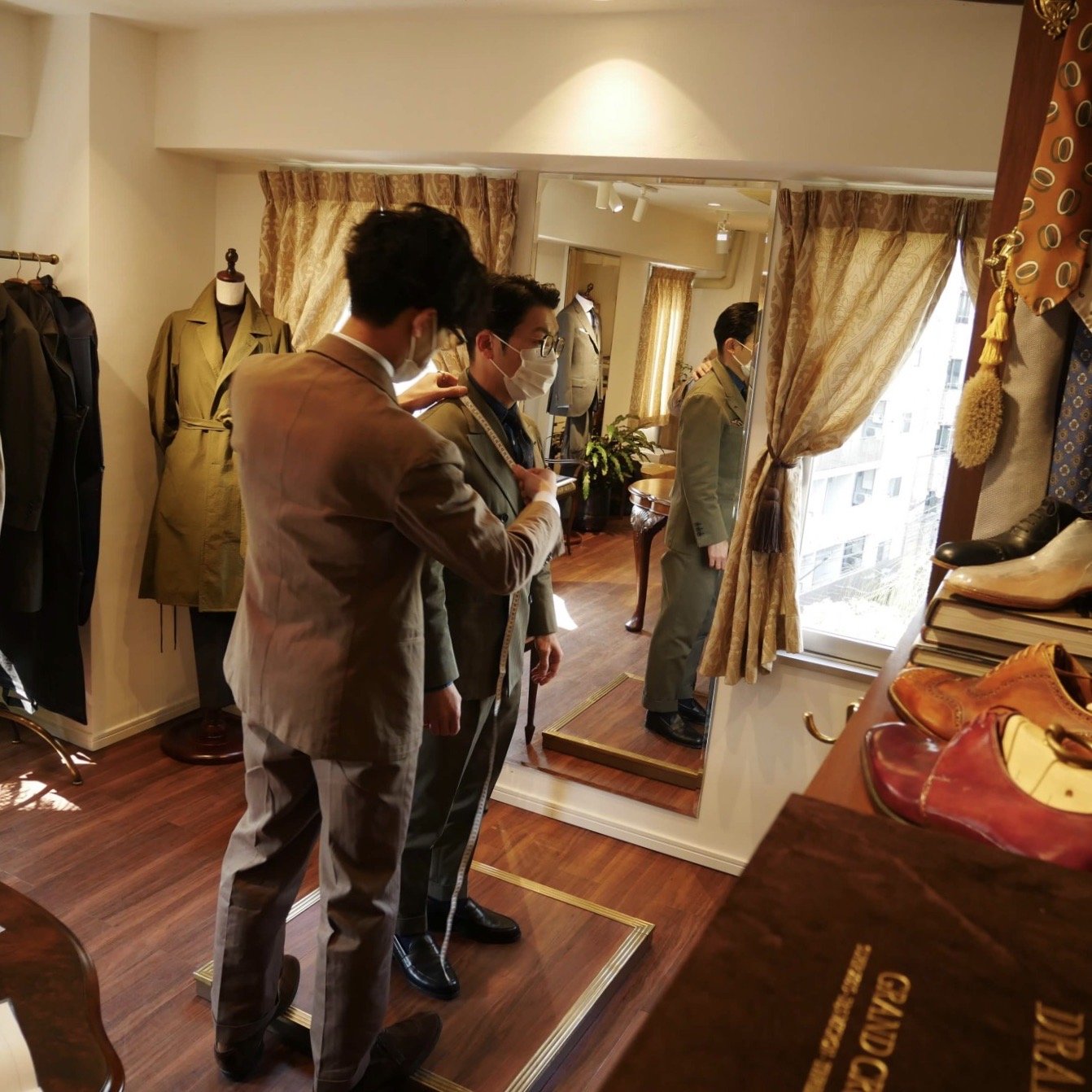 Our Bespoke Line uses a method known as the short-measurement system, taking approximately 20 detailed body measurements. Even these have been carefully narrowed down to the measurements that are truly necessary.
Some customers are surprised by the level of detail, but compared with chest-based drafting systems, this method allows for a more precise and individualized pattern.
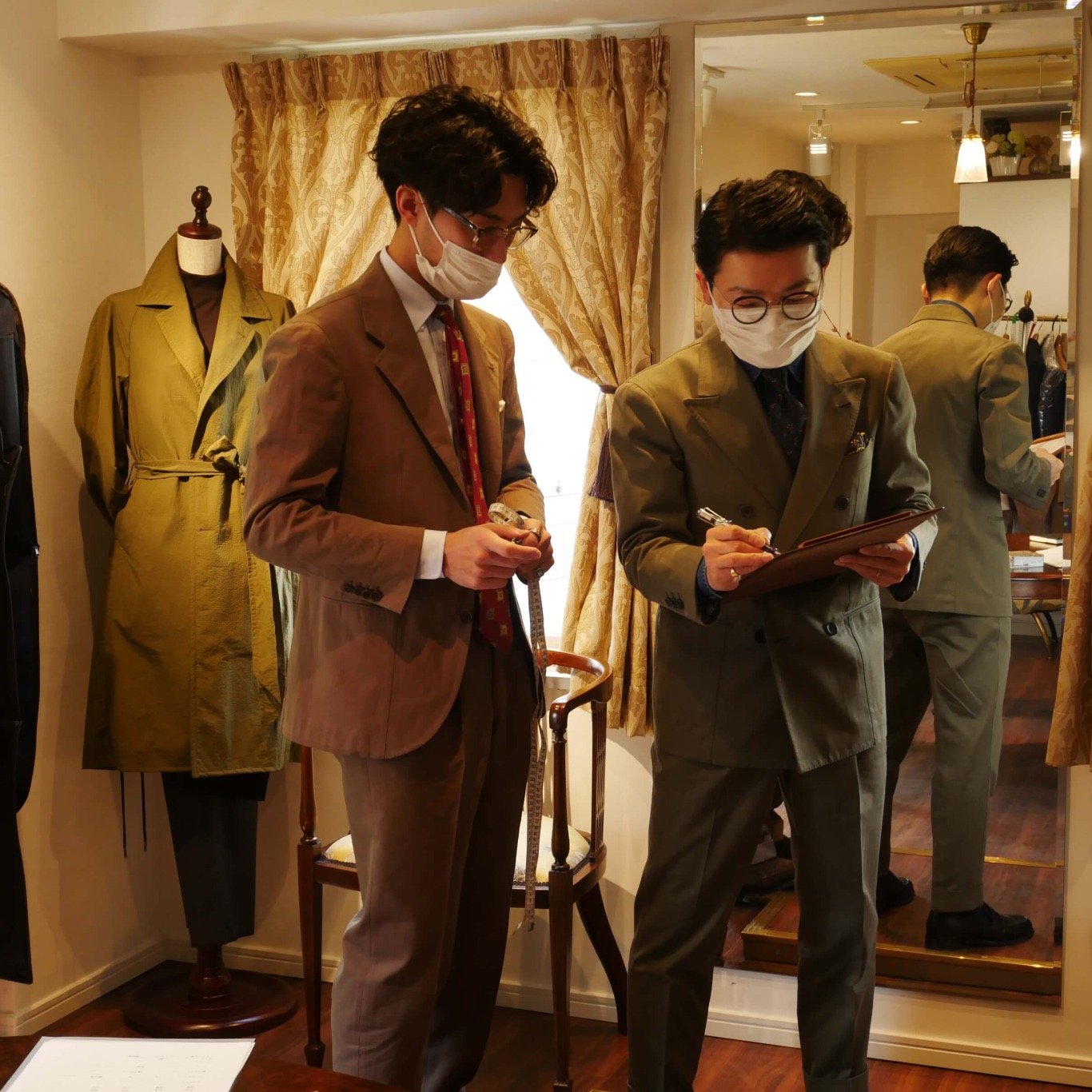
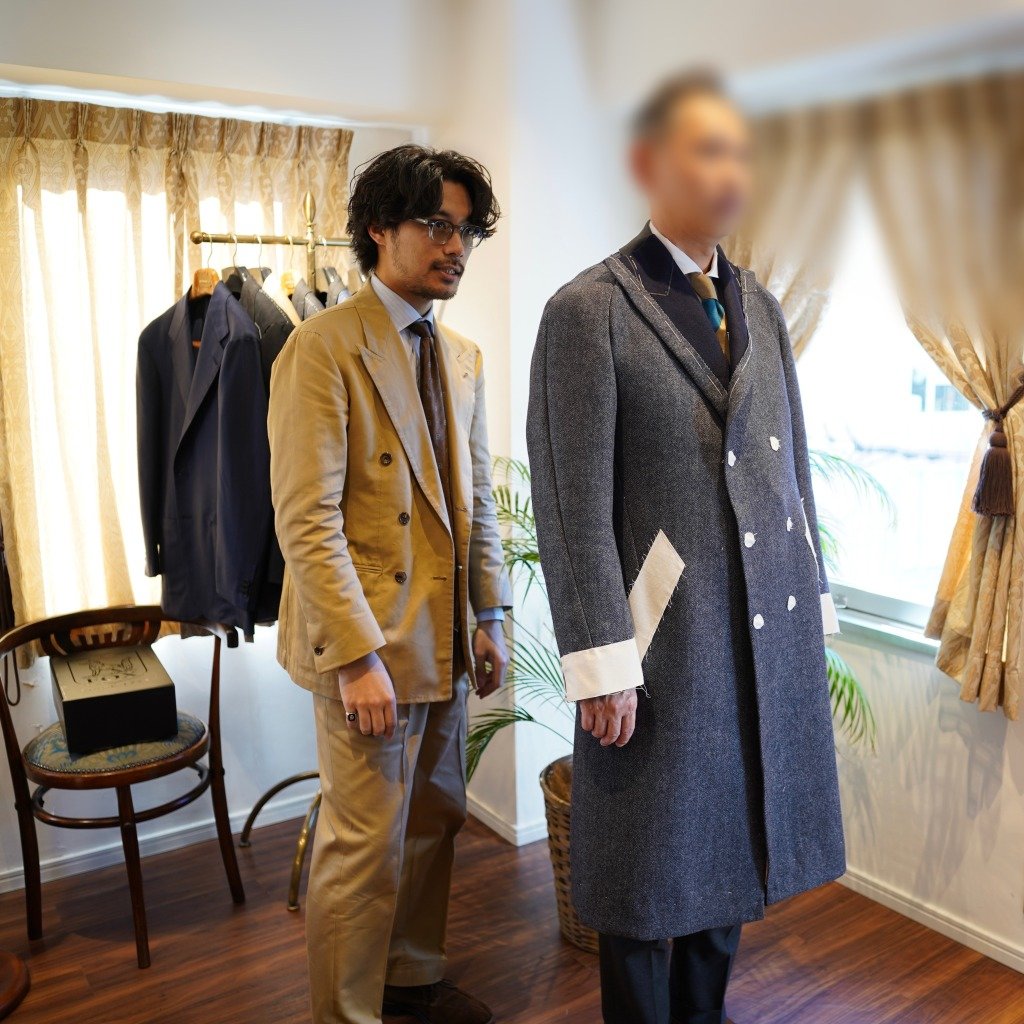
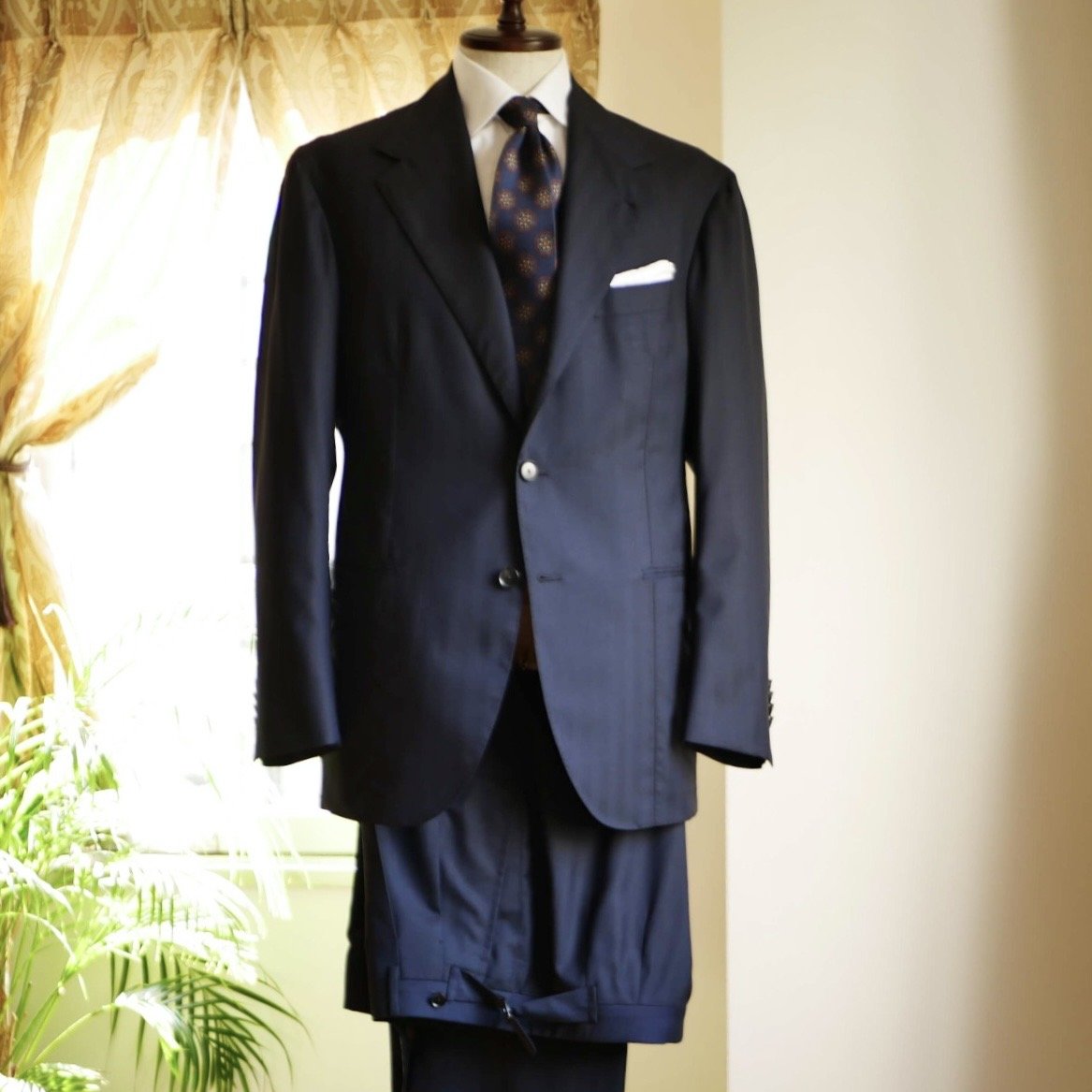
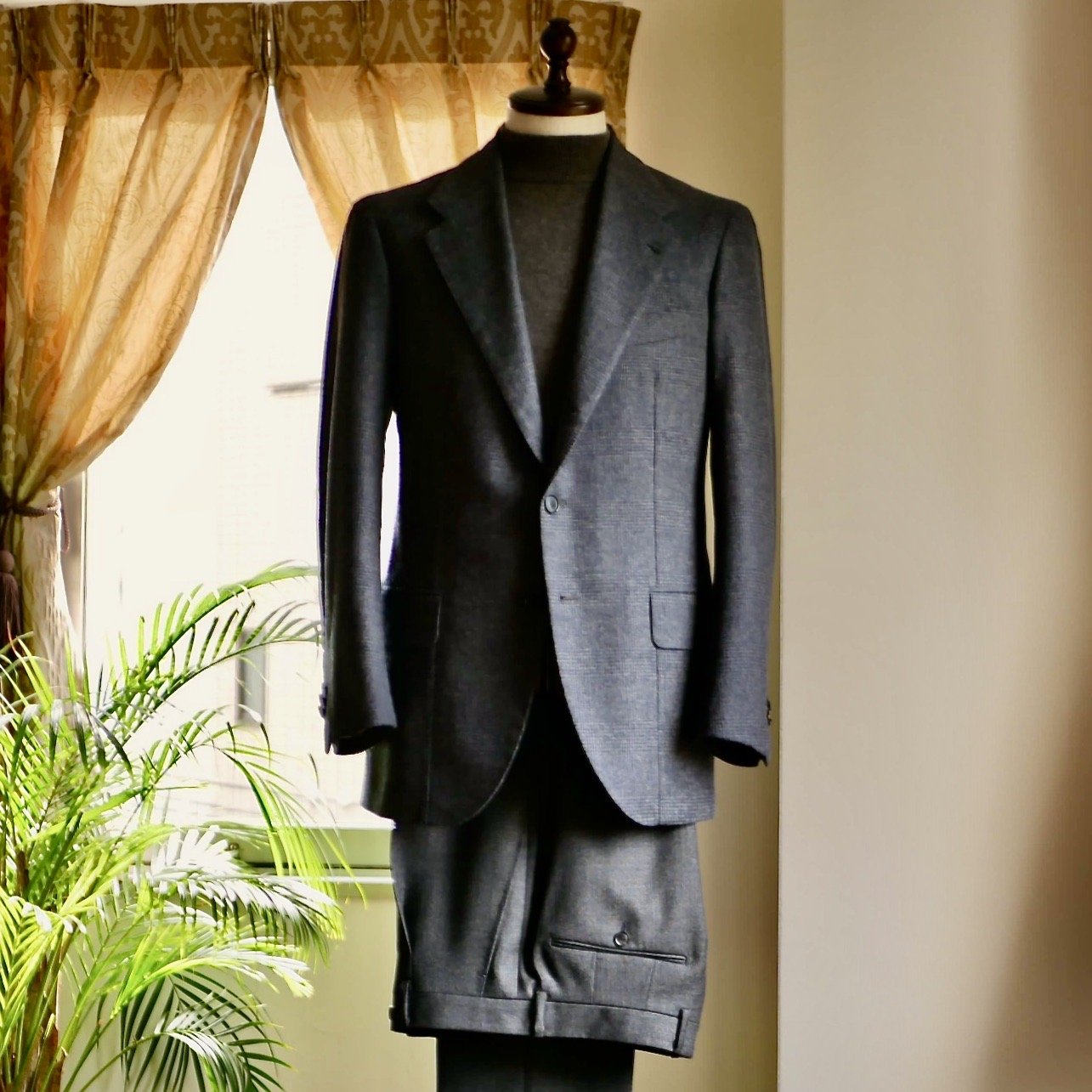
As I confirmed each point with Mr. Kojima, I added notes to the measurement sheet. Incidentally, we were both wearing Drapers "Cotton Deluxe" Solaro in different colors that day, completely by coincidence, which made us laugh.
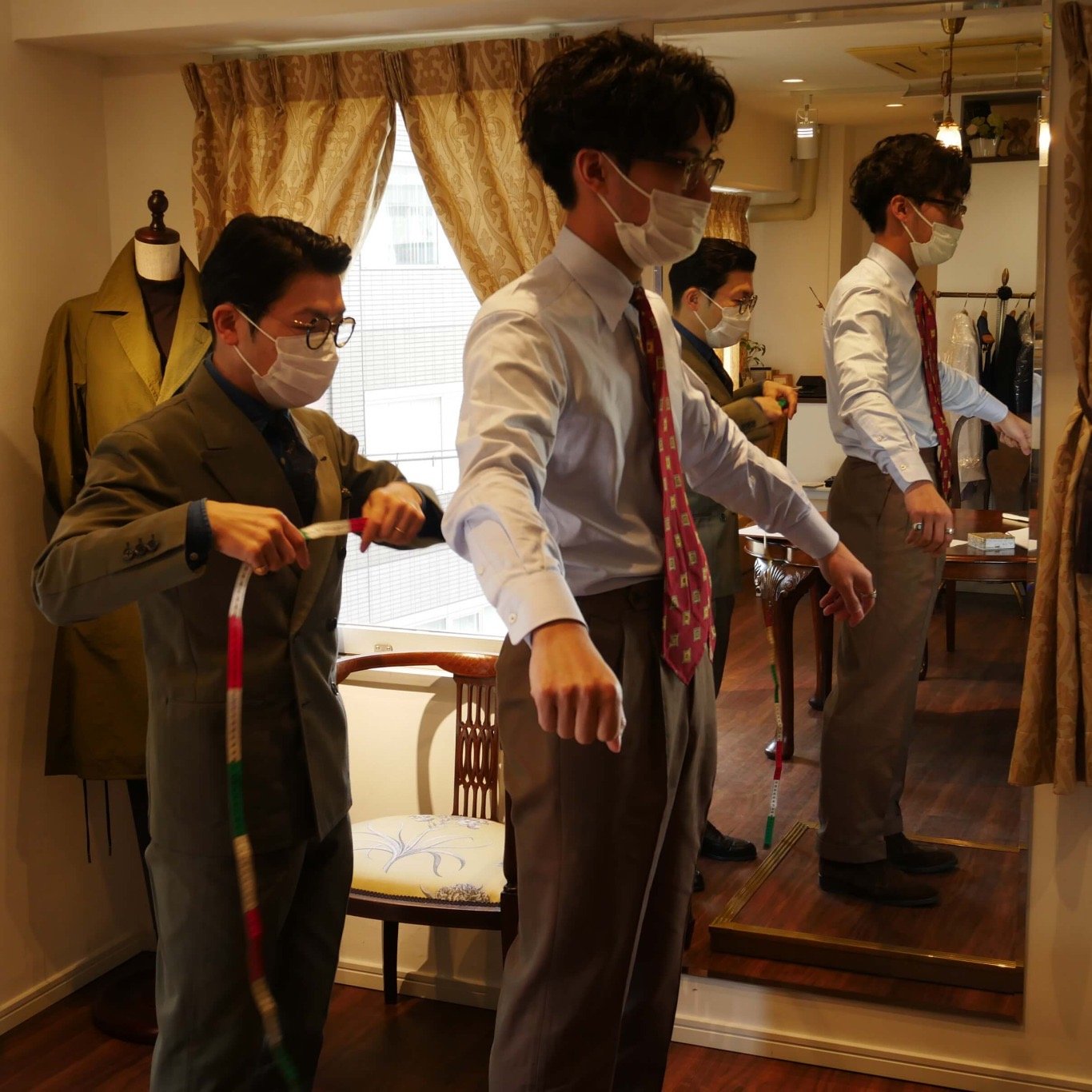
Next, Mr. Kojima played the role of the customer, and I took his measurements.
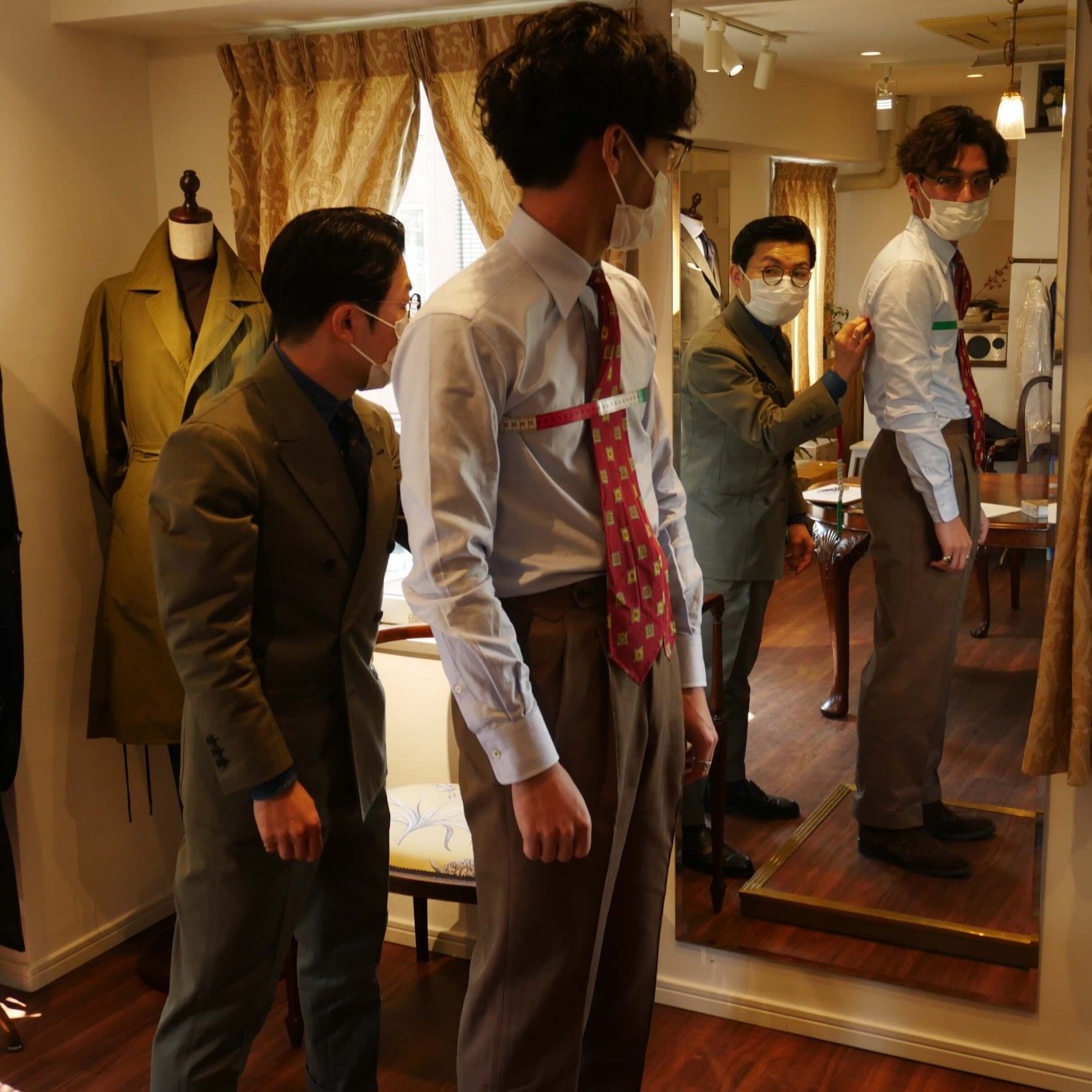
We began by confirming the chest circumference and chest line, which serve as important reference points for jacket measurements. Keeping the line horizontal is essential.
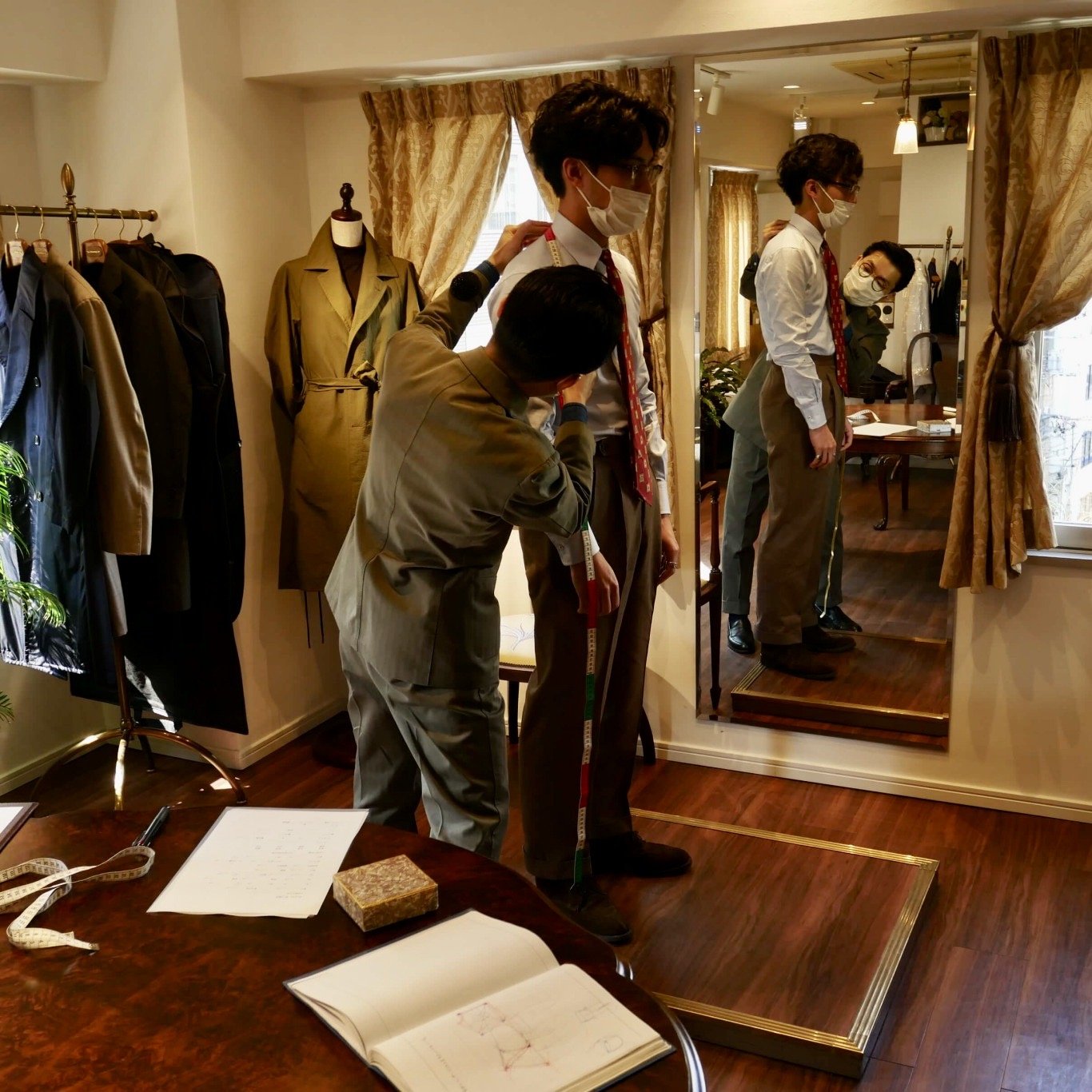
Unlike MTM, bespoke involves many diagonal measurements. These help us understand the three-dimensional contours of the body, including the musculature and shape around the shoulder blades.
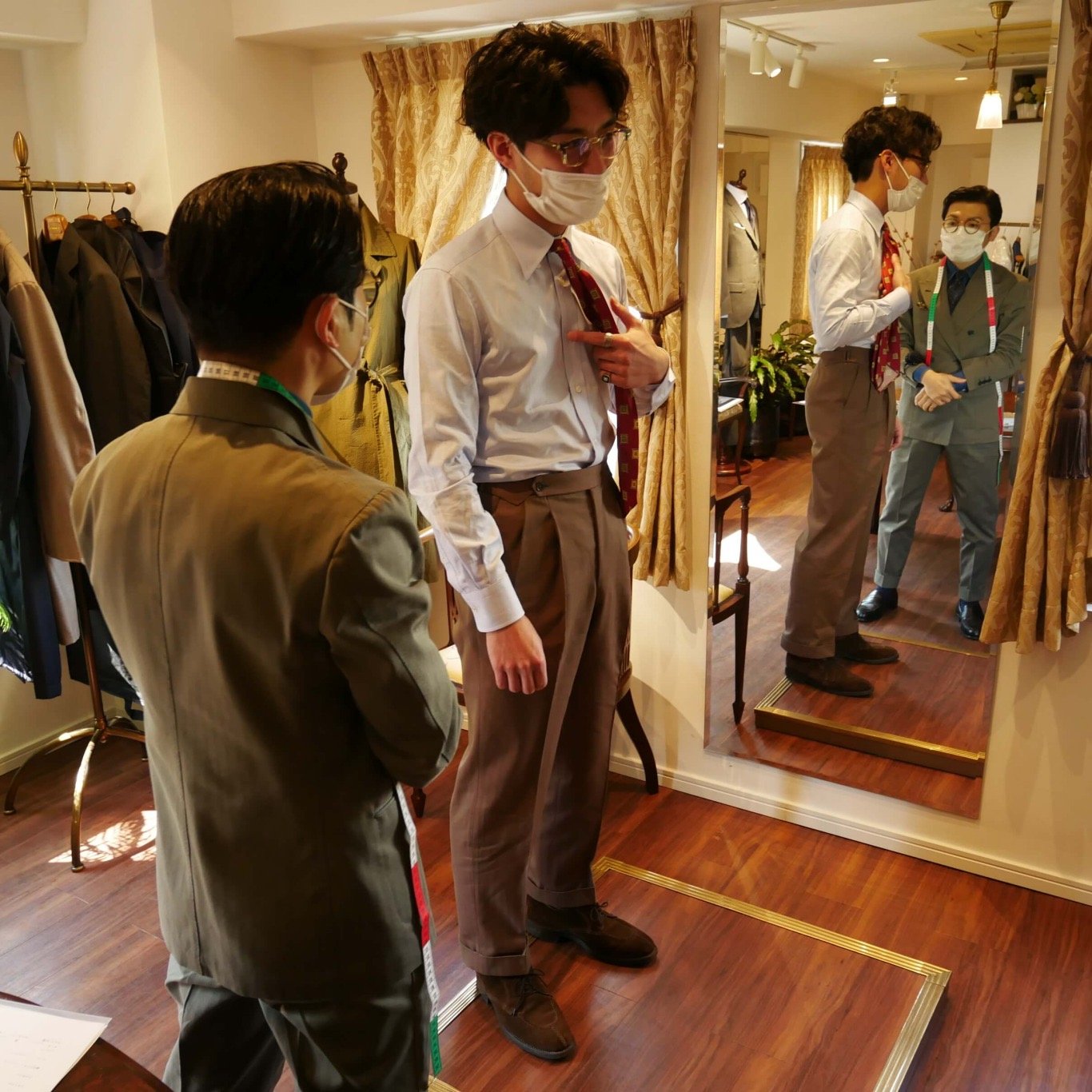
We also learned how shirt button placement can be used as a reference for remembering the height of the chest line.
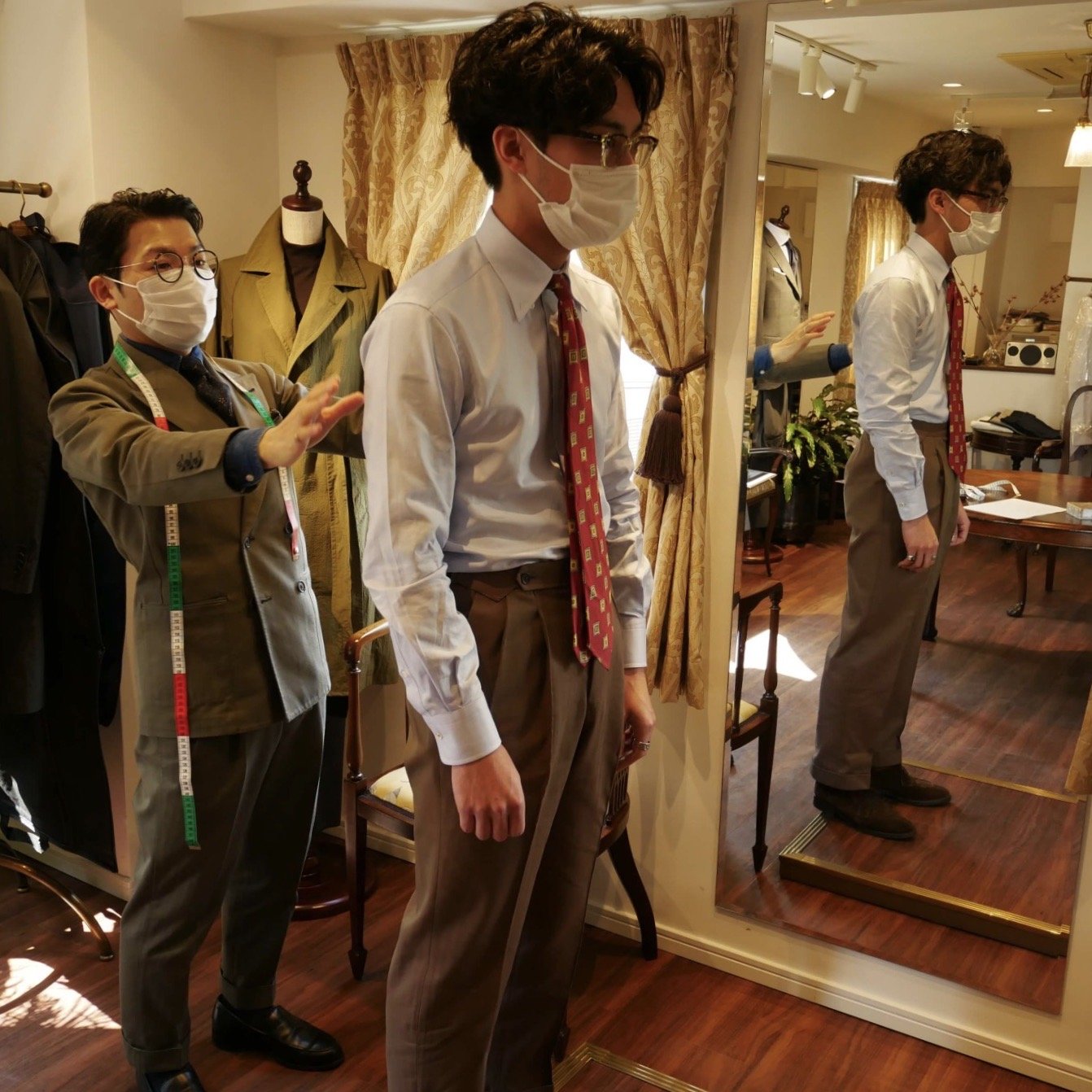
In addition to taking measurements, observing the customer's posture, shoulder slope, overall balance, and natural stance is equally important. This kind of observation is essential in both MTM and bespoke tailoring.
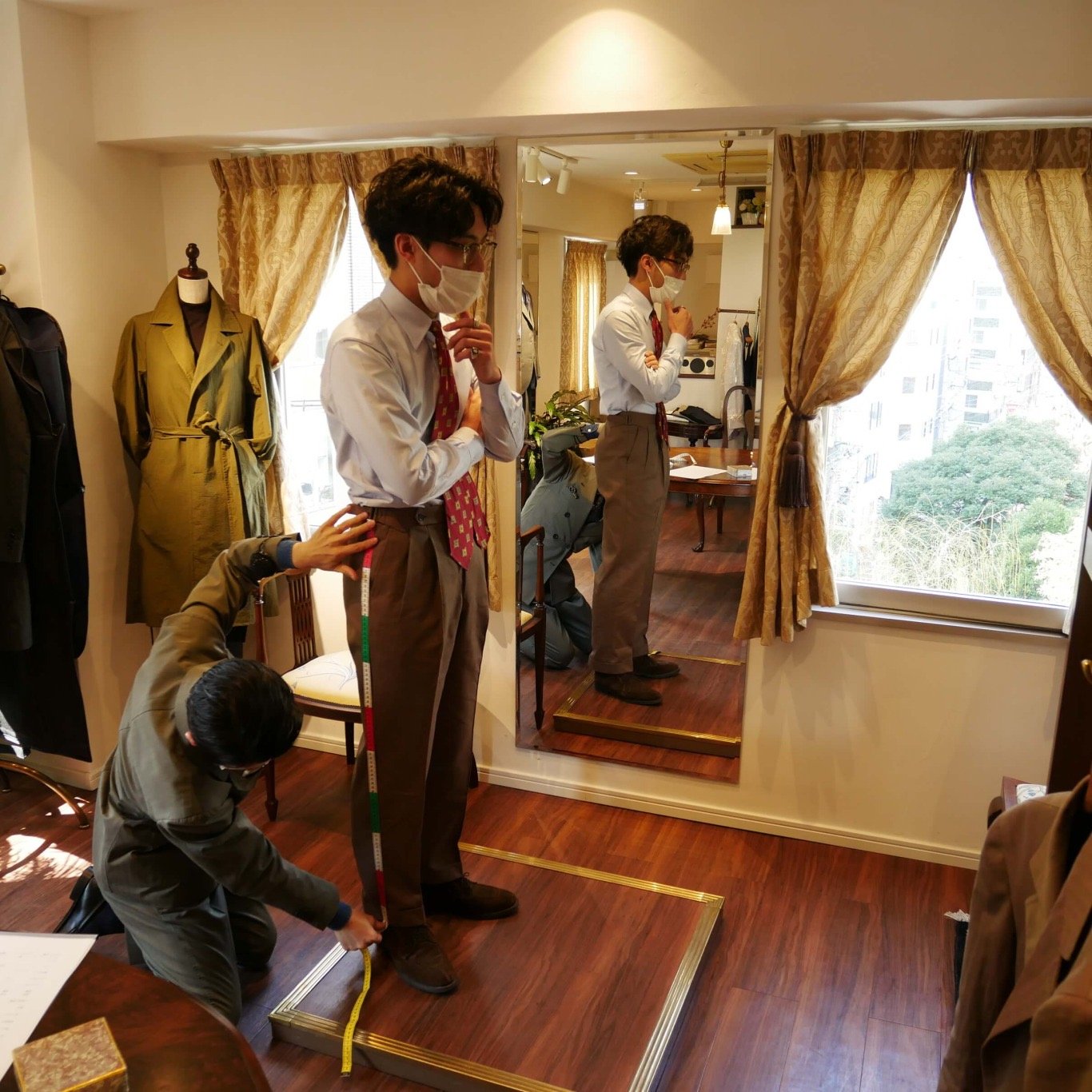
Here, we were measuring the trouser length. Trousers require fewer measurement points, but understanding the angle of the pelvis and the customer's preferred waist position is very important.
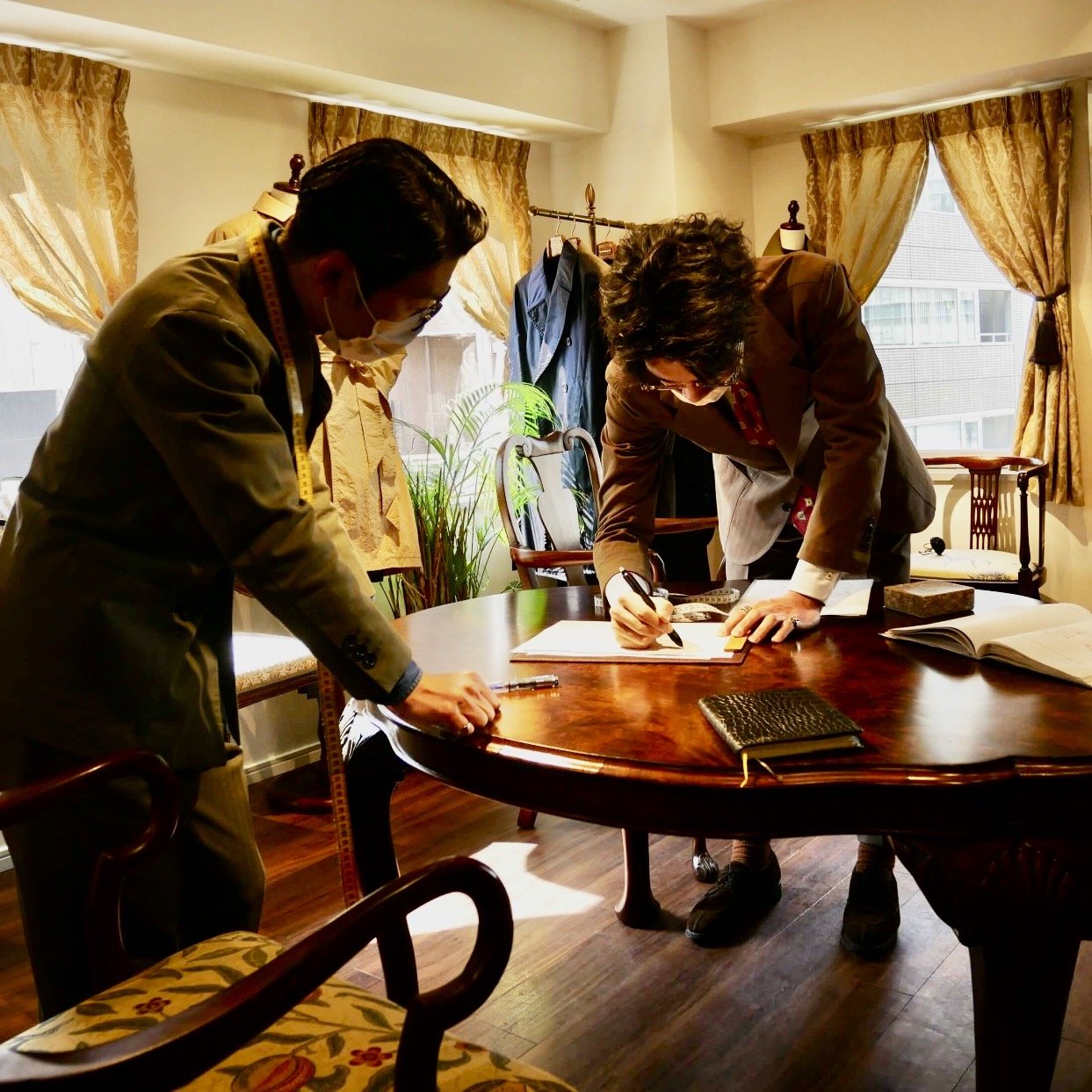
After two rounds of practical training, Mr. Kojima reviewed my pattern notes. I will keep these carefully as valuable reference materials for the future.
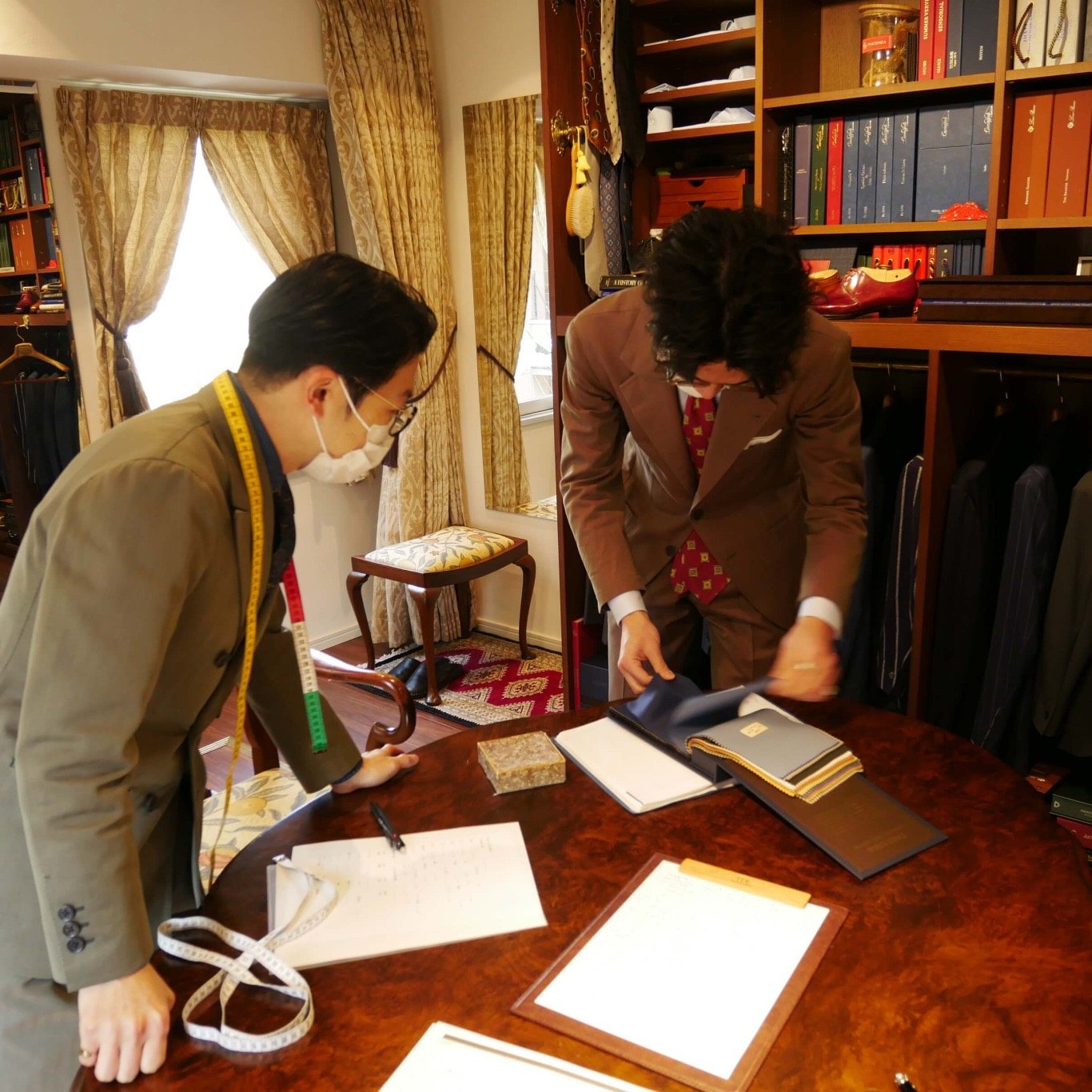 After the lesson, we naturally moved into our usual conversation about fabrics: what to make next, seasonal recommendations, and so on.
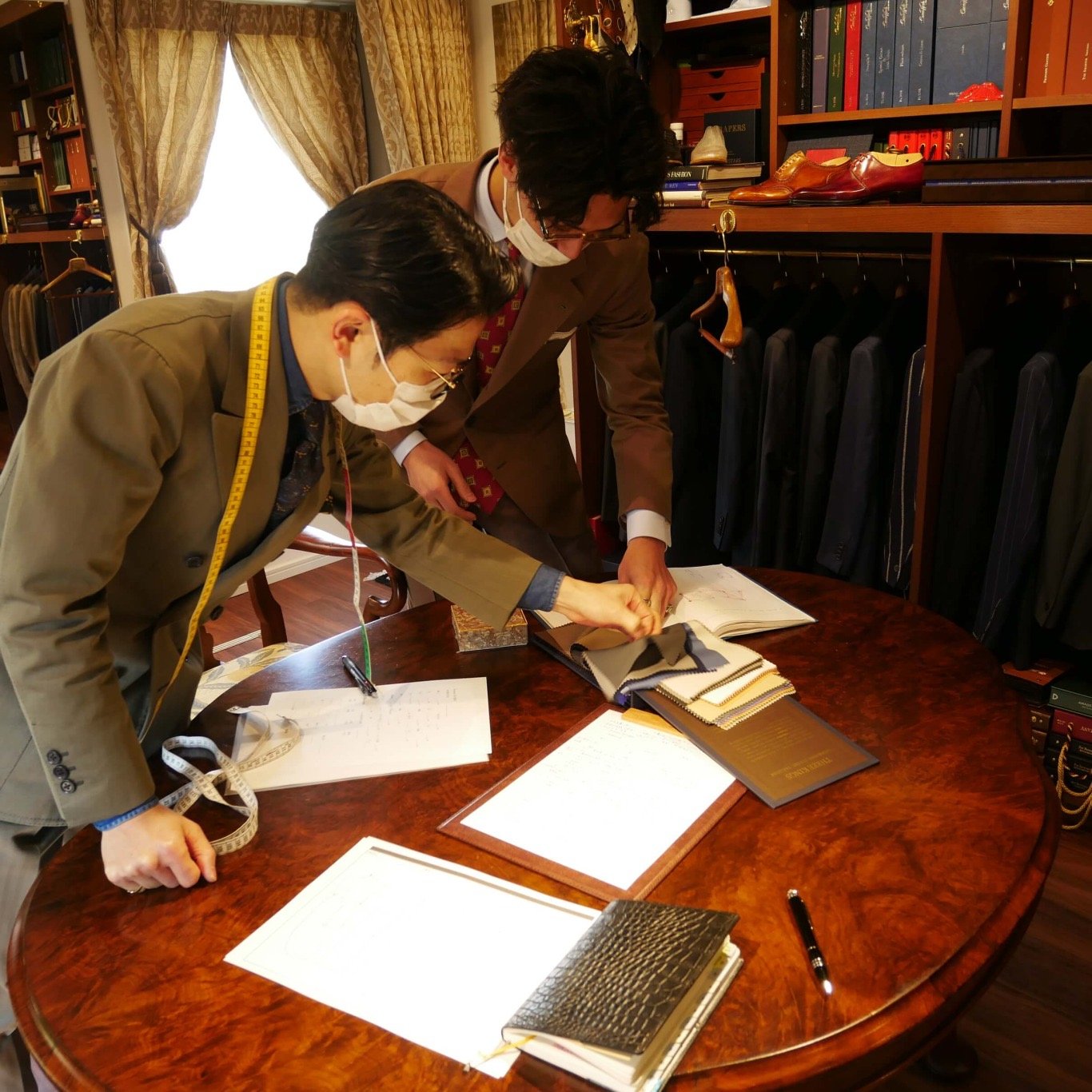
Mr. Kojima's top recommendation was Drapers "Three Kings." The lightweight covert cloth is certainly interesting, but the depth of color and sheen of the gabardine are particularly beautiful.
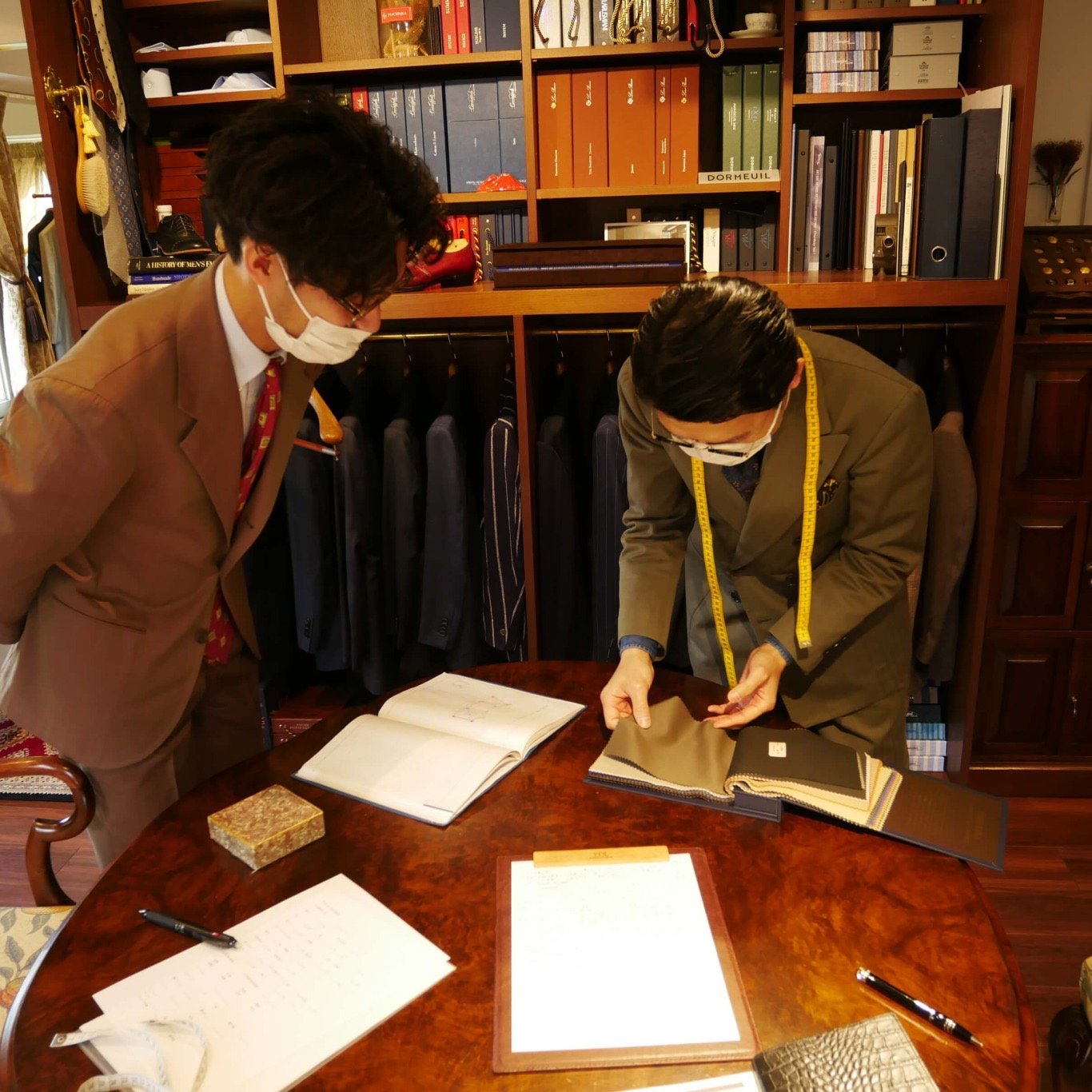
I inevitably find myself drawn to earth tones such as beige and khaki...
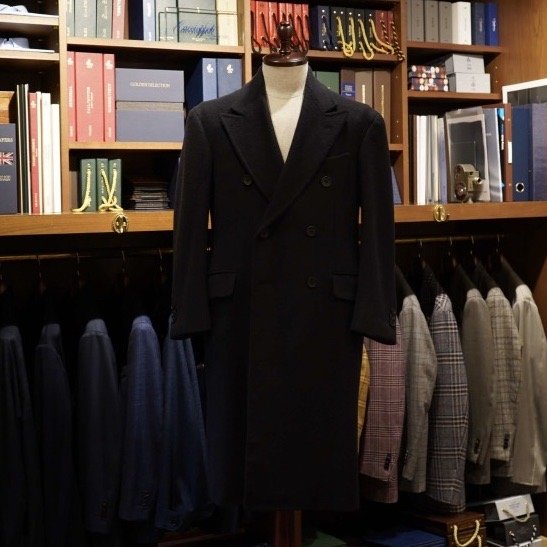
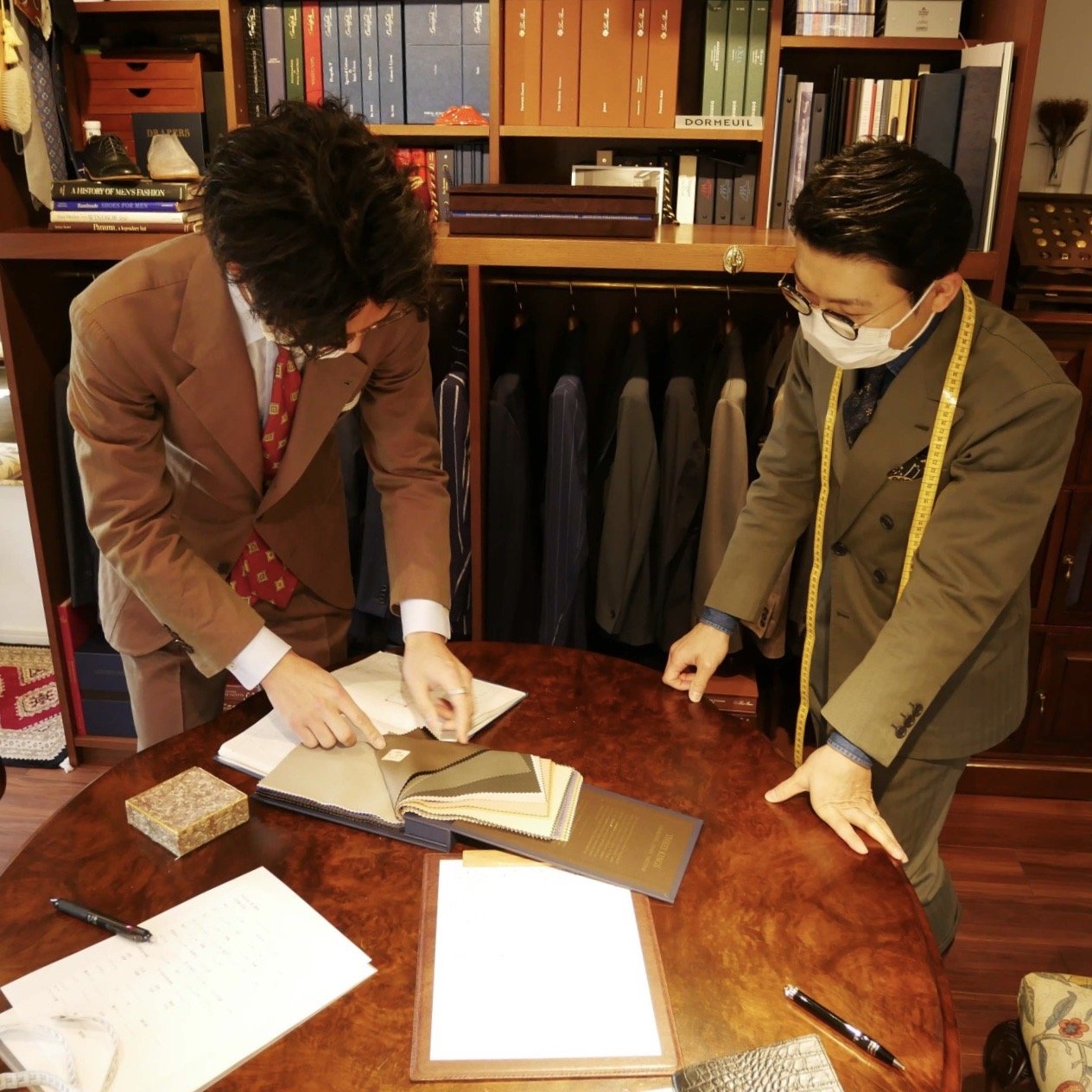 Having already completed a Super 160's navy suit and now enjoying a cotton Solaro suit, my next ideas are a linen suit and a cashmere Chesterfield Coat. Bespoke evolves with every order, and I look forward to sharing our next creation with you.
After the Lesson
One of the most memorable things Mr. Kojima said afterward was that "accurate measurements and precise patterns alone are not everything."
Some Neapolitan tailors are even said to cut directly onto the fabric without creating a formal paper pattern, meaning that the result can vary slightly each time. For them, that individuality is part of what makes bespoke tailoring feel alive.
Mr. Kojima himself also does not simply reuse the exact same pattern, even when a previous garment turned out very well.
While MTM places importance on reproducibility, bespoke allows room to evolve, refine, and experiment with each piece, always in consultation with the customer. This conversation made me appreciate bespoke tailoring even more deeply.
Of course, one lesson does not make me a master, but Mr. Kojima has given me his approval to conduct first fittings going forward. We will also apply what I have learned to further refine our MTM fitting process.
Even after more than 15 years working with bespoke tailoring, I still find endless opportunities to learn and improve. It is a lifelong pursuit, and one I continue to enjoy wholeheartedly.
Photo Gallery
Posted by Tomohiro Hayashi
The Dressing Lab specializes in bespoke tailoring. While we can tailor most items given some time, we do not have ready-to-wear garments available for immediate purchase.
We deal exclusively in high-quality custom-made items, requiring at least one month for completion of any piece. For those desiring bespoke services or in cases where fittings are necessary due to body shape, it may be required to visit our salon 2 to 3 times.
We kindly ask for your understanding of the above conditions before placing an order. We eagerly await your consultations and reservations.
*Please make sure to reserve an appointment before visiting our store.
We gladly welcome appointments for consultations or viewings, so please don't hesitate to reach out to us.